
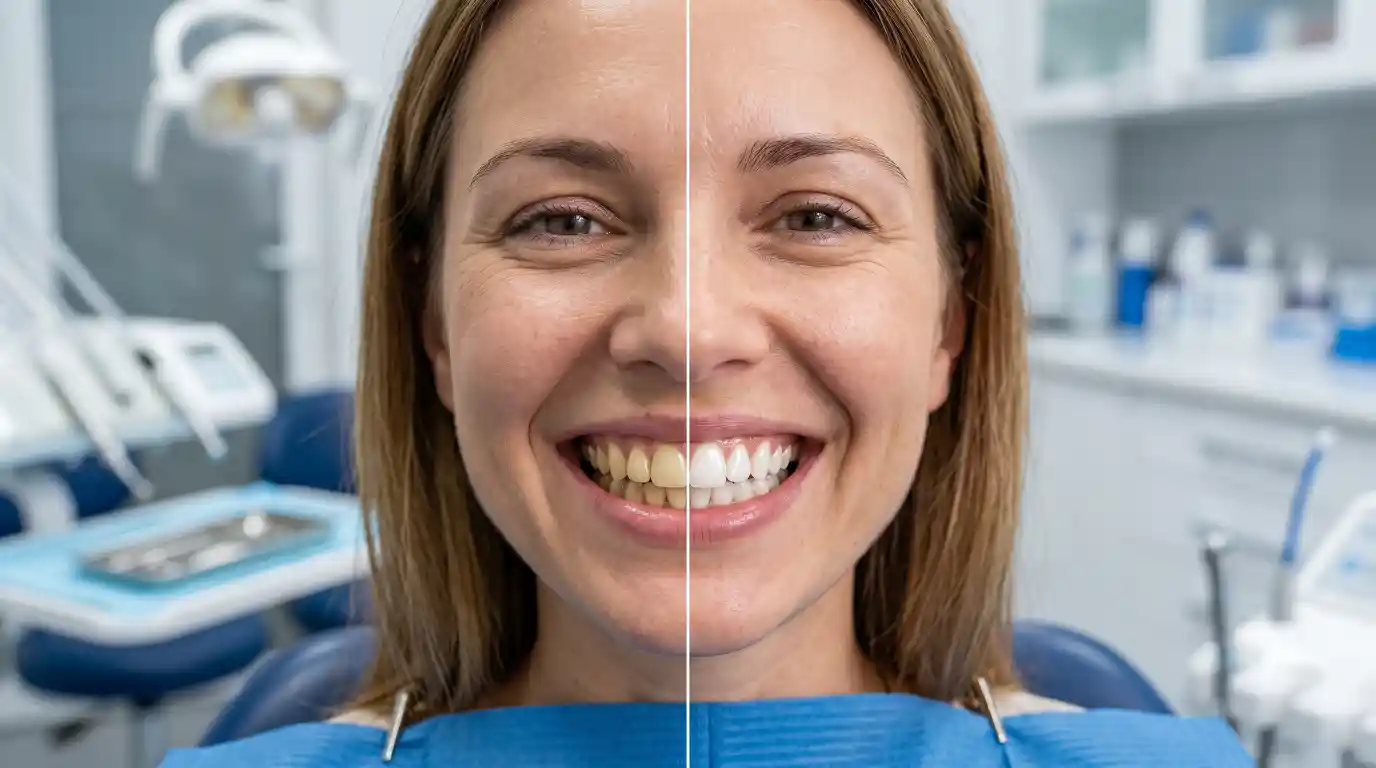
Tooth discoloration happens when teeth turn yellow, dull, gray, or develop spots and it’s one of the most common cosmetic concerns people search for a fix for. The cause matters more than most people realize: a coffee stain sitting on the enamel surface responds to a completely different treatment than a gray discoloration caused by an old injury or medication. Picking the wrong one wastes time and money; picking the right one can transform a smile in a single visit.
So what’s the best treatment for stained or discolored teeth? For surface stains from coffee, wine, or tobacco, professional whitening is usually the fastest fix. For deeper, intrinsic discoloration the kind whitening can’t touch bonding, veneers, or crowns are typically the better route. If you’re in Mesa, AZ and trying to figure out which category your stains fall into, U Smile Family Dentistry offers whitening, bonding, veneers, and full smile makeovers, with a dentist who can identify the exact cause before recommending a treatment.
The rest of this guide breaks down every stain type, every professional and at-home option, what actually works long-term, and how to keep your smile bright once you’ve achieved it so you can stop guessing and start treating the right problem the right way.
What Is Tooth Discoloration?
Tooth discoloration is any change in the natural color of your teeth. It can affect the entire tooth or just parts of it. Some discoloration is harmless and purely cosmetic. Other types signal an underlying dental or health issue that needs attention. The color change can range from mild yellowing to dark brown, gray, or even black patches depending on the cause.
Extrinsic vs. Intrinsic Tooth Stains
Extrinsic stains are stains that form on the outer surface of the tooth, on the enamel. They come from things you eat, drink, or smoke. These are the most common type and usually the easiest to treat because they sit on the surface where cleaning and whitening agents can reach them.
Intrinsic stains form inside the tooth, in the layer called dentin. They are caused by things that happen from the inside, such as certain medications, trauma, too much fluoride during childhood, or aging. Intrinsic stains cannot be removed by surface whitening because they are locked inside the tooth structure itself.
Age-Related Tooth Discoloration
As we age, two things happen at once. The outer enamel layer gradually wears down from years of use, and the inner dentin layer naturally darkens with age. The result is that teeth look more yellow or gray over time even in people with excellent oral hygiene. Age-related discoloration is a mix of both extrinsic and intrinsic changes, which is why it can be harder to treat than simple surface stains.

What Causes Teeth Stains and Discoloration?
Common causes of tooth stains and discoloration include foods, drinks, smoking, aging, poor oral hygiene, medications, and certain dental conditions.
Coffee, Tea, and Dark Drinks
Coffee and tea are the most common causes of surface staining. Both contain tannins, which are plant-based compounds that bind to tooth enamel and leave behind a yellowish or brownish film over time. Red wine, dark sodas, and fruit juices with strong pigments cause the same problem.
Smoking and Tobacco Use
Tobacco is one of the most aggressive staining agents for teeth. The tar and nicotine in cigarettes soak into the pores of the enamel and create deep yellow or brown staining that regular brushing cannot remove. Smokeless tobacco products cause similar and often worse discoloration along the gum line.
Poor Oral Hygiene
When plaque is allowed to build up on the teeth without regular brushing and flossing, it eventually hardens into tartar. Tartar has a yellow or brown color and creates a surface that picks up stains even more easily. Poor hygiene also allows bacteria to thrive, which can worsen discoloration over time.
Aging and Enamel Wear
The protective enamel on the outside of your teeth is the hardest substance in the human body, but it does wear down over time. As enamel thins, the yellowish dentin underneath becomes more visible through it. This process happens naturally with age and is not fully preventable, but it can be slowed with good habits.
Certain Foods and Medications
Deeply pigmented foods like berries, beets, curry, soy sauce, and tomato sauce can all leave stains on teeth with regular consumption. Some medications are also known to cause discoloration. Tetracycline antibiotics taken during childhood can cause a characteristic gray or banded discoloration that runs through the tooth. Antihistamines, blood pressure medications, and antipsychotics have also been linked to tooth staining in some cases.
Tooth Injury and Trauma
When a tooth experiences trauma from a fall or blow to the mouth, the internal blood vessels can rupture and bleed into the tooth structure. This causes the tooth to turn pink, gray, or dark brown over time. A single darkened tooth in an otherwise healthy mouth is often a sign of past injury.
Fluorosis and Excess Fluoride
Fluoride is important for strong teeth, but too much exposure during the years when teeth are developing can cause fluorosis. Mild fluorosis appears as faint white streaks or spots on the enamel. More severe fluorosis can cause brown or pitted discoloration. This condition is entirely cosmetic and does not affect the health of the tooth, but it can be visually noticeable.
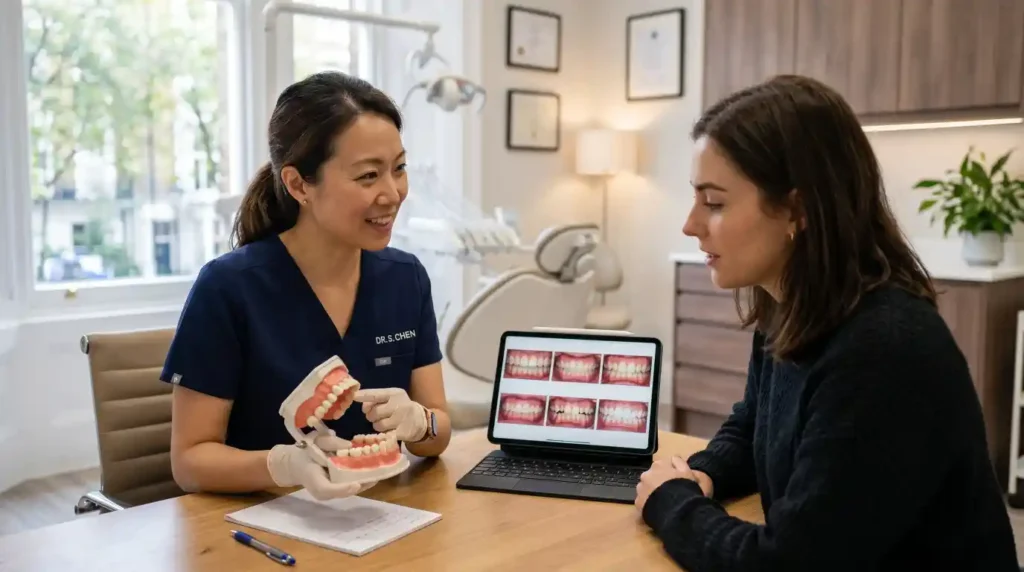
How to Identify the Type of Tooth Stain
Surface stains tend to be yellowish or brownish and appear fairly evenly across the teeth. They are most visible on the front surfaces and often worse near the gum line where plaque accumulates. Intrinsic stains can be gray, dark brown, or even bluish. They may affect a single tooth or appear as banding or spotting across multiple teeth.
Yellow teeth are usually caused by surface staining or enamel thinning and tend to respond well to whitening. Brown teeth often indicate heavier staining from tobacco or decay and may need stronger professional treatment. Gray teeth are usually a sign of intrinsic discoloration from medications, trauma, or aging and typically require restorative options like veneers or crowns rather than whitening.
Why Identifying the Cause Matters
Treating a stain without knowing its cause is like treating a symptom without understanding the illness. If you use whitening products on intrinsic stains, you will be disappointed. If you skip whitening and jump straight to veneers for surface stains, you will spend far more money than necessary. A dentist can identify the type and cause of your staining quickly and point you toward the most effective solution.
What Is the Best Treatment for Stained or Discolored Teeth?
The right option depends on whether the stain is extrinsic or intrinsic, how severe the discoloration is, your budget, and how quickly you want results. Here is an overview of the main treatment options:
Professional Teeth Whitening works best for extrinsic and mild age-related staining. It uses a high-concentration bleaching gel applied by your dentist and can lighten teeth by several shades in a single visit.
Dental Cleaning and Polishing removes surface buildup and mild staining caused by plaque and tartar. This is often the first step before any other whitening treatment.
At-Home Whitening Kits provided by your dentist use custom-fitted trays and a lower-concentration gel worn over several nights. These are effective for mild to moderate surface staining.
Whitening Toothpaste and Strips are over-the-counter options that work on very mild surface stains. They take longer to show results and are less effective than professional options.
Dental Bonding uses a tooth-colored resin applied directly to the tooth surface to cover stains that whitening cannot fix. It is a good option for localized or intrinsic staining.
Porcelain Veneers are thin shells bonded to the front of the teeth. They completely cover discoloration and are ideal for deep intrinsic stains, uneven color, or when you want a long-term cosmetic solution.
Dental Crowns cover the entire visible tooth. They are used when the tooth is severely discolored and also damaged or structurally compromised.
Internal Bleaching is a specialized treatment for teeth that have had root canals. The bleaching agent is placed inside the tooth to lighten it from within, which is the only way to address internal discoloration in a treated tooth.
Professional Treatments for Discolored Teeth
Several professional treatments can remove stains and restore a brighter smile, depending on the cause and severity of the discoloration.
In-Office Teeth Whitening
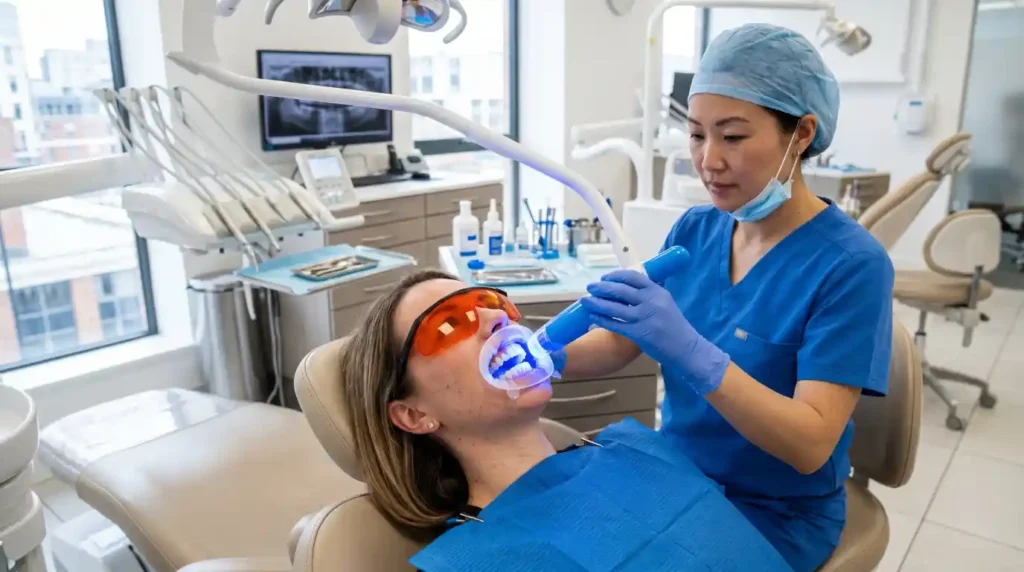
In-office whitening is the fastest and most effective way to whiten teeth with surface or mild intrinsic staining. Your dentist applies a concentrated peroxide gel to your teeth, sometimes activating it with a light source, and the treatment typically takes about 60 to 90 minutes. Most patients see significant results in a single session.
Laser Teeth Whitening
Laser whitening uses a beam of light to activate and speed up the whitening gel applied to the teeth. It produces faster results than standard in-office whitening and is often used for patients who want the most dramatic improvement in the shortest amount of time. It costs more than traditional whitening but delivers strong results for suitable candidates.
Dental Bonding for Stubborn Stains
Dental bonding involves applying a tooth-colored composite resin directly to the surface of a stained tooth. The material is shaped and hardened with a light and then polished to blend with the surrounding teeth. Bonding is a good option for individual stained teeth, mild intrinsic staining, or areas where whitening has not been effective.
Porcelain Veneers for Deep Discoloration
Porcelain veneers are the most comprehensive cosmetic solution for severe or deep discoloration. A thin layer of enamel is removed from the front of the tooth, and a custom-made porcelain shell is bonded in its place. Veneers are resistant to staining, look extremely natural, and can last 10 to 15 years or more with proper care.
Crowns for Severely Damaged Teeth
When a tooth is both severely discolored and structurally damaged or extensively restored, a dental crown may be the best option. A crown covers the entire visible portion of the tooth and restores both appearance and function. Crowns are typically recommended when a tooth is too damaged to benefit from a veneer alone.
At-Home Treatments for Stained Teeth
Whitening toothpastes contain mild abrasives and sometimes small amounts of peroxide or activated charcoal. They work by gently scrubbing away surface stains with regular brushing. Results are gradual and modest, typically taking several weeks of consistent use before a noticeable difference appears.
Over-the-counter whitening strips use a thin layer of peroxide gel applied directly to the teeth. They are more effective than whitening toothpaste but less powerful than professional treatment. Most people see some improvement within one to two weeks of daily use.
Baking Soda and Hydrogen Peroxide
Baking soda is a mild abrasive that can help lift surface stains when used occasionally as a paste mixed with water. Hydrogen peroxide at low concentrations can act as a mild bleaching rinse. Both are safe in limited amounts but should not be used daily as overuse can wear down enamel and irritate gum tissue.
Are Natural Remedies Safe?
Natural remedies like activated charcoal, apple cider vinegar, and oil pulling are popular online but have limited evidence supporting their effectiveness. Some, like activated charcoal, can actually be too abrasive for regular use and may harm enamel over time. These methods may offer minor cosmetic improvement at best and should not replace professional care for anything beyond very mild staining.
What Home Treatments Can and Cannot Fix
Home treatments work well for mild to moderate surface staining from food, drinks, and tobacco when used consistently over time. They cannot fix intrinsic staining, fluorosis, trauma-related discoloration, or staining caused by medications. If your teeth have not responded to consistent at-home care after four to six weeks, it is time to see a dentist.
Professional Treatments vs. Home Remedies
|
Feature |
Professional Treatments |
Home Remedies |
|
Effectiveness |
Very strong, works on surface and some deep stains | Mild, works only on light surface stains |
|
Cost |
Higher investment upfront |
Budget friendly, low cost |
| Speed of Results | Fast, often visible after one session |
Slow, takes weeks of consistent use |
|
Longevity |
Long lasting, results stay for months to years |
Short lived, fades faster without maintenance |
|
Safety |
Supervised by a dentist, lower risk of damage |
Risk of enamel damage if overused |
|
Best For |
Moderate to severe staining |
Very mild surface staining only |
|
Convenience |
Requires dental appointments |
Can be done at home anytime |
|
Side Effects |
Mild temporary sensitivity under supervision |
Sensitivity or gum irritation if misused |
|
Suitable for Deep Stains |
Yes, veneers, bonding, crowns available |
No, cannot reach intrinsic stains |
|
Dentist Involvement |
Required |
Not required |

How to Keep Your Teeth White After Treatment
Consistent brushing and flossing remove surface stains before they have a chance to settle. Brushing after meals and using a fluoride toothpaste helps protect enamel and maintain brightness. You do not need to give these up entirely, but reducing frequency and rinsing with water after drinking them significantly slows down the return of staining. Tobacco staining is aggressive and comes back quickly after whitening.
Quitting is the single most effective step a tobacco user can take to maintain whiter teeth long term. Drinking water after eating or drinking anything with strong pigments washes away residue before it bonds to enamel. Professional cleanings every six months remove surface buildup that regular brushing misses.
Can Tooth Discoloration Be Prevented?
Yes, tooth discoloration can be prevented with a few simple daily habits. Brushing twice a day, flossing regularly, and rinsing with water after eating or drinking anything with strong pigments all help keep stains from building up. Limiting coffee, tea, and red wine, avoiding tobacco, and visiting your dentist every six months for a professional cleaning go a long way in keeping your teeth bright. The earlier you build these habits, the less likely you are to deal with serious discoloration later on.
Risks and Side Effects of Teeth Whitening
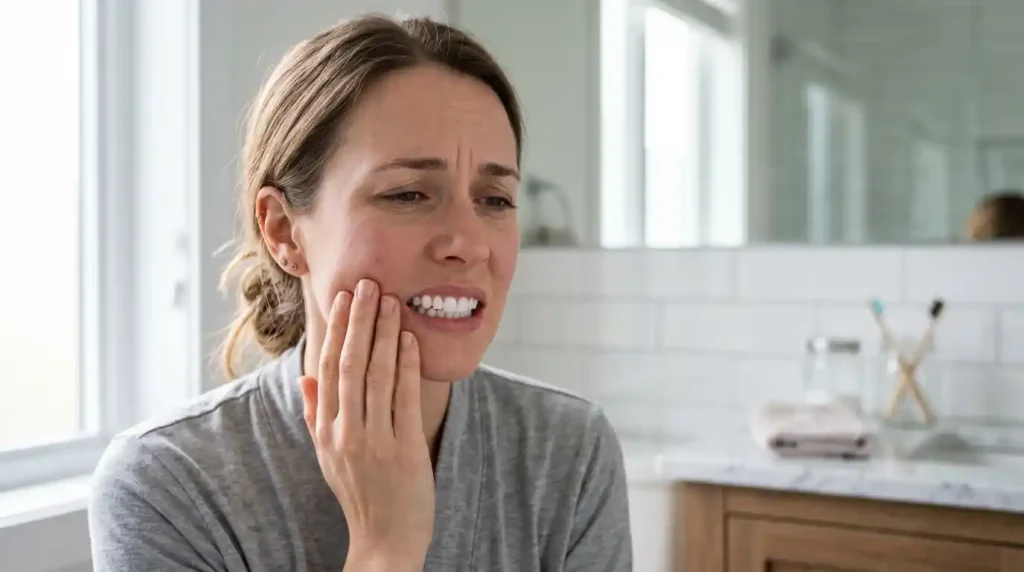
Teeth whitening is generally safe, but some people may experience temporary side effects such as tooth sensitivity or gum irritation.
Temporary Tooth Sensitivity
Sensitivity during or after whitening is the most common side effect. It usually appears as a brief sharp sensation when eating or drinking something cold or hot. It is caused by whitening agents temporarily opening pores in the enamel and typically resolves within one to three days.
Gum Irritation
If whitening gel comes into contact with the gum tissue, it can cause temporary redness, irritation, or a white appearance on the gums. Professional treatments minimize this risk by using protective barriers. At-home products that do not fit properly are more likely to cause gum irritation.
Overusing Whitening Products
Using whitening products more often than recommended or for longer than instructed can damage enamel over time and cause lasting sensitivity. Always follow the instructions on any product and consult a dentist before beginning any new whitening routine.
How to Whiten Teeth Safely
The safest way to whiten teeth is under the guidance of a dentist who can assess your stain type, recommend the most appropriate treatment, and monitor for side effects. If you use at-home products, stick to dentist-approved options and never exceed the recommended usage.
When Should You See a Dentist?
You should see a dentist if whitening products have not improved your teeth after four to six weeks, as the staining is likely intrinsic and needs a different approach. Patchy or uneven discoloration, a single tooth that is noticeably darker than the rest, or any sensitivity alongside discoloration are all signs that something deeper may be going on. These situations need professional evaluation before any cosmetic treatment is considered.
Ready to Fix Your Stained Teeth? Visit U Smile Family Dentistry in Mesa, AZ
At U Smile Family Dentistry in Mesa, AZ, our experienced dental team offers a full range of treatments for stained and discolored teeth, from professional in-office whitening and dental bonding to porcelain veneers and smile makeovers. We take the time to identify the type and cause of your staining and recommend the most effective solution for your specific situation. Contact us today and take the first step toward a brighter, more confident smile.
Conclusion
The best treatment for stained or discolored teeth depends on the type and cause of the stain. Surface stains often respond well to whitening, while deep intrinsic stains need bonding, veneers, or crowns. No single treatment works for everyone, so the smartest step is to talk to a dentist who can identify exactly what is causing your discoloration and recommend the right solution for your smile. A brighter, healthier smile is achievable for almost everyone with the right approach.
Frequently Asked Questions
What is the fastest way to remove stains from teeth?
Professional in-office whitening is the fastest option for surface stains. It can lighten teeth by multiple shades in a single 60 to 90-minute session. For deep intrinsic stains, veneers or bonding may be needed and take longer to complete.
Can yellow teeth become white again?
Yes, in most cases. Yellow teeth caused by surface staining from food, drinks, or tobacco respond well to professional whitening. Yellow teeth caused by enamel thinning can be improved with whitening but may also benefit from veneers for a more dramatic result.
Do whitening toothpastes really work?
Whitening toothpastes do work, but only for mild surface staining. They remove light discoloration gradually over several weeks. They are not effective for deeper stains or intrinsic discoloration and should not be expected to produce the same results as professional whitening.
Can deep stains be removed permanently?
Deep intrinsic stains cannot be removed with bleaching because they are inside the tooth. However, they can be permanently covered with veneers or crowns, which give a long-lasting cosmetic result. With proper care, veneers can last 10 to 15 years or more.
Are veneers better than teeth whitening?
They serve different purposes. Whitening is best for surface stains and is less invasive and more affordable. Veneers are better for deep or intrinsic staining, uneven color, and when you also want to change the shape or size of the teeth. A dentist can help you decide which is appropriate for your situation.
Is professional whitening worth it?
For most people with surface staining, yes. Professional whitening gives faster, stronger, and longer-lasting results than any at-home option. The investment is higher, but the results are more reliable and the process is supervised for safety.
Why is one tooth darker than the others?
A single tooth that is darker than the rest is often the result of past trauma, a dead nerve, internal bleeding within the tooth, or an old filling showing through. It should be evaluated by a dentist to rule out any underlying problem before cosmetic treatment is pursued.