
Your mouth may still smell bad after brushing because a toothbrush only cleans part of your mouth. Odor-causing bacteria can remain on your tongue, between your teeth, below the gumline, inside cavities, or around old dental work. Dry mouth, tonsil stones, postnasal drip, certain foods, smoking, and acid reflux can also contribute.
Brushing may temporarily cover the smell, but it cannot treat the underlying cause. Cleaning your tongue, flossing daily, drinking more water, cleaning dental appliances, and using an appropriate mouthwash may help. However, persistent bad breath can sometimes indicate gum disease, tooth decay, infection, or another health concern.
Bad breath that continues despite good oral hygiene should be evaluated by a dentist. At U smile Family Dentistry in Mesa, Arizona, patients can receive a thorough oral examination to help identify possible dental causes. This guide explains why your breath may still smell after brushing, how to recognize the likely source, which remedies may help, and when professional treatment is needed.
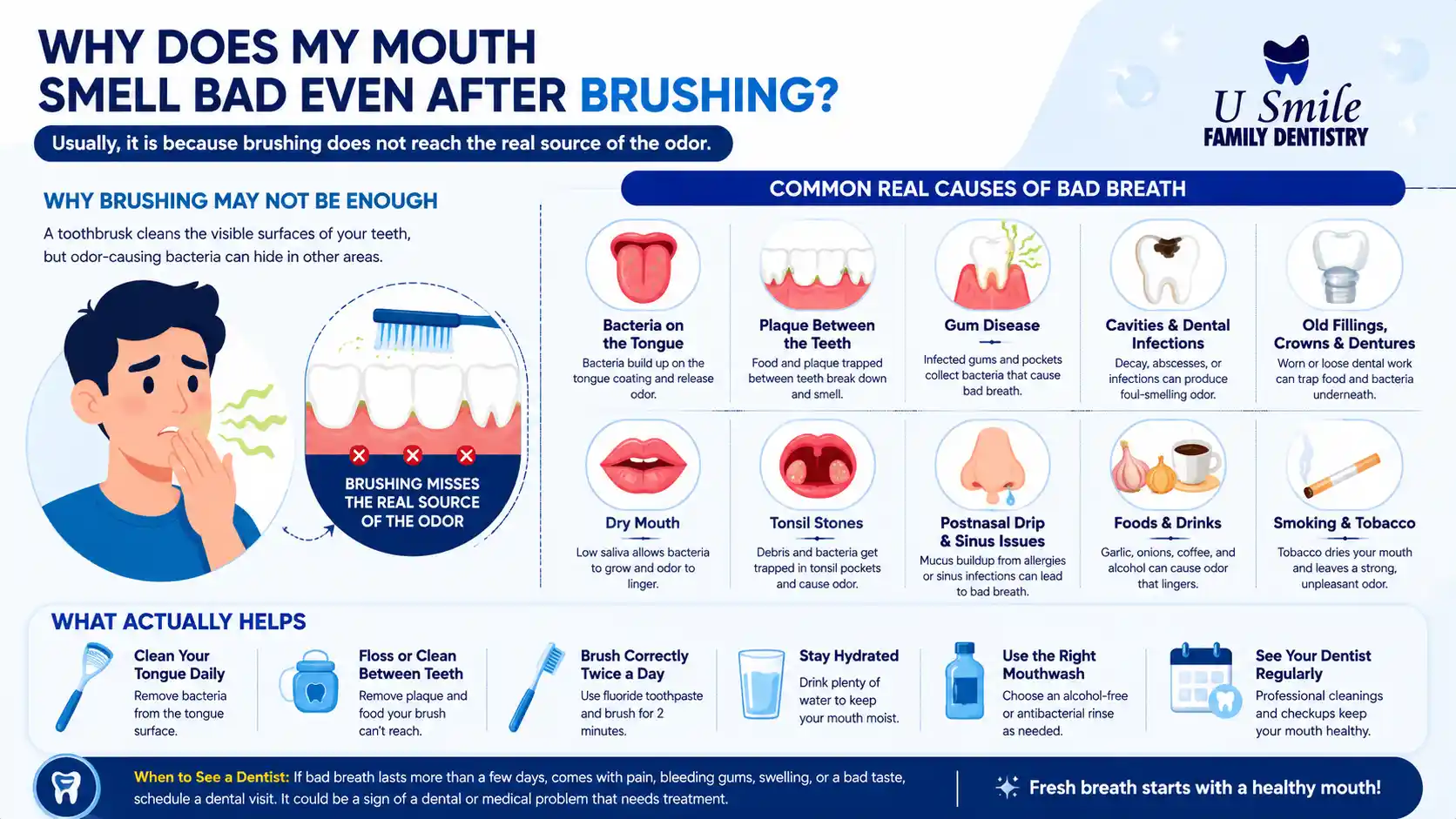
Why Brushing Alone May Not Eliminate Bad Breath
A toothbrush mainly cleans the front, back, and chewing surfaces of your teeth. It does not clean deeply between teeth or underneath the gums. Brushing also may not fully remove the coating near the back of your tongue. This area contains small grooves that can hold bacteria, food particles, dead cells, and mucus.
These materials break down and release odor-producing compounds. Toothpaste can temporarily cover the smell, but the odor may return when its flavor fades. Bad breath can therefore continue even when you brush twice a day. A complete routine should include tongue cleaning, interdental cleaning, hydration, and professional dental care when needed.
Common Causes of Bad Breath After Brushing
Several dental, lifestyle, and medical factors can cause bad breath that does not improve with brushing.
Bacteria and Coating on the Tongue
The tongue is one of the most common sources of persistent mouth odor. Its rough surface can trap bacteria, food debris, dead cells, and mucus. The buildup often appears as a white, yellow, or cream-coloured coating. It may be thicker near the back of the tongue, where a toothbrush may not reach well.
These bacteria can produce volatile sulfur compounds. These compounds may create a rotten egg, cabbage-like, or generally unpleasant smell. Use a tongue scraper or gently brush your tongue from back to front. Do not scrub hard enough to cause pain, bleeding, or irritation. Cleaning the tongue should be part of your daily routine, not something you do only when your breath smells bad.
Plaque and Food Between Your Teeth
Food can remain between your teeth even after careful brushing. This is especially common around crowded teeth, braces, bridges, and areas where teeth touch tightly. Bacteria break down the trapped food and release odor. Plaque can also collect between teeth where toothbrush bristles cannot reach.
Floss, interdental brushes, or a dentist-recommended water flosser can help clean these spaces. You may notice an unpleasant smell on the floss when you first begin cleaning an overlooked area. That smell does not mean you should stop. It often means plaque and debris were present. Gentle daily cleaning may improve the odor, but persistent bleeding or soreness needs a dental evaluation.
Gum Disease and Periodontal Infections
Persistent bad breath can be an early sign of gum disease. Gingivitis begins when plaque irritates the gums. Your gums may look red, feel tender, or bleed during brushing and flossing.
Untreated gingivitis can progress to periodontitis. The gums begin pulling away from the teeth and form deeper pockets. These pockets can collect bacteria, plaque, and tartar that you cannot remove at home.
Other warning signs include:
- Bleeding or swollen gums
- Receding gums
- A constant bad taste
- Loose or sensitive teeth
- Pain when chewing
- Pus near the gumline
Tartar cannot be removed with normal brushing. A dental professional must remove it during a professional cleaning. More advanced gum disease may require deeper periodontal treatment.
Cavities, Cracked Teeth, and Dental Infections
A cavity creates a damaged area where bacteria and food can collect. Brushing over the tooth may not reach inside the decay. Deep cavities can also irritate or infect the tissue inside a tooth. An infected tooth may cause bad breath, a foul taste, pain, swelling, or sensitivity to pressure and temperature.
Cracks can create similar problems. A narrow fracture may trap bacteria even when the tooth looks normal from the outside. A dental abscess requires prompt treatment. Contact a dentist if bad breath occurs with severe tooth pain, facial swelling, fever, pus, or difficulty swallowing.
Old Fillings, Crowns, Bridges, and Dentures
Dental restorations can collect bacteria when they become loose, cracked, worn, or poorly fitted. Food may become trapped beneath a damaged crown or around the edge of an old filling. Bridges can also collect plaque underneath the replacement tooth.
Removable dentures, retainers, and mouth guards may develop an odor when they are not cleaned thoroughly. They can hold bacteria and food particles against the teeth and gums. Clean removable appliances according to your dentist’s instructions. Do not use regular toothpaste on dentures unless your dentist recommends it. Some toothpaste formulas are too abrasive for denture materials. A dentist should inspect any restoration that causes a bad taste, odor, discomfort, or food trapping.
Dry Mouth and Reduced Saliva
Saliva helps rinse away food particles and control harmful bacteria. When saliva flow decreases, odor-producing material remains in the mouth longer.
Dry mouth, also called xerostomia, may cause:
- A sticky or dry feeling
- Thick or stringy saliva
- Cracked lips
- A rough or burning tongue
- Trouble swallowing
- Frequent thirst
- Mouth sores
- Bad breath
Dehydration, mouth breathing, snoring, tobacco, alcohol, anxiety, and certain health conditions can contribute to dryness. Hundreds of medicines can also reduce saliva. Common examples include some medicines used for allergies, depression, high blood pressure, anxiety, pain, and bladder conditions.
Do not stop a prescribed medicine without medical advice. A dentist or doctor can review your medication and recommend ways to manage the dryness.
Tonsil Stones
Tonsil stones are small white or yellow lumps that form in the folds of the tonsils. They contain hardened minerals, food debris, bacteria, and other material. Bad breath is one of their most common symptoms. You may also notice:
- A bad taste
- A sore throat
- Frequent coughing
- Trouble swallowing
- Ear discomfort
- A feeling that something is stuck in your throat
Small tonsil stones are often harmless. Gargling with warm salt water may help loosen debris. Avoid using sharp objects to remove them because the tonsils can bleed easily. Recurring, painful, or large tonsil stones should be assessed by a healthcare professional.
Postnasal Drip, Sinus Problems, and Throat Infections
Nasal and throat conditions can sometimes affect breath. Mucus may collect near the back of the tongue or throat during a cold, allergy flare, or sinus infection. Mouth breathing caused by congestion can also dry the mouth.
Postnasal drip alone is not always the direct cause of bad breath. However, an infection or persistent inflammation in the nose, sinuses, tonsils, or throat may contribute to odor. Consider medical advice when bad breath occurs with facial pressure, thick nasal drainage, fever, a persistent cough, or a sore throat that does not improve.
Foods, Drinks, and Dieting
Garlic, onions, spices, coffee, and alcohol can affect breath. Some odors remain after brushing because compounds from food enter the bloodstream and leave through the lungs. Fasting and restrictive diets may also change breath odor. Low food intake can reduce saliva flow. Diets that sharply limit carbohydrates may increase ketone production, which can create a noticeable smell.
Sugary foods can feed oral bacteria and increase plaque buildup. Frequent snacking also gives bacteria more material to break down. Temporary food-related odor should improve after digestion, hydration, and normal oral care. Odor that remains every day likely has another cause.
Smoking, Vaping, and Tobacco Use
Tobacco leaves a strong smell in the mouth. It can also dry oral tissues and increase plaque buildup. People who smoke have a higher risk of gum disease, another common cause of persistent bad breath. Smoking can also reduce the success of gum disease treatment.
Vaping may also cause dry mouth and leave residue or flavour compounds behind. Brushing cannot fully overcome an ongoing source of dryness or irritation. Stopping tobacco use offers the greatest long-term benefit. A dentist or doctor can discuss suitable quitting support.
Acid Reflux and Digestive Conditions
Gastroesophageal reflux disease, or GERD, allows stomach contents to move upward into the esophagus. Some people notice a sour taste, throat irritation, frequent burping, or unpleasant breath.
Reflux is not the leading cause of most bad breath. Dental and oral causes are usually considered first. However, medical evaluation may be appropriate when the odor occurs with:
- Frequent heartburn
- Acid or food moving into the throat
- Chronic coughing
- Hoarseness
- Chest discomfort
- Difficulty swallowing
Do not assume persistent bad breath comes from the stomach without first checking your teeth, tongue, gums, and saliva flow.
Medications and Underlying Health Conditions
Medicines often affect breath indirectly by causing dry mouth. Some medicines may also release compounds that become noticeable in the breath as the body processes them. Less commonly, persistent breath changes may be linked to diabetes, liver disease, kidney disease, respiratory infections, or other medical conditions.
Breath odor alone cannot diagnose these problems. The surrounding symptoms matter more than the smell itself. Fruity-smelling breath with vomiting, extreme thirst, frequent urination, confusion, or breathing difficulty may indicate diabetic ketoacidosis. This is a medical emergency that requires immediate care.
How to Get Rid of Bad Breath That Persists After Brushing
The right solution depends on the cause. Using more toothpaste will not fix gum disease, decay, dry mouth, or tonsil stones.
Clean Your Tongue Daily
Use a tongue scraper or a soft toothbrush once a day. Place it toward the back of your tongue without triggering your gag reflex. Pull it forward gently, rinse it, and repeat as needed. Do not scrape aggressively. A healthy tongue does not need to be completely pink or free from every visible coating.
Clean Between Your Teeth
Floss or use an interdental cleaner once a day. Move the floss gently beneath the gumline and curve it around each tooth. Interdental brushes may work better around braces, wide spaces, and bridges. A water flosser may be useful for people who struggle with string floss. The best option is the one you can use safely and consistently.
Improve Your Brushing Technique
Brush twice daily with fluoride toothpaste for about two minutes. Use a soft-bristled toothbrush. Angle the bristles toward the gumline and use small, controlled movements.
Avoid harsh scrubbing. It can irritate the gums and contribute to enamel wear or gum recession. Replace your toothbrush or brush head when the bristles become worn or spread apart.
Keep Your Mouth Moist
Drink water throughout the day. Take extra care after exercise, caffeine, alcohol, or illness. Sugar-free gum may stimulate saliva. Products containing xylitol may also support cavity prevention.
A humidifier may help if your mouth becomes dry during sleep. Nasal congestion should also be addressed because it can encourage mouth breathing. Persistent dry mouth needs professional evaluation. Your dentist or doctor may recommend saliva substitutes or other treatments.
Choose Mouthwash Carefully
Mouthwash can support a good oral care routine, but it should not replace brushing, tongue cleaning, or flossing. Cosmetic mouthwash mainly covers odor for a short time. Therapeutic mouthwash contains active ingredients designed to reduce bacteria, plaque, gingivitis, or bad breath.
Ask your dentist which type suits your needs. Prescription rinses are not appropriate for unsupervised long-term use. People with dry mouth may prefer an alcohol-free product. Always follow the label and avoid swallowing the rinse.
Clean Oral Appliances
Clean dentures, retainers, aligners, mouthguards, and removable bridges every day. Brush or rinse the appliance according to its care instructions. Clean the storage case as well. Never place an unclean appliance back into a freshly brushed mouth. It can reintroduce bacteria and odor.
Address the Underlying Cause
Home care will not repair a cavity, remove hardened tartar, replace a leaking filling, or treat an infected tooth. Likewise, toothpaste cannot treat chronic sinus disease, uncontrolled reflux, or medication-related dry mouth. Seek care based on your symptoms rather than repeatedly covering the smell.
How to Prevent Bad Breath From Returning
Fresh breath depends on managing the cause, not repeatedly masking the odor.
Maintain these daily habits:
- Brush twice a day with fluoride toothpaste
- Clean your tongue once a day
- Floss or clean between your teeth daily
- Drink water regularly
- Clean dentures and appliances
- Limit tobacco use
- Manage dry mouth
- Schedule routine dental visits
Pay attention to changes. New bleeding, pain, dryness, swelling, or a persistent bad taste should not be ignored.
Conclusion
Bad breath after brushing usually means the odor is coming from an area your toothbrush cannot fully clean or from a condition brushing cannot treat. Common causes include tongue bacteria, plaque between the teeth, gum disease, cavities, dry mouth, tonsil stones, postnasal drip, smoking, and acid reflux.
Start by brushing twice daily, cleaning your tongue, flossing every day, drinking enough water, and cleaning retainers, dentures, or mouth guards. Mouthwash and sugar-free gum may provide temporary relief, but they will not cure decay, gum disease, infection, or chronic dry mouth.
Schedule a dental examination if the smell returns quickly, lasts throughout the day, or occurs with bleeding gums, tooth pain, swelling, sensitivity, a persistent bad taste, or damaged dental work. A dentist can identify the actual source and recommend treatment that improves both your breath and your oral health.
Get Help for Persistent Bad Breath in Mesa, AZ
If bad breath keeps returning after brushing, the cause may be more than food or an incomplete oral care routine. U Smile Family Dentistry in Mesa, Arizona, can examine your teeth, gums, tongue, dental restorations, and saliva flow to look for problems such as plaque buildup, gum disease, cavities, or dry mouth. Schedule an appointment today to identify the source of the odor and receive care based on your oral health needs.
Frequently Asked Questions
Why Does My Breath Smell Bad Even Though I Brush Twice a Day?
Brushing does not clean every area that can produce odor. Bacteria may remain on your tongue, between your teeth, underneath your gums, inside a cavity, or around dental work. Dry mouth and tonsil stones can also cause odor. Add tongue cleaning and interdental cleaning to your routine. See a dentist if the smell continues.
Can Bad Breath Come From the Stomach?
It can, but oral causes are more common. Acid reflux may create a sour taste or affect breath when stomach contents move into the esophagus or mouth. Digestive causes should not be assumed until dental problems, tongue buildup, gum disease, and dry mouth have been considered.
How Do I Know Whether Bad Breath Comes From My Teeth or Tongue?
A visible tongue coating may suggest bacterial buildup. Bleeding gums, tooth pain, food trapping, or a bad taste near one tooth may suggest a dental issue. However, these clues are not conclusive. A dental examination is the most reliable way to find the source.
Why Is My Breath Worse in the Morning?
Saliva production decreases while you sleep. This allows bacteria and odor-producing compounds to collect. Sleeping with your mouth open, snoring, dehydration, and nasal congestion can make morning breath stronger. The odor should improve after drinking water and completing your oral care routine.
Can Gum Disease Cause Bad Breath Without Pain?
Yes. Early gum disease can cause bleeding, redness, and bad breath without significant pain. More advanced disease may also progress quietly. Persistent odor with bleeding gums should be evaluated even when your teeth do not hurt.
Why Does My Breath Smell Bad After Flossing?
Floss may release odor when it removes old food, plaque, and bacteria from between the teeth. The smell should decrease with consistent cleaning. A repeated strong odor from one area may indicate trapped food, gum disease, decay, or a damaged restoration.
Can Dry Mouth Cause Bad Breath All Day?
Yes. Saliva helps wash away food particles and control bacteria. When saliva remains low throughout the day, bad breath may continue despite brushing. Hydration and sugar-free gum may help, but ongoing dry mouth requires evaluation.
Does Mouthwash Cure Persistent Bad Breath?
Mouthwash may reduce bacteria or temporarily cover odor, depending on the product. It does not cure cavities, gum disease, infections, tonsil stones, or chronic dry mouth. It should support a complete oral care routine rather than replace one.
How Long Should Fresh Breath Last After Brushing?
There is no fixed time. Food, drinks, saliva flow, oral bacteria, and dental health all affect how quickly odor returns. Breath that smells bad again within a short period may suggest tongue buildup, dry mouth, plaque, gum disease, or another untreated cause.
What Type of Professional Should I See for Chronic Bad Breath?
Begin with a dentist because most persistent bad breath starts in the mouth. Your dentist may refer you to a physician, gastroenterologist, or ear, nose, and throat specialist when the examination suggests a non-dental cause.