

Cavities often start silently before causing noticeable pain. As the decay progresses, you may experience tooth sensitivity, persistent pain, discoloration, or visible pits in the tooth. These problems are commonly caused by plaque buildup, frequent sugar consumption, and inadequate oral hygiene. Treatment depends on how far the decay has progressed and may range from a simple filling to a root canal or tooth extraction. Early diagnosis offers the best chance of preserving your tooth and maintaining a healthy smile.
That’s exactly why waiting for pain isn’t a safe plan. If you live in Mesa, Arizona, catching a cavity early can mean the difference between a simple filling and a much bigger procedure like a root canal or an extraction. The earlier you catch it, the easier and cheaper it usually is to fix. This guide walks you through every sign a cavity might be forming, what it feels like at each stage, and when it’s time to call a dentist.
What Is a Cavity?
A cavity is a hole or area of damage in a tooth caused by decay. It forms when the hard outer layer of the tooth, called enamel, breaks down over time. Once enamel wears away in one spot, it doesn’t grow back on its own, and the damage keeps spreading unless a dentist steps in to treat it.
What Happens Inside a Tooth?
A tooth has three main layers. The outer layer is enamel, which is hard and protects everything underneath. Below that sits dentin, a softer layer that is more sensitive to temperature and pressure. At the center of the tooth is the pulp, which holds nerves and blood vessels. When decay only affects the enamel, you might not feel anything at all.
How Cavities Develop
Cavities start when bacteria in your mouth feed on sugar and starch left behind from food. These bacteria produce acid as a byproduct, and that acid slowly wears down enamel. Over time, this creates a small weak spot, then a soft spot, and eventually an actual hole. The process can take months or even years, which is why cavities often go unnoticed until they get bigger.
How to Know If You Have a Cavity
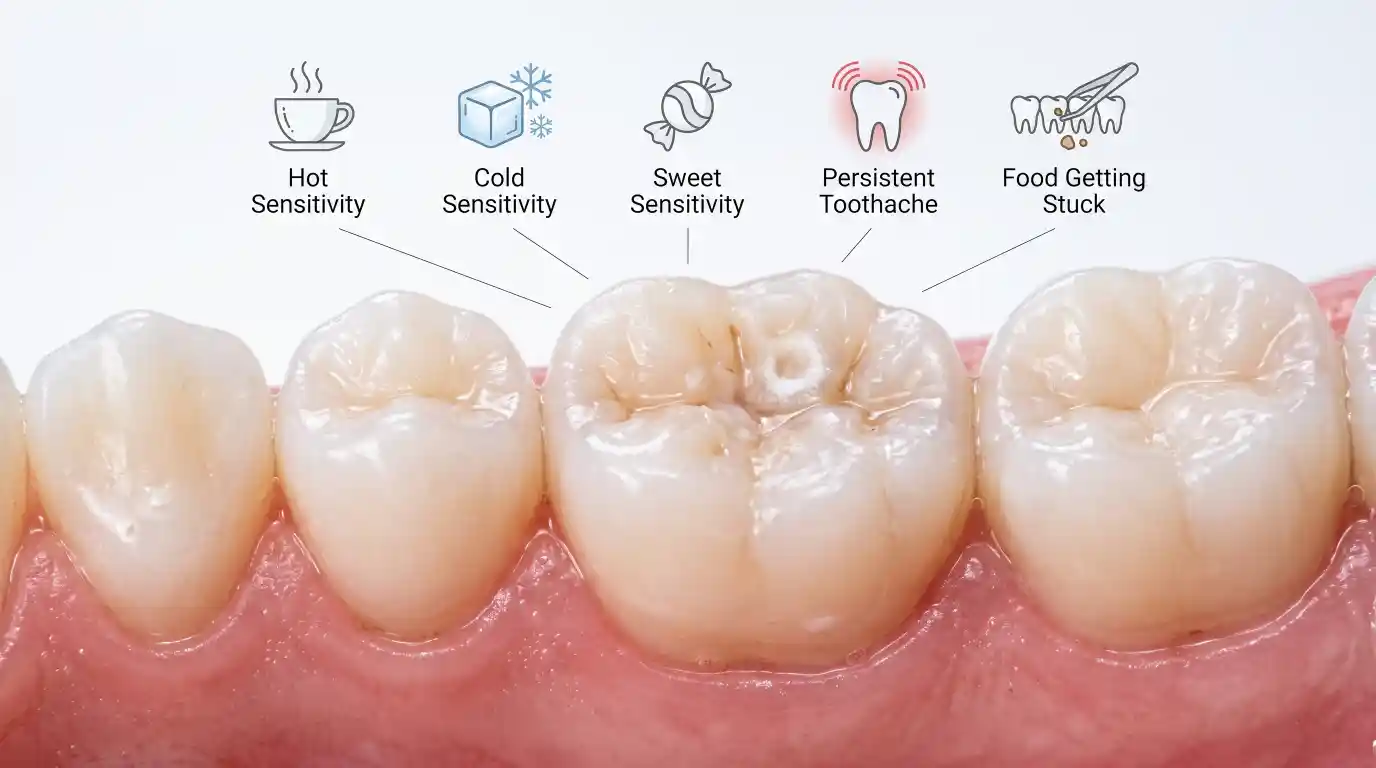
There are several signs that point to a cavity. Some are easy to spot, while others are more subtle and only show up under specific conditions, like eating something cold or sweet.
Tooth Sensitivity to Hot, Cold, or Sweet Foods
One of the earliest signs of a cavity is a quick, sharp reaction to hot coffee, cold ice cream, or sugary snacks. This happens because decay has worn a path close enough to the nerve that outside temperatures and sugar can reach it more easily than they would through healthy enamel.
Persistent Toothache or Pain When Biting
Pain that shows up on its own, without any trigger, or pain that happens specifically when you bite down, often points to a cavity that has grown past the enamel. This kind of pain tends to come and go at first, then becomes more constant as decay spreads deeper into the tooth.
White, Brown, or Black Spots on the Tooth
Cavities often show up as discoloration before they become a full hole. A white spot can be an early sign of enamel breaking down. Brown or black spots usually mean the decay has been active for a longer period of time.
Visible Holes or Pits
In more advanced cases, you might actually be able to see or feel a small hole or pit in the tooth. This is a clear sign that decay has progressed and needs attention from a dentist soon.
Food Constantly Getting Stuck in One Spot
If food keeps getting trapped in the same place every time you eat, it could mean a cavity has created a gap or rough edge where food can collect. This is especially common between teeth or along the back molars.
Bad Breath or a Bad Taste in Your Mouth
Bacteria buildup from a cavity can lead to bad breath that doesn’t go away with brushing, or a strange, unpleasant taste that lingers in your mouth. This happens because bacteria are actively breaking down tooth material in that spot.
Rough, Chipped, or Weak Tooth Surface
Decay can weaken a tooth’s structure, causing the surface to feel rough with your tongue or making the tooth more likely to chip or crack under normal pressure, like chewing.
What Does a Cavity Feel Like at Different Stages?
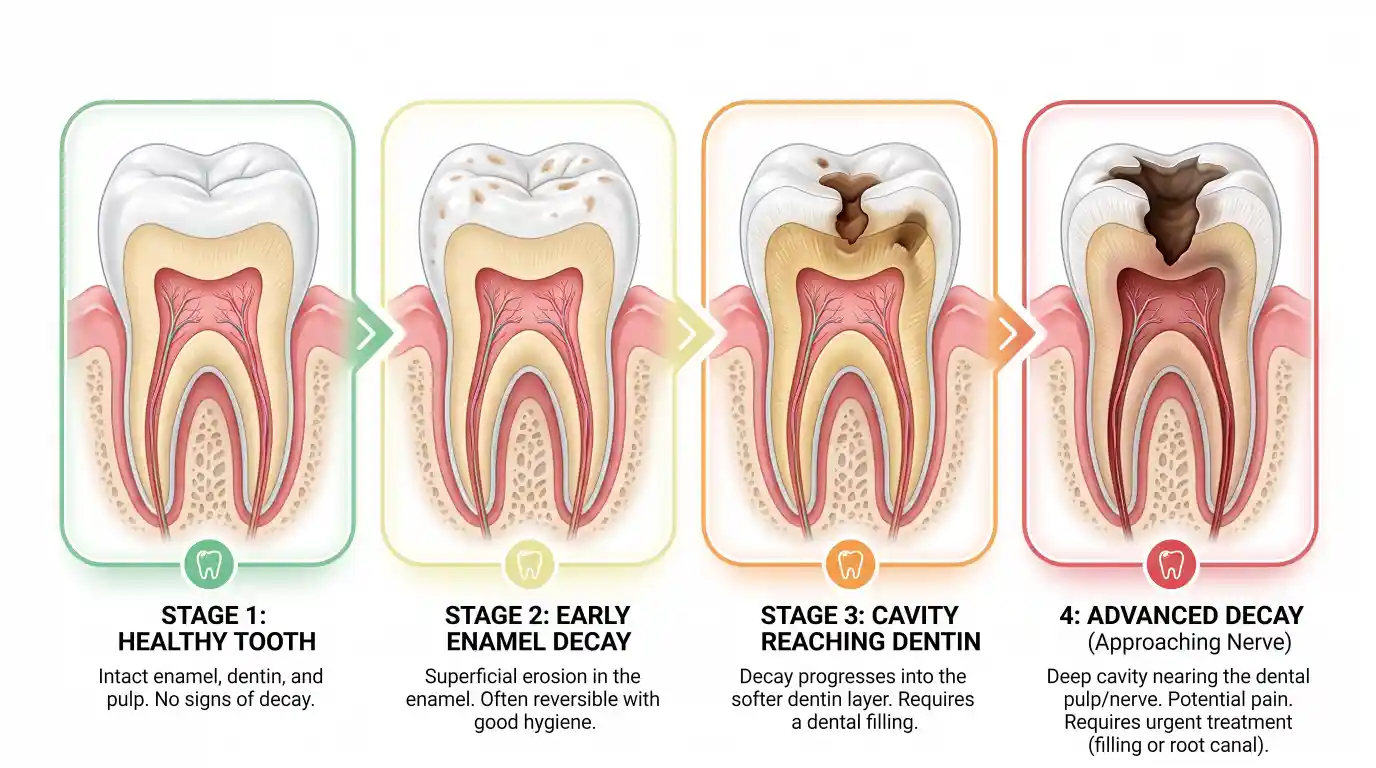
Cavities don’t feel the same at every point. Understanding the stages can help you figure out how far along the decay might be. At this point, you might not feel anything at all. Some people notice mild sensitivity to cold drinks or sweets, but it passes quickly and isn’t painful enough to worry about right away.
As decay reaches the dentin layer, sensitivity becomes more noticeable and lasts longer after eating or drinking something hot or cold. Once decay reaches the pulp, pain tends to be sharp, constant, or throbbing. It might wake you up at night or become worse when you lie down. This stage often requires more involved treatment, like a root canal.
Cavity vs. Tooth Sensitivity: How to Tell the Difference
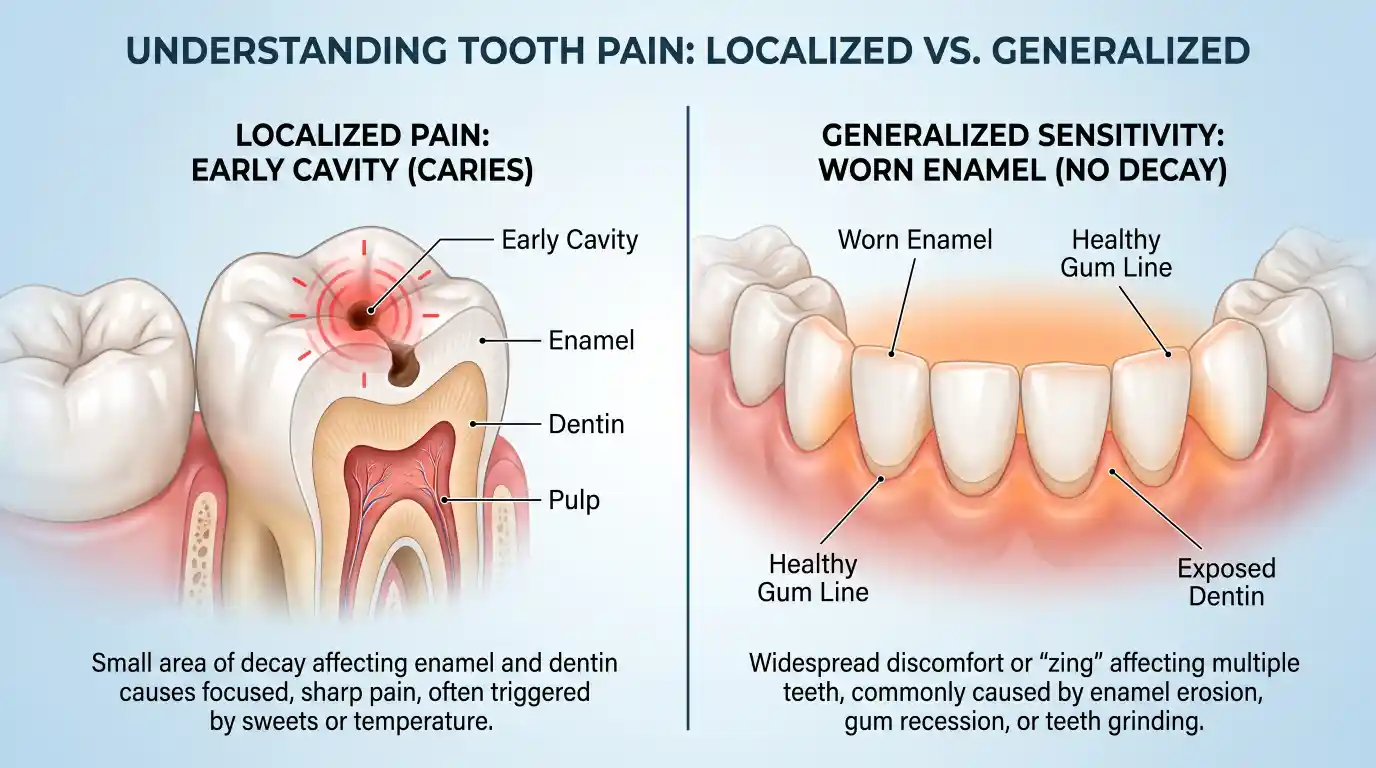
Cavities and tooth sensitivity can feel similar, but a few key differences can help you tell them apart.
Similar symptoms Both cavities and general tooth sensitivity can cause discomfort with hot, cold, or sweet foods, which makes it easy to confuse the two.
Key differences: Cavity pain usually happens in one specific tooth and gets worse over time. General sensitivity, on the other hand, often affects several teeth at once and tends to stay about the same instead of gradually worsening.
When sensitivity is not a cavity, sensitivity without decay can come from worn enamel, gum recession, teeth grinding, or a cracked filling. If sensitivity is spread across multiple teeth rather than focused on one spot, it may not be a cavity at all, but it’s still worth having a dentist check it out.
What Causes Cavities?
Several everyday habits and conditions can lead to cavities forming.
Plaque and Bacteria
Plaque is a sticky film of bacteria that forms on teeth throughout the day. When it isn’t removed through brushing and flossing, it produces acid that damages enamel.
Sugary and Acidic Foods
Sugar feeds the bacteria that cause decay, while acidic foods and drinks, like soda and citrus, wear down enamel directly. Frequent snacking on either one gives bacteria more chances to attack your teeth.
Poor Oral Hygiene
Skipping brushing or flossing lets plaque build up, which raises the risk of cavities forming in hard-to-reach spots.
Dry Mouth
Saliva helps wash away food particles and neutralize acid in your mouth. A dry mouth, whether from medication, dehydration, or a medical condition, means less protection against decay.
Not Getting Enough Fluoride
Fluoride strengthens enamel and helps it resist acid attacks. Without enough fluoride from toothpaste, water, or dental treatments, teeth are more vulnerable to cavities.
Where Do Cavities Usually Start?
The chewing surfaces of back teeth have deep grooves that are hard to clean fully, making them a common spot for decay to begin. Cavities often form between teeth where a toothbrush can’t reach as easily. This is why flossing plays such an important role in prevention.
Decay near the gumline can be harder to spot and is often linked to plaque buildup in that area. Existing fillings can wear down or develop small gaps over time, giving bacteria a new place to start decay around the edges.
Can You Tell If You Have a Cavity at Home?
You can spot some warning signs at home, but only a dental exam can confirm whether you have a cavity.
What you can safely check You can look for visible spots, feel for rough areas with your tongue, and pay attention to sensitivity or pain patterns.
Only a dentist can confirm X-rays and professional tools can catch decay hiding between teeth or under the surface, which you simply can’t see or feel on your own.
Why self-diagnosis isn’t always accurate Some cavities have no symptoms at all in the early stages, and some symptoms that feel like a cavity turn out to be something else entirely, like a cracked tooth or gum issue. A dental exam is the only reliable way to know for sure.
What Happens If You Ignore a Cavity?
A small cavity left untreated grows bigger, which means the filling needed later will be larger and less conservative than it would have been early on. If decay reaches the pulp, a root canal may be needed to remove infected tissue and save the tooth.
In severe cases, damage can become too extensive to repair, leaving extraction as the only option. Untreated decay can lead to a painful infection or abscess, which may require antibiotics and urgent treatment, and can even affect your overall health if left unchecked.
How Cavities Are Treated
For very early stages, fluoride can strengthen enamel and stop decay before it becomes a true cavity. The most common treatment for a standard cavity involves removing the decayed portion and filling the space with a durable material.
When too much of the tooth structure is damaged for a filling, a crown can cover and protect what remains.
For decay that reaches the pulp, this procedure removes the infected tissue while preserving the outer tooth. When a tooth is too damaged to save, removal may be the safest option, often followed by a discussion about replacement options.

How to Prevent Cavities
Brushing twice a day with fluoride toothpaste helps strengthen enamel and remove plaque before it causes damage. Flossing reaches the spaces between teeth that a toothbrush can’t clean, lowering your risk of decay in those tight areas. Cutting back on sugary foods and drinks gives bacteria less fuel to produce the acid that damages enamel.
Water helps rinse away food particles and supports saliva production, both of which protect your teeth throughout the day. Routine checkups catch cavities early, often before you’d notice any symptoms yourself. Sealants add a protective coating to the chewing surfaces of back teeth, making it harder for decay to take hold in those deep grooves.
When Should You See a Dentist?
You should schedule a visit if you notice any of the following:
- Pain lasting more than a day
- Swelling in your face or gums
- Tooth discoloration that wasn’t there before
- A visible hole in a tooth
- Pain when chewing or biting down
- Sensitivity that keeps getting worse instead of better
Waiting on these symptoms rarely makes things better, and early treatment is almost always simpler than treatment after the problem has grown.
Protect Your Smile with U Smile Family Dentistry in Mesa, AZ
Noticing any of these warning signs doesn’t have to mean living with worry or waiting for the pain to get worse. At U Smile Family Dentistry, our Mesa, Arizona team takes the time to look closely at every tooth, catch problems while they’re still small, and walk you through your options with care and honesty.
If something feels off, even a little, it’s always worth getting it checked out early rather than hoping it goes away on its own. Contact us today to schedule a checkup and give your smile the attention it deserves before a small issue turns into a bigger one.
Conclusion
Cavities rarely announce themselves right away. The most common warning signs, sensitivity to hot and cold, discoloration, aching when you bite, and food getting stuck in the same spot, tend to build up gradually before becoming impossible to ignore. Catching these signs early gives you more options and an easier path to treatment.
Don’t wait until pain forces the issue. A simple filling today is almost always easier, faster, and less expensive than the root canal or extraction that untreated decay can lead to down the road. Early dental treatment protects your natural tooth and keeps small problems from turning into bigger ones.
Frequently Asked Questions
How do I know if I have a cavity or just sensitivity?
Cavity pain usually stays focused on one tooth and gets worse over time. General sensitivity often shows up in several teeth at once and stays fairly consistent. If one tooth feels different from the rest, it’s worth getting checked by a dentist to know for sure.
Can a cavity heal without a filling?
Only very early enamel damage, before an actual hole forms, can sometimes be reversed with fluoride and better oral care. Once a true cavity exists, no home remedy can heal it, and it needs professional treatment.
What does an early cavity look like?
Early cavities often show up as a small white spot or chalky patch on the tooth. Over time this can shift to pale yellow or light brown. You may also notice mild sensitivity to cold or sweets, even without real pain yet.
How long can a cavity go untreated?
There’s no safe timeline, since decay doesn’t slow down on its own. A small spot can grow into something needing a root canal or extraction if ignored too long, so it’s best to get it checked as soon as you notice symptoms.
What does cavity pain feel like?
It often starts as a quick, sharp twinge with hot, cold, or sweet foods. As decay deepens, it can turn into a dull, occasional ache, and in advanced stages, a sharp or constant throbbing pain that may even wake you up at night.
Can brushing remove a cavity?
No. Brushing helps prevent cavities by clearing away plaque, but it cannot remove or reverse decay that has already formed. Once damage is done, only a dentist can properly treat it.