
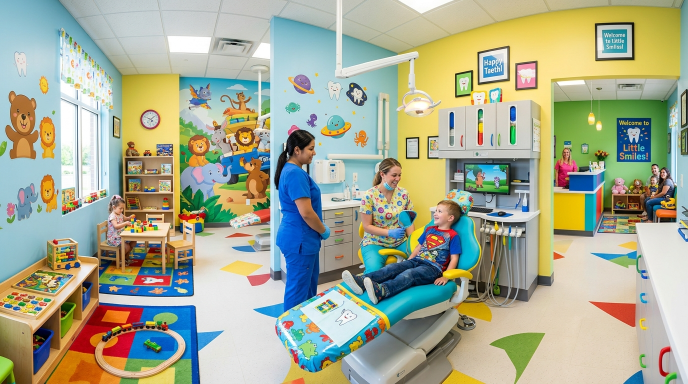
A pediatric dentist is a dental specialist who provides oral health care for infants, children, teenagers, and children with special needs. After dental school, pediatric dentists complete additional training focused on treating young patients and helping them develop healthy teeth and gums. Pediatric dentists use child-friendly techniques and equipment to make visits more comfortable and less stressful.
Children should start dental visits by their first birthday or when their first tooth appears. Early care helps prevent cavities, supports healthy growth, and teaches lifelong oral hygiene habits. If you are in North Mesa, AZ, our team provides gentle, welcoming dental care for children and families across the Mesa area. However, children with serious dental problems or special health needs may need care from a specialist dentist.
What Is a Pediatric Dentist?
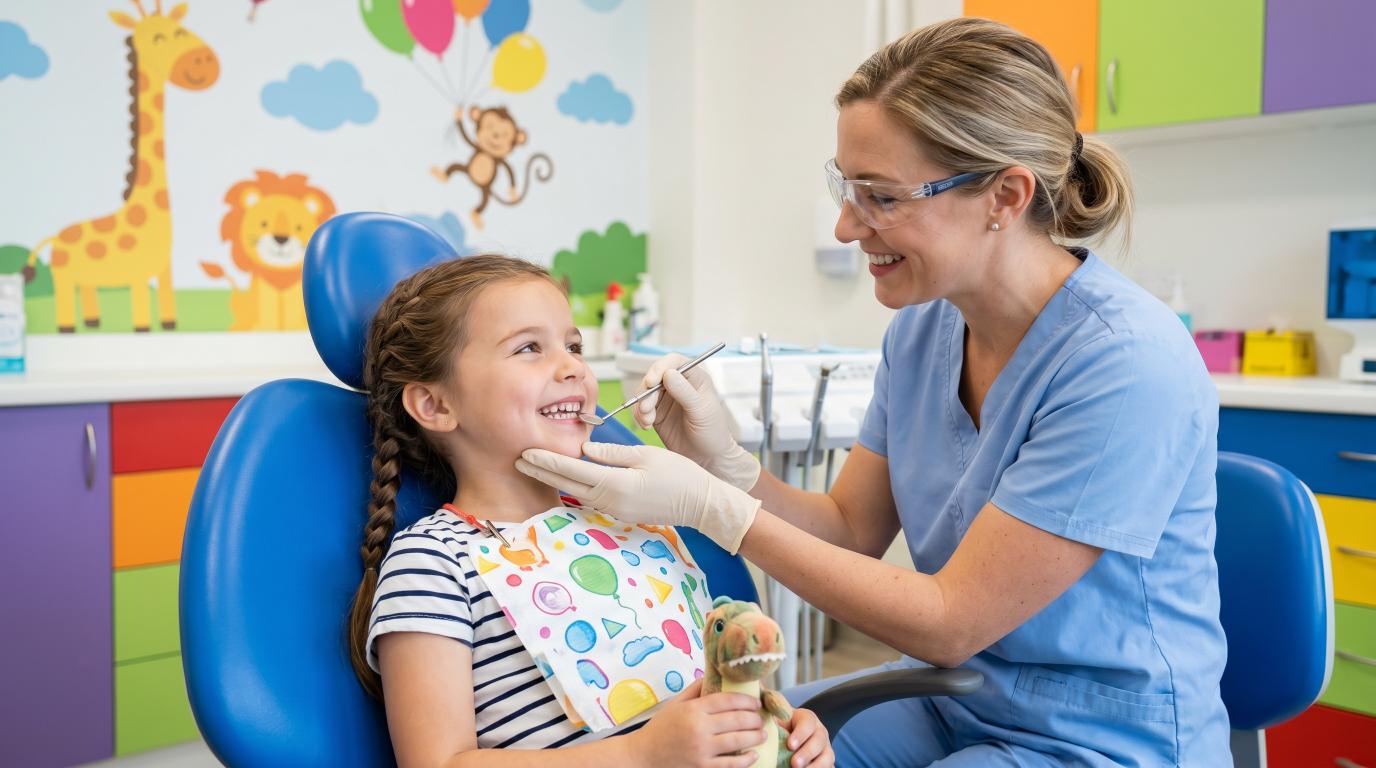
A pediatric dentist, also called a pedodontist, is a dental specialist who cares for the teeth and gums of infants, children, and teenagers, including kids with special healthcare needs. They focus on preventive care, dental treatments, and healthy tooth development from birth through adolescence.
The American Academy of Pediatric Dentistry (AAPD) says pediatric dentistry provides dental care for children from birth through adolescence. Their offices are often designed to help kids feel comfortable and less anxious during dental visits.
What Kind of Training Does a Pediatric Dentist Have?
Pediatric dentists complete additional specialized training after dental school to learn how to care for infants, children, teenagers, and patients with special healthcare needs.
Dental School (4 Years) Like all dentists, a pediatric dentist starts with four years of dental school where they earn their dental degree and learn the foundations of general dentistry.
Specialized Residency (2 to 3 Years) After dental school, they must complete an additional two to three years of residency training focused entirely on treating infants, children, teenagers, and patients with special needs. This is what separates them from a general dentist.
Child Psychology and Behavior Management A major part of their residency is learning how to handle nervous or fearful children. Keeping a child calm and comfortable during treatment is a skill that requires dedicated, hands-on training.
Child Development and Growth Patterns They study how teeth and jaws develop at different ages so they can spot problems early and guide proper growth before it becomes a bigger issue.
Sedation and Nitrous Oxide Training They receive specialized training in sedation techniques and the use of nitrous oxide so they can safely manage anxious or uncooperative young patients during procedures.
Dental Injuries and Common Childhood Conditions They are trained to handle tooth injuries, which are very common in active children, as well as cavities, gum disease, and other oral health issues specific to young patients.
Board Certification After completing the residency, they must pass board exams to become certified by the American Board of Pediatric Dentistry, the highest credential in the field.
What Does a Pediatric Dentist Do?
Pediatric dentists provide a full range of dental services built around the needs of growing children. Their work falls into three main areas: prevention, treatment, and monitoring development.
Preventive Dental Care
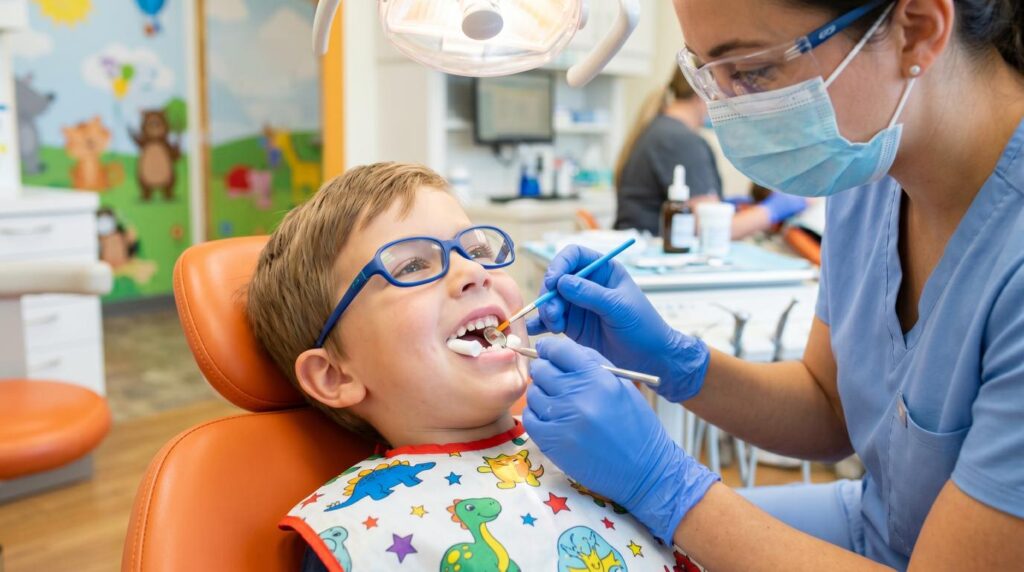
Prevention is the cornerstone of pediatric dentistry. During a routine visit, a pediatric dentist examines your child’s teeth and gums, checks for early cavities, and cleans away plaque that brushing misses. Fluoride treatments strengthen tooth enamel, while dental sealants protect the back teeth where cavities most often form. Both are safe, quick, and proven to reduce decay in kids.
Infant Oral Health Exams
Pediatric dentists recommend an oral health exam by your child’s first birthday or within six months after the first tooth appears. During these early visits, they check the teeth and gums, assess the risk of cavities and guide parents on feeding habits, teething, brushing, and preventing tooth decay. Early exams help identify problems before they become more serious.
Treating Dental Problems
When problems occur, pediatric dentists handle them in ways that work for children. Over 40 percent of children have tooth decay by kindergarten, making it the most common chronic childhood disease. Beyond cavities, they treat tooth infections, gum disease, and dental injuries, including knocked-out teeth, with the extra reassurance and gentle care that children need.
Monitoring Growth and Development
Pediatric dentists track how your child’s mouth develops over time. They monitor baby teeth, watch permanent teeth coming in, check jaw alignment, and spot early orthodontic problems. Catching these issues early can mean a simple fix now instead of expensive treatment later.
Why Is Pediatric Dentistry Important?
Pediatric dentistry plays an important role in protecting a child’s oral health from infancy through the teenage years. Children’s teeth, gums, and jaws are still developing, which means they need specialized care that addresses their unique needs at every stage of growth. Regular visits to a pediatric dentist help prevent common problems such as cavities, gum disease, and tooth decay before they become more serious and costly to treat.
Pediatric dentists also focus on teaching children and parents good oral hygiene habits, including proper brushing, flossing, and healthy eating choices. Early dental care helps children feel comfortable at the dentist, reducing fear and anxiety that can lead to avoiding dental visits later in life. In addition, pediatric dentists monitor the development of teeth and jaws, allowing them to identify and address potential issues early.
Pediatric Dentist vs General Dentist
| Feature | Pediatric Dentist | General Dentist |
|---|---|---|
| Focus | Specializes in dental care for infants, children, and teenagers | Treats patients of all ages |
| Education | Dental school + 2–3 years of extra training in child dentistry | Dental school (no child-specific specialization required) |
| Patients | Mainly kids (including toddlers and teens) | Kids, adults, and elderly |
| Child Behavior Handling | Trained in managing children’s fear, anxiety, and behavior | Basic experience with children, but not specialized |
| Treatment Approach | Child-friendly techniques, preventive care, growth monitoring | General treatments for all dental problems |
| Common Services | Fluoride treatment, sealants, early orthodontic evaluation, cavity care in kids | Fillings, root canals, crowns, cleanings, extractions |
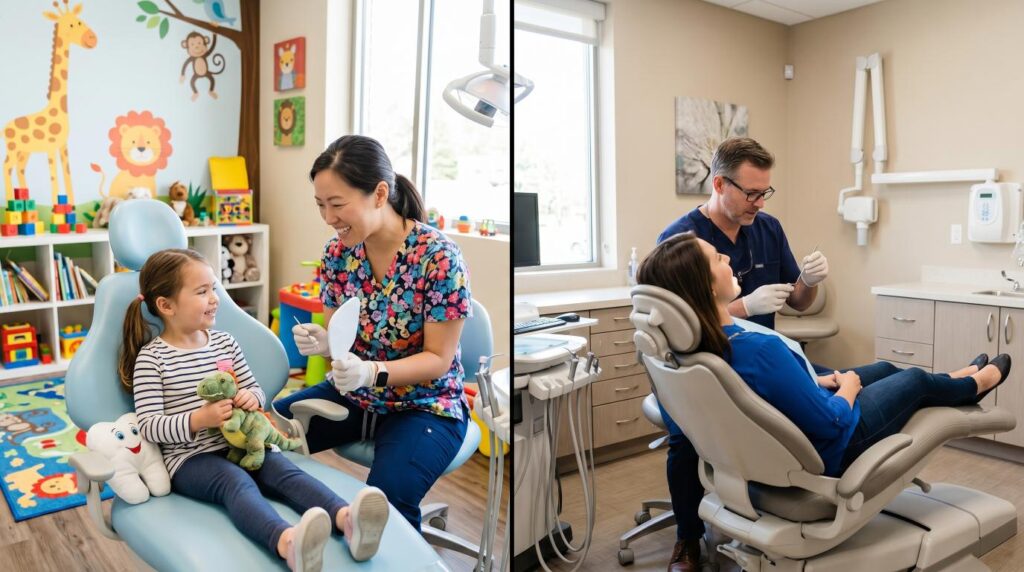
| Clinic Environment | Designed to be kid-friendly (toys, colorful setup) | Standard dental clinic setup |
| Best For | Children with developing teeth or dental anxiety | Routine dental care for the whole famil |
Common Treatments Offered by Pediatric Dentists
Pediatric dentists provide a wide range of preventive, restorative, and specialized treatments designed to support healthy teeth, gums, and oral development throughout childhood.
Preventive Dental Care
Dental cleanings, fluoride treatments, dental sealants, and routine exams help prevent cavities and maintain healthy teeth.
Cavity Treatment and Restorative Care
Dental Fillings, dental crowns, extractions, and space maintainers help restore damaged teeth and support proper tooth development.
Orthodontic Evaluations
Pediatric dentists monitor tooth alignment and bite problems to identify orthodontic issues early.
Sedation Dentistry
Safe sedation options, including nitrous oxide, help anxious children or those needing complex treatment feel comfortable.
Habit Counseling
Pediatric dentists help children stop thumb sucking and prolonged pacifier use, which can affect tooth and jaw development.
Dental Injury Care
They treat chipped, fractured, displaced, and knocked-out teeth caused by falls or accidents.
Gum and Soft Tissue Conditions
Pediatric dentists diagnose and treat gum disease, mouth ulcers, tongue ties, and other soft tissue problems affecting children’s oral health.
Infant Oral Health Exams
Early dental visits help assess cavity risk, monitor development, and educate parents about feeding, teething, and oral hygiene.
Signs Your Child May Need a Pediatric Dentist
- Tooth pain or sensitivity.
- Visible spots, holes, or cavities on the teeth.
- A tooth that should have erupted has not come in.
- Avoiding certain foods because of pain or discomfort.
- Thumb sucking or pacifier use beyond age 3.
- Dental anxiety or a previous bad dental experience.
- Broken, chipped, or injured teeth.
- Persistent bad breath or swollen gums.
- Teeth grinding or bite problems.
- Physical, developmental or special healthcare needs requiring specialized dental care.
How to Choose the Right Pediatric Dentist
Choosing the right pediatric dentist starts with checking qualifications. Look for a dentist who has completed an accredited pediatric residency and is board-certified, which means they have met rigorous standards specifically for treating children. A child-friendly space with bright colors, toys, and staff who speak directly to kids helps lower anxiety and makes visits easier for everyone.
Reading parent reviews online gives you a real picture of what to expect, especially how the staff handles nervous children and whether parents felt heard. Ask about emergency care as well, since dental accidents happen at any time and you need to know how the practice responds outside regular hours. Even the best dentist becomes impractical if they are too far away or unavailable when you need them.

When Should a Child First Visit a Pediatric Dentist?
Many parents assume that baby teeth do not really matter because they fall out anyway. But baby teeth play a crucial role in your child’s development. When baby teeth decay and fall out too early, it can cause long-term problems with how the permanent teeth come in.
The first appointment is usually short and relaxed. The dentist will count your child’s teeth, check the gums, look at the bite, and talk to you about feeding habits, teething, and proper oral hygiene for toddlers. It is as much a parent education visit as it is a dental checkup. Starting early also helps your child get comfortable with the dental environment before any anxiety has a chance to build up.
Ready to find a pediatric dentist for your child?
At U Smile Family Dentistry, we make every child’s visit comfortable, fun, and stress-free. Our North Mesa dental office serves families across Mesa, Gilbert, San Tan Valley, and surrounding areas. Early visits are quick, easy, and make all the difference for your child’s long-term oral health. Contact us and take the first step toward protecting your child’s smile for life.
Conclusion
A pediatric dentist is specially trained to care for children’s teeth, gums, and oral development from infancy through the teenage years.Beyond routine cleanings and cavity treatment, pediatric dentists are experienced in managing dental emergencies, guiding proper oral habits, and providing care for children with special health needs.
Knowing what pediatric dentistry involves helps parents make informed decisions about their child’s oral health. Starting regular dental visits early can prevent problems, support healthy development, and give children the foundation for strong teeth and healthy smiles for life.
Frequently Asked Questions
At what age should my child see a pediatric dentist?
Your child should have their first dental visit by their first birthday or within six months of their first tooth appearing. Starting this early helps establish healthy habits, gives the dentist a baseline for tracking development, and gets your child comfortable with dental visits before anxiety can form.
Are baby teeth really important?
Baby teeth help children chew food properly, support speech development, and hold space in the jaw for permanent teeth. When baby teeth are lost too early due to decay or injury, it can cause permanent teeth to come in crooked or crowded.
How often should children visit the dentist?
Most children should see a pediatric dentist every six months for a routine exam and cleaning. Some children with a higher risk of tooth decay or specific dental issues may need more frequent visits. Your pediatric dentist will recommend the schedule that makes the most sense for your child’s individual situation.
Can pediatric dentists treat teenagers?
Pediatric dentists typically treat patients from birth through age 18. Many continue treating teenagers, especially those who have grown up in the practice and have a trusted relationship with the dentist. The transition to an adult dentist usually happens gradually, often around the late teenage years.
Is pediatric dental care covered by insurance?
Most dental insurance plans include coverage for children’s preventive care such as exams, cleanings, and X-rays. Medicaid and CHIP programs in the United States provide dental coverage for eligible children. Always check with your specific plan and ask the dental office about insurance acceptance before scheduling.