
Most dental experts, including the American Academy of Pediatric Dentistry, recommend that a child should see a pediatric dentist by their first birthday or within six months after the first tooth appears, whichever comes first. This early visit helps ensure healthy tooth and gum development and allows early detection of any problems.
Even if your child’s teeth look fine, an early visit is still important. It focuses on prevention, guidance, and building healthy habits from the start. For families in Mesa, AZ, it’s an important step in supporting long-term oral health and helping children feel comfortable at future dental visits.
Signs Your Child Needs a Pediatric Dentist Early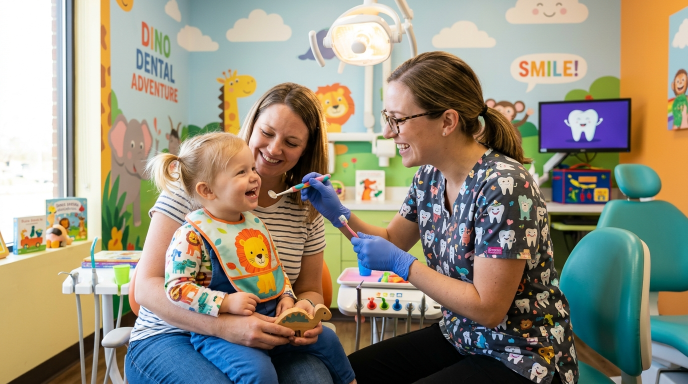
Beyond regular checkups, some signs mean you should not wait for the next appointment and should see a pediatric dentist sooner.
Tooth Pain or Sensitivity
If your child complains of a toothache, avoids certain foods, cries while eating something hot or cold, or chews only on one side, it may indicate a problem. Young children often cannot explain pain clearly, so watch their eating habits. Ongoing discomfort may signal cavities, infection, or pressure from an erupting tooth.
White, Brown, or Dark Spots on Teeth
Any spots on teeth should not be ignored. White spots are often an early sign of enamel weakening and decay. Brown or black spots usually mean cavities are already forming. Discoloration can also indicate enamel defects or past injury. Early treatment is important because decay spreads quickly in baby teeth.
Gum Swelling or Bleeding
Occasional bleeding from brushing too hard can happen, but frequent bleeding or swollen gums is not normal. It may be a sign of early gum disease, plaque buildup, or infection. If swelling continues, a dental check is needed.
Persistent Bad Breath
Bad breath that does not go away after brushing may point to tooth decay, gum issues, or mouth breathing. In some cases, it can even be caused by a foreign object stuck in the nose or mouth. A dentist can identify the exact cause.
Delayed or Irregular Tooth Eruption
Most children have a full set of baby teeth by age three. If teeth are delayed, missing, or coming in at unusual angles, it should be evaluated. This helps rule out developmental or alignment issues early.
Dental Injury or Trauma
Any injury to the mouth should be checked, even if the tooth looks fine. Hidden damage can exist below the gumline. If a tooth is knocked out, keep it in milk or saline and see a dentist immediately preferably within an hour.
Difficulty Chewing or Jaw Discomfort
If your child avoids chewing, complains of jaw pain, or shows clicking sounds while opening their mouth, it may indicate bite problems or jaw development issues. Early treatment can prevent more serious alignment problems later.
What Happens During a Child’s First Dental Visit?
Understanding the first visit can help reduce anxiety for both parents and children. It is usually simple, gentle, and focused on prevention.
Gentle Oral Examination
The dentist will gently check your child’s teeth, gums, bite, jaw, and soft tissues inside the mouth. For very young children, the exam may be done while sitting in a parent’s lap. The process is quick, calm, and designed to keep the child comfortable.
Cleaning and Fluoride Treatment (If Needed)
Depending on your child’s age and oral health, the dentist may perform a light cleaning and apply fluoride varnish. Fluoride helps strengthen teeth and protect against early cavities. For most infants and toddlers, this step is fast and painless.
Parent Education on Oral Hygiene and Habits
A large part of the first visit is focused on guiding parents. The dentist explains how to brush properly, how much toothpaste to use, when to start flossing, and how diet affects teeth. They also discuss habits like bottle feeding at night, pacifier use, and thumb sucking. You leave with clear, practical advice for daily care.
How Often Should Children Visit a Pediatric Dentist?
Regular dental visits are important for keeping your child’s teeth healthy and preventing problems early.
Standard 6-Month Dental Checkups
Most children should visit a pediatric dentist every six months. These routine visits help detect problems early, clean the teeth, apply preventive treatments, and monitor how the teeth and jaws are developing over time.
More Frequent Visits for High-Risk Children
Some children may need more frequent visits, usually every three to four months. This is recommended for children who get cavities easily, eat a lot of sugary foods, have weak enamel, or are in orthodontic treatment. Your dentist will decide the best schedule based on your child’s needs.
What Does a Pediatric Dentist Do?
A pediatric dentist is trained to manage all aspects of a child’s oral health, from infancy through the teenage years. Their focus is both preventing problems and treating them in a child-friendly way.
Preventive Treatments (Cleanings, Fluoride, Sealants)
Prevention is the main focus of pediatric dentistry. Regular cleanings remove plaque and buildup that brushing at home may miss. Fluoride treatments help strengthen tooth enamel and reduce the risk of cavities. Sealants are thin protective coatings applied to the back teeth to block decay in deep grooves where food and bacteria often get trapped.
Restorative Treatments (Fillings, Crowns, Extractions)
When problems do occur, pediatric dentists repair damaged teeth using fillings, crowns, or extractions if necessary. Fillings treat small cavities, while crowns are used for more severe decay. Tooth extraction is only done when a tooth cannot be saved or needs removal for proper dental alignment. The goal is always to save the natural tooth whenever possible.
Growth and Development Monitoring
At every visit, the dentist monitors how your child’s teeth and jaws are developing. They check tooth eruption patterns, spacing, and bite alignment. Early detection of orthodontic issues can make future treatment easier and more effective.
Emergency Dental Care
Pediatric dentists also handle urgent dental problems such as injuries, infections, or knocked-out teeth. They can provide immediate treatment and use calming techniques or sedation if a child is anxious or unable to cooperate during care.
What Happens If You Delay Dental Visits?
Delaying dental visits is not harmless. It can lead to serious oral health problems that become more painful and harder to treat over time.
Early Childhood Cavities and Rapid Tooth Decay
Tooth decay is the most common chronic disease in children and is more common than asthma. Early childhood cavities can spread quickly because baby teeth have thinner enamel than adult teeth. Without early treatment, a child may need extensive dental work or even sedation to treat multiple teeth at once.
Pain, Infection, and Tooth Loss
Untreated cavities do not stop on their own, they get worse. They can reach the nerve, cause severe pain, and lead to infections or abscesses. In some cases, the tooth may be lost too early. This can affect eating, comfort, and proper development of permanent teeth.
Impact on Speech and Jaw Development
Healthy baby teeth are important for speech development. Missing or damaged front teeth can make it harder for children to pronounce certain sounds like “s,” “th,” and “f.” Early tooth loss can also shift nearby teeth, affecting jaw growth and bite alignment.
Long-Term Dental and Orthodontic Problems
Children who don’t receive early dental care are more likely to develop complex orthodontic issues later. Problems like crowding, bite misalignment, and jaw imbalance become harder to correct over time. Early checkups help detect these issues early and reduce the need for extensive treatment in the future.
How to Prepare Your Child for Their First Dental Visit
Describe the visit in simple, neutral terms. “The dentist is going to look at your teeth and count them” is far better than anything that hints at discomfort. Avoid words like “hurt,” “needle,” or “drill” ; let the dental team introduce their own child-friendly language for their tools and procedures.
Preparing with Books, Videos, or Role Play
There are many children’s books and short videos designed to introduce dental visits in a friendly way. Reading one together before the appointment helps normalize the experience. You can also play “dentist” at home counting teeth with a toothbrush makes the idea familiar and even fun.
Choosing the Right Appointment Time
Schedule morning appointments whenever possible. Young children are at their most cooperative and alert earlier in the day. Avoid scheduling during nap time or at the end of a long day when patience is thin.
Comfort Items to Reduce Anxiety
Let your child bring a favorite toy, stuffed animal, or blanket. Having something familiar in an unfamiliar setting provides real comfort. Most pediatric dental offices are well equipped with distractions but a beloved toy makes any waiting room easier.
Healthy Habits for Strong Pediatric Dental Health
Good daily habits play a big role in preventing cavities and keeping your child’s teeth healthy.
Proper Brushing and Flossing Routine
Children should brush their teeth twice a day, once in the morning and once before bed using an age-appropriate amount of fluoride toothpaste. Most kids need help with brushing until around age 7 or 8. Flossing should start as soon as two teeth touch to remove food and plaque between them.
Healthy Diet and Sugar Control
Sugar is one of the main causes of tooth decay. Limiting sugary snacks, juices, and sweet drinks especially between meals can greatly reduce cavity risk. Water and milk are the best options for dental health. If sweets are eaten, it is better to have them with meals instead of frequent snacking.
Avoiding Bottle Feeding at Night
Putting a baby or toddler to sleep with a bottle of milk, formula, or juice can lead to early tooth decay. The liquid stays in the mouth during sleep and feeds bacteria for hours. If a bottle is needed at bedtime, plain water is the safest choice.
Managing Pacifier and Thumb-Sucking Habits
Pacifier use and thumb-sucking are normal in early childhood, but prolonged habits after age 2–3 can affect tooth and jaw development. They may cause misalignment or bite problems. A pediatric dentist can guide parents on how to gradually reduce these habits safely.
When Should a Child Stop Seeing a Pediatric Dentist?
There is no fixed age when a child must stop seeing a pediatric dentist. The transition depends on the child’s development, needs, and comfort level.
Typical Transition Age (18–21 Years)
Most patients transition from pediatric dentistry in their late teens or early twenties. Many pediatric dentists continue treating patients through high school and sometimes into early adulthood, depending on their practice.
When to Switch to a General Dentist
A child is usually ready to move to a general dentist when they can independently manage their oral health and make routine dental care decisions. This often happens after orthodontic treatment is completed and wisdom teeth have been evaluated or addressed.
Special Cases for Continued Pediatric Care
Some individuals benefit from staying with a pediatric dentist longer. This is common for patients with developmental disabilities, anxiety, or complex medical conditions. In these cases, the familiar environment and specialized care approach can make dental treatment easier and less stressful.
Book Your Pediatric Dental Visit in Mesa, AZ Today
Protect your child’s smile with gentle, expert care at U Smile Family Dentistry. Early dental visits help prevent cavities, build healthy habits, and support proper growth and development. Our friendly team in Mesa, AZ is committed to making every visit comfortable and stress-free for both you and your child. Whether it’s a first visit or a routine checkup, we provide personalized care every step of the way. Book your child’s appointment today and give them a strong, healthy foundation for a lifetime of confident smiles.
Conclusion
Knowing when to see a pediatric dentist is one of the most important steps in protecting your child’s long-term oral health. The first visit should happen by age one or within six months of the first tooth, and regular checkups every six months help prevent problems before they start. Early care is not just about treating teeth, it is about guiding healthy habits, preventing cavities, and supporting proper growth and development.
By staying alert to early warning signs and maintaining good daily oral habits, parents can help ensure their child grows up with a healthy, confident smile. If you are in Mesa, AZ, starting early with a trusted pediatric dentist can make a lasting difference in your child’s dental health journey.
Frequently Asked Questions
When should my child first see a pediatric dentist?
Most experts recommend the first visit by age one or within six months after the first tooth appears, whichever comes first.
What if my child has no teeth yet?
Even if no teeth have erupted, an early dental visit is still important to check oral development and guide parents on proper care.
How often should children visit a pediatric dentist?
Most children should visit every six months, while those at higher risk for cavities may need more frequent visits every 3–4 months.
Are baby teeth really important if they fall out anyway?
Yes, baby teeth are essential for chewing, speech development, and holding space for permanent teeth. Early loss can lead to alignment issues later.
What should I expect at my child’s first dental visit?
The first visit is usually simple and gentle, including an oral exam, possible cleaning or fluoride treatment, and guidance for parents on brushing, diet, and oral habits.