
Yes, dental bonding looks remarkably natural when performed by an experienced cosmetic dentist. The tooth-colored composite resin used in bonding is carefully selected to blend seamlessly with your natural enamel, creating a virtually unnoticeable restoration. Through precise color matching, artistic sculpting, and professional finishing techniques, dental bonding can enhance your smile while maintaining a completely natural appearance.
Many patients in Mesa, AZ still wonder whether bonding will look obvious in certain lighting, show in photos, or feel different from their natural teeth. Understanding the materials, techniques, and factors that influence the final result can help you feel more confident about your decision. Below, we’ll explore exactly how dental bonding achieves its natural look and what you can expect from the results.
Why Many Patients Worry About Dental Bonding Looking Fake
One of the biggest concerns patients have about cosmetic dentistry is the fear of obvious dental work. Many worry that dental bonding might not match their natural tooth color or could appear bulky, overly white, or artificial. These concerns often come from seeing poorly done bonding that looks chalky or uneven.
In reality, the natural appearance of dental bonding depends largely on the dentist’s skill and the quality of the materials used. When performed by an experienced cosmetic dentist who understands tooth anatomy, shade matching, and contouring, bonding is designed to blend seamlessly and remain virtually undetectable.
How Dental Bonding Is Designed to Look Natural
Modern dental bonding has evolved into a sophisticated cosmetic procedure that incorporates multiple techniques specifically designed to replicate the complex appearance of natural teeth.
Precise Color Matching and Shade Selection
Natural-looking dental bonding starts with accurate shade selection. Dentists use detailed shade guides and evaluate your teeth under proper lighting to ensure the composite resin matches your surrounding enamel. Because natural teeth aren’t a single flat color, a skilled provider may use subtle shade blending to recreate natural depth and prevent a chalky or overly white appearance.
Layering to Mimic Natural Enamel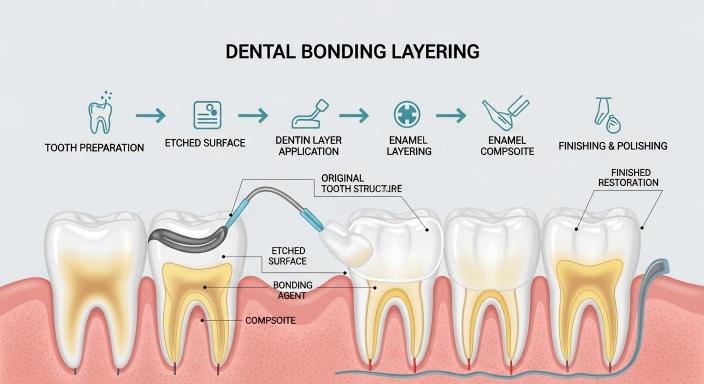
Teeth have depth and translucency, not a solid uniform color. To replicate this, dentists apply composite resin in thin layers, mimicking the structure of natural enamel and dentin. This layering technique allows the bonded tooth to reflect light similarly to adjacent teeth, creating a more realistic, enamel-like finish.
Artistic Sculpting and Contouring
Color alone isn’t enough — shape matters just as much. A cosmetic dentist carefully sculpts and contours the resin to match the natural curves, edges, and proportions of your tooth. Attention to details like the incisal edge and surface texture ensures the bonding looks balanced and harmonious within your smile.
Professional Polishing for a Seamless Finish
The final step is polishing the bonded surface to achieve a smooth, glossy finish similar to natural enamel. Proper polishing enhances light reflection and prevents the restoration from appearing dull, helping the bonding blend in virtually undetectably.
Is Dental Bonding Noticeable in Real-Life Situations?
One of the most pressing questions patients have is whether their dental bonding will be visible in everyday situations. The good news is that high-quality dental bonding is virtually undetectable in all typical social settings.
During close conversations, well-executed bonding blends seamlessly with surrounding enamel, making it difficult to distinguish from natural teeth. In photos even with flash properly matched composite resin reflects light similarly to enamel, maintaining a consistent appearance. Natural sunlight, often the most revealing type of lighting, also does not expose professionally done bonding.
That said, results depend heavily on the dentist’s technique. Bonding that is poorly color-matched or improperly contoured may appear noticeable, which is why choosing an experienced cosmetic provider is essential.
What Factors Determine How Natural Dental Bonding Looks?
Several critical factors work together to create an authentic result:
Cosmetic dentist experience is perhaps the single most important factor. Dental bonding is a highly technique-sensitive procedure requiring both technical skill and artistic judgment. Experience translates directly into more natural-looking results.
Tooth location significantly influences the final appearance. Front teeth require the highest level of artistry and have more translucency than back teeth, making color matching more challenging.
The size of restoration matters considerably. Small repairs are generally easier to blend seamlessly, while larger bonding applications require more skill to maintain a natural appearance.
Underlying tooth color can affect the final result, particularly with severely discolored teeth. Extremely dark underlying tooth structure may require more opaque materials or multiple layers.
The quality of composite resin makes a substantial difference in both immediate appearance and long-term aesthetics. Higher-quality materials offer better color stability, superior polish ability, and more realistic optical properties.
Patient habits including coffee, tea, red wine consumption, and smoking can all affect how natural bonding looks over time. These lifestyle factors can cause gradual discoloration that makes the restoration more noticeable.
When Might Dental Bonding Look Less Natural?
While dental bonding can achieve excellent results, certain circumstances might make it appear less natural:
Poor color blending occurs when insufficient time is spent on color-matching or when the dentist lacks cosmetic experience. Bonding that’s significantly whiter than natural teeth becomes more noticeable over time.
Staining over time is a natural process affecting composite bonding. Does bonding stain? Yes, composite materials can absorb pigments over time, though modern materials are more resistant. Does dental bonding turn yellow? It can develop a yellowish or brownish tint over several years, especially without proper maintenance.
Large repairs involving significant portions of a tooth present greater challenges for achieving natural results. When bonding covers most of a tooth’s visible surface, creating subtle color variations and translucency patterns is more difficult.
Rough edges or inadequate blending at margins where bonding meets natural tooth structure can make restoration obvious. Proper feathering and polishing of these transition areas is essential.
Low-quality materials compromise aesthetic results from the start, with inadequate color options, poor polish ability, or optical properties that don’t mimic natural enamel.
Dental Bonding Before and After: What Results Are Realistic?
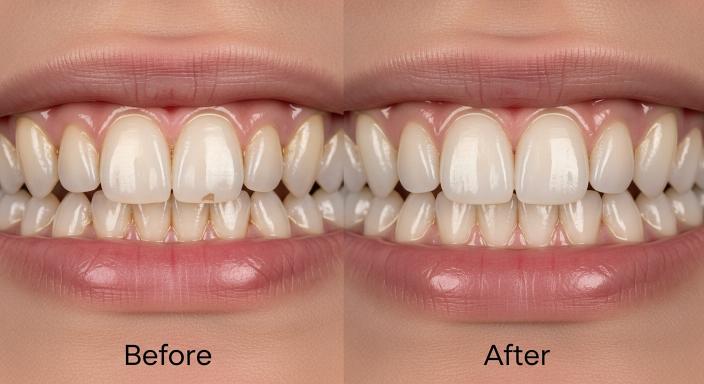
Understanding what dental bonding can realistically achieve helps set appropriate expectations. Dental bonding before and after results are most successful for:
Minor chips can be seamlessly repaired with bonding, restoring natural tooth contour. The repair is often completely invisible when color, translucency, and texture match surrounding enamel.
Small gaps between teeth respond beautifully to bonding. The procedure closes spaces by adding composite material to adjacent teeth, creating smile enhancement that looks so natural people assume teeth always looked that way.
Uneven edges resulting from natural wear or minor trauma can be corrected to create a more harmonious smile line. Successfully bonded edges should have appropriate translucency and realistic texture.
Discoloration correction is possible with bonding, though with limitations. Bonding can cover yellowed or slightly discolored teeth, but severely discolored teeth may achieve more natural results with porcelain veneers.
Dental Bonding vs Veneers: Which Looks More Natural?
The question of bonding or veneers often arises when considering cosmetic treatment:
Porcelain veneers have exceptional translucency characteristics that very closely replicate how light passes through natural enamel. This translucency comparison favors veneers, particularly for front teeth.
The thickness difference affects both procedure and final appearance. Veneers require removing enamel to accommodate porcelain shells, while bonding typically requires little or no tooth preparation.
Stain resistance is notably better with porcelain veneers. Porcelain is non-porous and resists staining much more effectively than composite resin, maintaining its appearance more consistently over time.
For long-term aesthetics, porcelain veneers generally maintain their natural appearance longer than bonding. Veneers typically last 10-15 years while maintaining color and luster, whereas bonding may show staining after 5-7 years.
How Long Does Dental Bonding Stay Natural Looking?
The lifespan of composite bonding’s natural appearance averages 5-10 years, though individual results vary significantly. Some bonding may show signs of wear or staining after three to four years, while other cases look excellent for a decade or longer.
Maintenance tips can significantly extend how long bonding looks natural. Regular professional cleanings help remove surface stains, and hygienists can polish bonding during visits to restore original luster.
Polishing appointments specifically for composite bonding can refresh the polish and address minor imperfections between regular cleanings, adding years to aesthetic lifespan.
Replacing dental bonding eventually becomes necessary when restoration has stained significantly or no longer blends with natural teeth. The good news is replacement is straightforward—the dentist removes old composite without damaging natural tooth structure and applies fresh bonding.
How long does bonding last from an aesthetic perspective may differ from its functional lifespan. Being proactive about replacement when appearance begins to decline ensures your smile always looks its best.
How to Keep Your Dental Bonding Looking Natural
Avoid staining foods and beverages, or minimize their contact with bonded teeth. Coffee, tea, red wine, dark sodas, berries, and curry all have staining potential. Rinsing your mouth with water after consuming them helps.
Professional cleanings every six months are essential for maintaining bonding appearance. Dental hygienists can remove surface stains and restore shine to composite bonding without damaging it.
Good oral hygiene benefits both natural teeth and bonding. Brush twice daily with non-abrasive toothpaste, as overly abrasive products can dull composite bonding. Floss daily, being gentle around bonded areas.
Avoid biting hard objects such as ice, hard candy, pens, or fingernails. Composite bonding is more susceptible to chipping than natural enamel. If you play contact sports, wear a protective mouthguard. If you grind teeth, discuss a nightguard with your dentist.
Is Dental Bonding the Right Cosmetic Option for You?

Dental bonding is an excellent choice for patients seeking a minimally invasive way to improve their smile. Unlike veneers, which require enamel removal, bonding involves little to no alteration of the natural tooth structure. The composite resin is applied directly to the tooth surface, making the procedure conservative and, in many cases, reversible.
It’s also a more affordable cosmetic option compared to treatments like porcelain veneers or crowns, making subtle smile enhancements accessible without a major financial commitment. Most bonding procedures are completed in a single visit, typically taking 30 to 60 minutes per tooth, so you can leave the office with immediate results.
Because bonding is performed chairside, your dentist can adjust the color, shape, and contour in real time to ensure natural-looking results. It’s best suited for minor to moderate concerns such as small chips, gaps, uneven edges, or discoloration. A consultation with an experienced cosmetic dentist will help determine whether dental bonding is the right solution for your goals.
Schedule Your Dental Bonding Consultation in Mesa, AZ
Ready to enhance your smile with natural-looking dental bonding in Mesa, AZ? Schedule your consultation today and let our experienced cosmetic team create seamless, confident results tailored just for you. Call now or book your appointment online to get started.
Conclusion
So, does dental bonding look natural? In most cases, yes — when performed by an experienced cosmetic dentist using high-quality materials and precise techniques, dental bonding blends seamlessly with natural enamel. From accurate shade matching to careful sculpting and polishing, every step is designed to create a restoration that looks and feels like a natural part of your smile.
While factors like dentist skill, material quality, and long-term maintenance influence the final result, well-executed bonding is virtually undetectable in everyday life. If you’re considering cosmetic improvement, scheduling a consultation can help you determine whether dental bonding is the right solution for achieving a natural, confident smile.
Frequently Asked Questions
Can dental bonding look fake?
Dental bonding can look unnatural if it is poorly color-matched or improperly shaped. However, when performed by an experienced cosmetic dentist, bonding is carefully blended and contoured to match surrounding teeth, making it virtually unnoticeable.
Does dental bonding stain or turn yellow?
Composite bonding can absorb stains over time, especially from coffee, tea, red wine, or smoking. With proper oral hygiene, regular cleanings, and occasional polishing, staining can be minimized and appearance maintained.
Is dental bonding noticeable on front teeth?
When done correctly, dental bonding on front teeth looks very natural. Skilled dentists use layering and sculpting techniques to replicate enamel translucency and ensure seamless blending.
How long does dental bonding stay natural looking?
Most dental bonding maintains its natural appearance for 5 to 10 years. Longevity depends on oral habits, material quality, and routine dental maintenance.
Is dental bonding as natural-looking as veneers?
For minor cosmetic concerns, bonding can look extremely natural. Porcelain veneers may offer superior translucency and longer-lasting stain resistance, but bonding provides a conservative and effective option for subtle smile enhancements.