

Yes, whitening strips work for many people with mild to moderate tooth stains. Most strips use peroxide to break down colored stain molecules in natural teeth. When used as directed, they can make teeth look lighter over several days or weeks. Results depend on the stain type, product strength, tooth color, and how closely you follow the instructions.
At U Smile Family Dentistry in Mesa, AZ, patients often ask whether store-bought whitening strips are worth using. Strips may be a practical option for healthy teeth with common stains, but they cannot fix every kind of discoloration. A dental check is important if you have pain, strong sensitivity, cavities, gum problems, or visible dental work.
This guide explains how whitening strips work, which stains they can improve, how long results may take, and why whitening can look uneven. It also covers safe use, common side effects, professional alternatives, and signs that you should speak with a dentist first.
Do Whitening Strips Work?
Whitening strips can lighten many yellow or light brown stains on natural teeth. They often work best on discoloration caused by coffee, tea, red wine, tobacco, dark foods, and normal aging.
They may not work well on gray teeth, deep internal stains, injury-related discoloration, or dental restorations. Crowns, veneers, fillings, bridges, implants, and bonding do not become whiter with bleaching products.
Best for: Mild to moderate stains on natural teeth
Typical process: Daily treatment for several days or weeks
Common side effects: Temporary sensitivity and gum irritation
Main limitation: They cannot whiten dental restorations or every deep stain
How Do Teeth Whitening Strips Work?
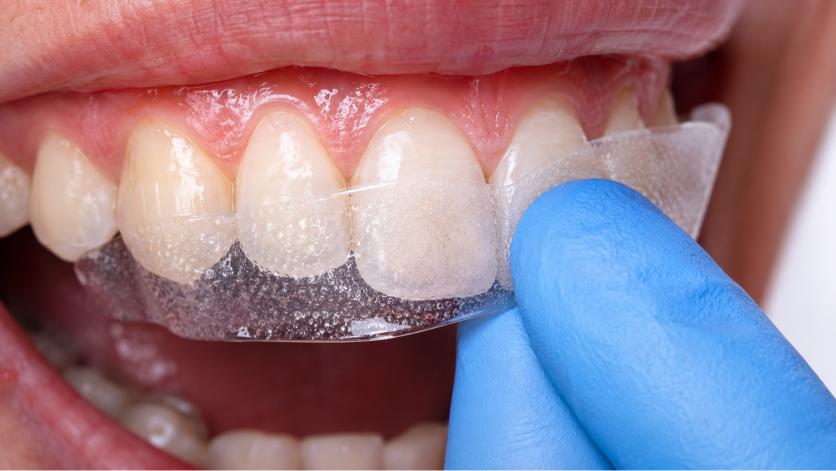
Whitening strips are thin, flexible pieces coated with a whitening gel. Most contain hydrogen peroxide or carbamide peroxide. You place the gel side against the front surfaces of your teeth for the time listed on the package.
Peroxide moves into the outer tooth layers and reacts with colored stain molecules. This reaction makes the stains less concentrated, so the teeth appear lighter.
The strip holds the gel in place during treatment. However, its flat shape may not cover every curve, gap, or crowded tooth evenly. This is why the front teeth may whiten more clearly than the spaces between them.
Whitening strips are designed to change tooth color, not scrape away enamel. Problems are more likely when strips are used too often, worn too long, or combined with other strong whitening products.
What Types of Stains Can Whitening Strips Remove?
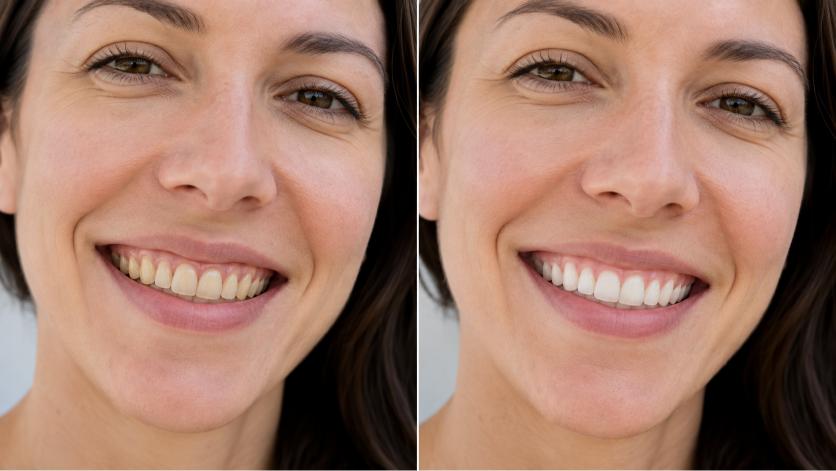
The answer depends on where the stain is located and what caused it.
Food and Drink Stains
Strips often work well on stains caused by coffee, tea, red wine, cola, dark berries, and sauces. These stains collect on and within the outer tooth surface over time.
A professional cleaning may remove plaque, tartar, and some surface buildup first. Whitening can then target the color that remains in natural teeth.
Tobacco Stains
Whitening strips may improve mild yellow or brown tobacco stains. Heavy or long-term staining can be harder to change and may need professional whitening.
Results may also fade faster if smoking or tobacco use continues because new stains can form after treatment.
Age-Related Yellowing
Teeth often look more yellow with age. Enamel can become thinner, which allows more of the naturally yellow dentin below it to show.
Strips may improve some age-related yellowing. However, darker teeth or deeper color changes may respond better to dentist-supervised whitening.
Deep Internal Stains
Strips may have limited results on gray discoloration, stains caused by certain medicines, fluorosis, tooth injury, or changes inside a nonliving tooth.
These problems may need another option, such as professional bleaching, internal whitening, bonding, veneers, or crowns. The right choice depends on the cause.
How Long Does It Take for Whitening Strips to Work?
Some people notice a small change after a few treatments. Most products require regular use for several days or a few weeks.
The exact timeline depends on:
- The strength of the whitening gel
- The type and amount of staining
- The natural color of your teeth
- How well the strips fit
- How often you use them
- Whether staining habits continue
Follow the schedule on the product label. Using strips more often or leaving them on longer does not guarantee faster results. It mainly raises the risk of sensitivity and gum irritation.
Take a clear photo before treatment under normal lighting. Compare it with another photo after the full course. This is often easier than judging small daily changes in the mirror.
How White Can Whitening Strips Make Your Teeth?
Whitening strips can improve tooth color, but they do not give every person the same shade. Natural tooth color, enamel thickness, stain depth, and past dental treatment all affect the final result.
Strips are better for creating a lighter, cleaner-looking smile than producing an extreme paper-white shade. Product photos may also look brighter because of lighting or editing.
Complete only the recommended treatment course. Repeated whitening without enough time between cycles may increase discomfort without making a major extra difference.
Why Do Whitening Strips Sometimes Look Uneven?
Whitening strips usually cover flat front tooth surfaces best. They may not press evenly into gaps or around teeth that overlap, rotate, or sit behind nearby teeth.
Uneven color can also happen when one tooth has a filling, crown, bonding material, or a deeper internal stain. These areas may not respond like natural enamel.
Temporary white spots may become more visible when teeth dry during treatment. The color may look more even after saliva restores moisture. White spots that remain should be examined before more whitening is attempted.
A single dark tooth should not be treated again and again without a diagnosis. It may have decay, past trauma, or a problem inside the tooth.
Are Whitening Strips Safe for Enamel and Gums?
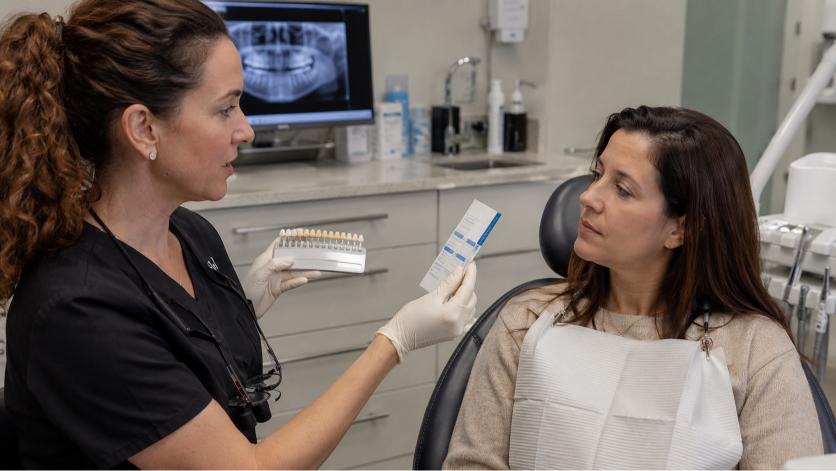
Whitening strips are generally safe for healthy natural teeth when you use a reliable product exactly as directed. The most common side effects are temporary tooth sensitivity and irritation where the gel touches the gums.
Your oral health also matters. Strips should not be used to hide pain, decay, broken teeth, or gum disease. Whitening does not treat these problems and may make them feel worse.
Stop treatment and contact a dentist if you develop strong pain, gum sores, swelling, pain when biting, or sensitivity that continues after you stop using the strips.
Possible Side Effects of Whitening Strips
Whitening strips are generally safe when used correctly, but they can cause temporary side effects in some people. The most common concerns include tooth sensitivity, gum irritation, white gum patches, and uneven whitening.
Tooth Sensitivity
Sensitivity may feel like a brief shock when you breathe cold air or drink something hot or cold. Peroxide can temporarily irritate the inner tooth tissue.
Mild sensitivity often improves after a break or after treatment ends. Sensitivity toothpaste may help some patients. Sharp pain in one tooth should be checked before you continue.
Gum Irritation
Whitening gel may irritate the gums when a strip is placed too high, folded over the gumline, or left on too long.
Remove the strip and rinse your mouth if you feel burning. Do not cut or change the product unless its instructions allow it.
White Gum Patches
The gums may briefly look white after direct contact with whitening gel. This often fades, but strong burning, peeling, sores, or lasting pain need dental advice.
Uneven Whitening
Crowded teeth, dental restorations, white spots, and mixed stain types can cause uneven results. Adding more treatments may make the difference more noticeable instead of correcting it.
How to Use Whitening Strips Correctly
Read the complete instructions before opening the first strip. Products differ in strength, wear time, and treatment length.
Apply the correct strip to the upper or lower teeth. Press it gently against the front surfaces and keep the gel away from the gums as much as possible.
Do not wear strips longer than directed. Do not sleep in them unless the product is designed for overnight use. Never add extra whitening gel.
Follow the product instructions about brushing, rinsing, eating, and drinking after removal. Use only one whitening system at a time.
Combining strips with strong whitening toothpaste, pens, gels, or trays may increase sensitivity without giving a better result.
How Often Is It Safe to Use Whitening Strips?
Use the exact schedule listed by the manufacturer. Some strips are used once daily, while other products have different instructions.
Do not start a new full treatment course immediately after finishing the first one unless the label or your dentist says it is appropriate.
People with sensitive teeth, exposed roots, worn enamel, or several restorations should ask a dentist before repeating treatment.
More frequent whitening does not always mean better whitening. Giving the teeth and gums time to recover can reduce discomfort.
Who Should Avoid Whitening Strips?
Whitening strips may not be suitable if you have:
- Untreated cavities
- Cracked or broken teeth
- Loose or damaged fillings
- Active gum disease
- Painful gum recession
- Strong tooth sensitivity
- Mouth sores
- A dark tooth after an injury
- Extensive visible dental work
- An unknown cause of discoloration
Children and younger teens should not start cosmetic whitening without guidance from a dentist and parent or guardian.
Pregnant or breastfeeding patients should discuss elective whitening with their dentist and healthcare professional. Treatment can often wait until a more suitable time.
Do Whitening Strips Work on Crowns, Fillings, and Veneers?
No. Whitening strips do not change the shade of crowns, veneers, implants, bridges, tooth-colored fillings, or bonding. They whiten only natural tooth structure.
This can create a mismatch. A front crown may stay the same shade while nearby natural teeth become lighter.
A dentist can help plan whitening before new cosmetic work is completed. Existing restorations may need replacement later if the shade difference becomes noticeable and you want a closer match.
Whitening Strips vs. Professional Teeth Whitening
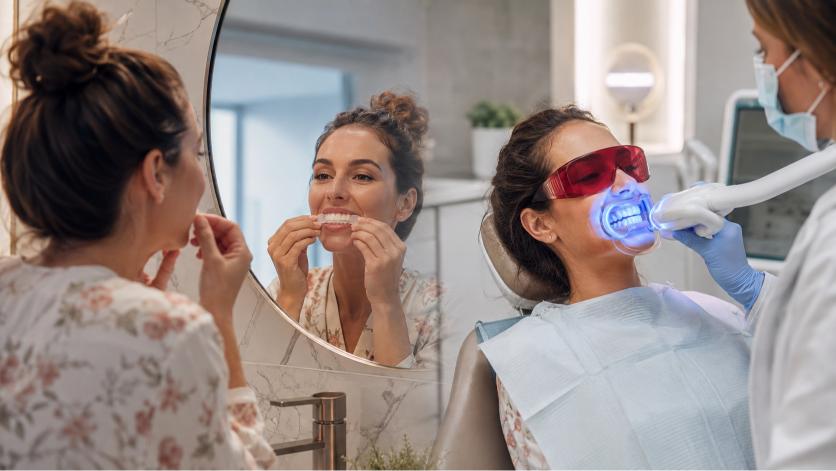
Both methods can lighten natural teeth, but the treatment process is different.
|
Factor |
Whitening Strips |
Professional Whitening |
|
Cost |
Usually lower |
Usually higher |
|
Speed |
More gradual |
Often faster |
|
Fit |
General strip shape |
Treatment can be customized |
|
Supervision |
Usually self-directed |
Managed by a dental professional |
|
Coverage |
Mainly front surfaces |
Can provide more controlled coverage |
|
Best for |
Mild to moderate stains |
Deeper stains or more complex needs |
|
Sensitivity control |
Limited to label directions |
Treatment can be adjusted |
Whitening strips may be enough for healthy teeth with common stains. Professional care may be better when stains are dark, results are uneven, sensitivity is a concern, or dental work affects the visible smile.
A dentist can also confirm whether whitening is the correct treatment. Some discoloration needs cleaning, repair, internal bleaching, bonding, veneers, or another cosmetic option.
How to Maintain Results After Whitening Strips
Whitening results are not permanent because teeth can collect new stains.
Brush twice daily with fluoride toothpaste and clean between your teeth each day. Regular dental cleanings can remove buildup that home brushing misses.
Limit tobacco and frequent dark drinks when possible. Coffee, tea, wine, cola, and dark juices can stain teeth again.
Rinse with water after dark foods and drinks. Do not rush into frequent touch-up courses. Ask your dentist how often whitening is suitable for your teeth.
When Should You Ask a Dentist About Whitening?
Schedule an examination before whitening if you have tooth pain, strong sensitivity, gum bleeding, exposed roots, cavities, broken teeth, or one tooth that has changed color.
You should also ask for guidance if the strips do not work after a complete course. The stain may be too deep or may not respond to that product.
A dentist can identify the stain and explain whether strips, custom trays, in-office whitening, or another treatment is more suitable.
Get Teeth Whitening Advice in Mesa, AZ
Whitening strips can be useful, but they are not right for every stain or every smile. A dental examination can help you avoid wasted treatments and reduce the chance of discomfort.
Schedule a whitening consultation with U Smile Family Dentistry in Mesa, AZ. Our team can check your teeth and gums, review your dental work, and help you choose a whitening method that fits your needs.
Conclusion
Whitening strips can be a simple, affordable way to lighten mild to moderate stains on healthy natural teeth, but they are not the right fit for every smile. They tend to work best if your teeth and gums are healthy, your stains come from coffee, tea, red wine, tobacco, or normal aging, and you do not have visible crowns, veneers, fillings, or bonding on your front teeth.
On the other hand, it’s best to talk to a dentist first in a few situations. If you have tooth pain, strong sensitivity, or gum irritation. If one tooth looks noticeably darker than the others. Or if you’ve already completed a full course of strips without seeing the results you wanted.
If any of this sounds like your situation, U Smile Family Dentistry in Mesa, AZ can identify the cause of discoloration and explain whether whitening strips or a professional option is more suitable for your smile.
Frequently Asked Questions
Do Whitening Strips Work After One Use?
Whitening strips may create a small change after one use, but most people need several treatments to see a clear difference. Results depend on product strength, stain type, and starting shade. Follow the full course instead of extending each session. Stop if you develop strong pain or gum irritation.
How Long Do Whitening Strip Results Last?
Results may last for several months, but the timeline differs for each person. Coffee, tea, tobacco, red wine, and dark foods can bring stains back sooner. Daily brushing, flossing, and regular cleanings can help maintain the change. Follow dental or product guidance for touch-ups.
Should I Brush My Teeth Before Using Whitening Strips?
Follow the directions for your specific product. Some allow gentle brushing before treatment, while others advise waiting because brushing may make the gums more sensitive. Clean teeth can help the strip contact the surface. Avoid brushing hard right before whitening.
Can Whitening Strips Cause Permanent Sensitivity?
Lasting sensitivity is not the usual response, but whitening can reveal or worsen an existing problem. Mild sensitivity often fades after treatment stops. Strong pain, pain in one tooth, or discomfort that continues needs a dental examination. Do not keep whitening through persistent pain.
Why Are My Teeth Still Yellow After Whitening Strips?
The stain may be too deep, the strips may not fit evenly, or your natural tooth shade may be warm. Dental restorations also stay the same color. A professional cleaning or dentist-supervised whitening may offer a better result. A dentist can identify why the shade did not change.
Can I Eat After Using Whitening Strips?
Follow the product directions because recommendations vary. Avoiding very dark, acidic, hot, or cold foods right after treatment may help, especially if the teeth feel sensitive. Water and lighter-colored foods are simple choices. Good rinsing and brushing habits help limit new stains.
Are Professional Whitening Treatments Better Than Strips?
Professional whitening offers more supervision, customization, and control, but strips may be enough for mild stains. The better choice depends on oral health, sensitivity, budget, goals, and stain type. A dental examination can help prevent uneven results. Neither option can whiten existing restorations.