
To get rid of bad breath (halitosis), brush your teeth and floss at least twice daily, clean or scrape your tongue to remove odor-causing bacteria, and stay hydrated to prevent dry mouth. Maintaining consistent oral hygiene and removing trapped food particles helps reduce bacterial buildup that commonly leads to unpleasant breath odor.
Bad breath usually develops when bacteria accumulate in the mouth and break down leftover food particles, releasing sulfur compounds responsible for foul smells. If you live in Mesa, AZ, improving daily oral care habits, supporting healthy saliva flow, and addressing dental issues early with a trusted local dentist can significantly improve breath freshness and prevent persistent halitosis.
What Is Bad Breath (Halitosis)?
Halitosis is the medical term for ongoing or recurring bad breath that can come from the mouth, throat, or sometimes the digestive system. Many people experience bad breath occasionally, but for some, it becomes a persistent problem that affects daily confidence and oral health.
Bad breath mainly occurs when bacteria in the mouth break down food particles and release foul-smelling gases. These bacteria often collect between teeth, along the gumline, and on the surface of the tongue. Temporary bad breath may happen after eating certain foods or waking up in the morning, while chronic bad breath usually continues even after brushing and may require proper dental care or treatment.
What Causes Bad Breath?
Understanding the cause of bad breath is the first step to getting rid of it. In many cases, bad breath does not come from just one issue but from a combination of oral hygiene, lifestyle habits, or underlying health problems.
Poor Oral Hygiene
When teeth are not brushed and flossed regularly, food particles remain between teeth and along the gumline. Bacteria feed on these particles and release foul-smelling gases, leading to unpleasant breath. Over time, this buildup can also increase plaque and worsen oral health problems.
Tongue Buildup The Hidden Cause
The tongue is one of the most common sources of bad breath. Its rough surface traps bacteria, dead cells, and food debris that form a coating and produce odor if the tongue is not cleaned daily. Cleaning the tongue regularly helps remove odor-causing bacteria effectively.
Dry Mouth (Reduced Saliva Flow)
Saliva helps wash away bacteria and keep the mouth clean. When saliva production decreases due to dehydration, mouth breathing, medications, or sleep, bacteria grow more easily and cause bad breath. Drinking enough water throughout the day helps maintain healthy saliva flow.
Food and Lifestyle Habits
Foods like garlic, onions, coffee, and alcohol can temporarily affect breath. Smoking and tobacco use also worsen bad breath by drying the mouth and leaving odor-causing chemicals behind. Maintaining balanced eating and lifestyle habits can help reduce recurring odor.
Gum Disease and Tooth Infections
Periodontal disease is one of the most significant and underdiagnosed causes of chronic bad breath. Bacterial infection below the gumline creates pockets of tissue destruction where anaerobic bacteria flourish. Abscesses, cavities with decay reaching the pulp, and infected wisdom teeth all produce a distinctly foul odor that no amount of mouthwash can mask for long. If your bad breath has a sharp, putrid quality, gum disease or an active infection should be ruled out immediately.
Bad Breath From the Throat or Tonsils
Tonsil stones and post-nasal drip from allergies or sinus infections can cause bacteria buildup in the throat, leading to ongoing bad breath. Treating sinus or throat issues often improves breath quality.
Medical Conditions Linked to Bad Breath
Sometimes bad breath is linked to health conditions such as diabetes, acid reflux, or kidney problems. If good oral hygiene does not improve your breath, a dentist or doctor should evaluate the cause. Proper medical treatment can help control odor related to these conditions.
How to Tell If You Have Bad Breath
Many people do not realize they have bad breath because it is difficult to notice your own mouth odor over time. Since you become used to your natural breath smell, simple self-check methods can help you understand whether bad breath may be present.
One easy way is the wrist test lick the inside of your wrist, let it dry for a few seconds, and then smell it. You can also smell used dental floss after cleaning between your teeth or gently check the back of your tongue for a white coating or unpleasant odor. A constant bad taste in your mouth or feedback from someone you trust may also indicate that your breath needs professional dental evaluation.
How to Get Rid of Bad Breath Immediately
When you need fresh breath quickly, these targeted strategies work fast.
Drink Water
Rinsing and swallowing water immediately dilutes bacterial concentrations and stimulates saliva flow. Make it a habit to drink water after every meal rather than reaching for gum or mints as a first response.
Clean Your Tongue
Use a dedicated tongue scraper or the back of your toothbrush to firmly scrape from the back of your tongue forward. Do this two to three times, rinse, and repeat. This single step can dramatically reduce mouth odor within minutes.
Chew Sugar-Free Gum
Xylitol-sweetened gum stimulates saliva production and inhibits bacterial growth. It’s not a substitute for brushing, but it’s highly effective as a quick fix between meals or after coffee.
Rinse After Meals
A simple water rinse after eating removes loose food particles before bacteria can begin breaking them down. If you have access to an alcohol-free antibacterial mouthwash, even better swish for thirty seconds for fast odor reduction.
Eat Breath-Freshening Foods
Crunchy, high-fiber foods like apples, celery, and carrots act as natural toothbrushes, scrubbing teeth and stimulating saliva. Fresh parsley and mint contain chlorophyll compounds with natural deodorizing properties.
Daily Oral Hygiene Routine for Fresh Breath

Keeping your breath fresh depends on following a consistent daily oral care routine. Regular cleaning helps prevent bad breath from developing throughout the day.
Morning routine: Start by cleaning your tongue to remove bacteria that build up overnight. Brush your teeth for at least two minutes using fluoride toothpaste, making sure to clean along the gumline and back teeth. Floss between all teeth to remove trapped food particles.
Night routine: Your nighttime routine is especially important because saliva production decreases during sleep. Floss before brushing so loosened debris can be removed properly, then brush your teeth and clean your tongue again. Avoid eating or drinking anything except water after brushing.
Weekly habits: Replace your toothbrush or brush head every three months or sooner if the bristles become worn. Clean tongue scrapers and dental appliances regularly. Properly wash retainers, night guards, or dentures to prevent bacteria buildup.
How to Permanently Get Rid of Bad Breath
Getting rid of bad breath permanently means treating the root cause instead of simply covering the smell. Regular professional dental cleanings help remove plaque and tartar that cannot be eliminated by brushing alone. If gum disease, cavities, or infections are present, proper dental treatment is necessary to improve breath and restore oral health.
Long-term fresh breath also depends on healthy daily habits. Staying well hydrated helps prevent dry mouth, while reducing smoking, alcohol, and excessive coffee intake can lower odor-causing bacteria. Maintaining a balanced diet and following consistent oral hygiene practices play an important role in keeping your breath fresh over time.
Foods That Cause and Prevent Bad Breath 
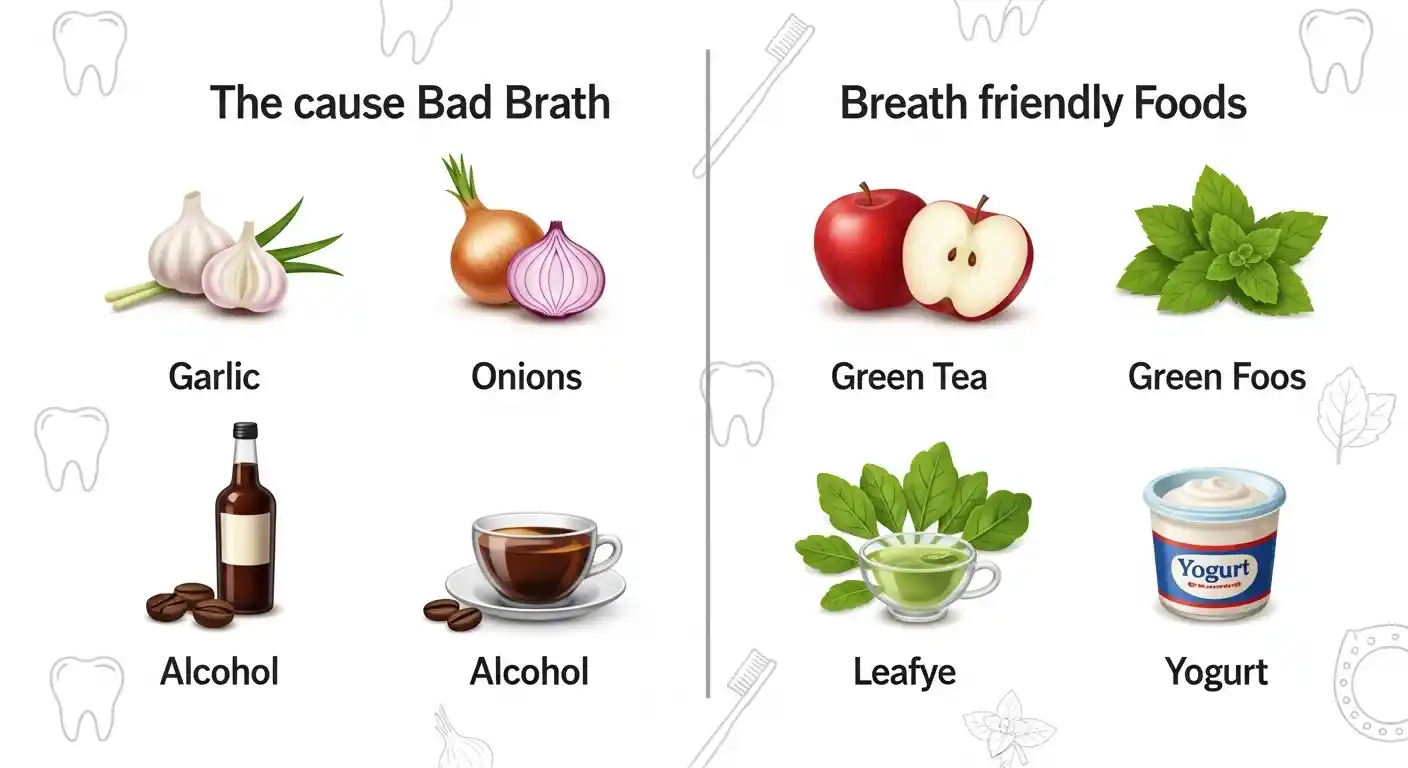
Some foods can make bad breath worse, while others help keep your breath fresh. Foods such as garlic, onions, coffee, alcohol, and sugary snacks often cause unpleasant odors because they encourage bacteria growth in the mouth. Sugar especially feeds bacteria, while coffee can dry the mouth and increase bad breath.
On the other hand, certain foods can naturally improve breath. Crunchy fruits like apples help increase saliva and clean teeth, while plain yogurt with live cultures may reduce odor-causing bacteria. Green tea and leafy vegetables also support fresher breath by helping control bacteria and neutralize unwanted smells.
Home Remedies for Bad Breath
Some home remedies can help reduce bad breath when used along with good oral hygiene. Rinsing your mouth with warm saltwater or a baking soda solution may help control bacteria and reduce odor for a short time. Drinking green tea regularly can also support fresher breath because it contains natural antibacterial properties.
Oil pulling, which involves swishing coconut or sesame oil in the mouth for several minutes, may help lower bacteria levels and improve breath in some cases. However, these remedies should only support daily brushing and flossing, not replace them. If bad breath is caused by gum disease or infection, professional dental treatment is still necessary.
Common Bad Breath Mistakes
Some daily habits meant to improve breath can actually make bad breath worse. Using mouthwash too often, especially alcohol-based types, can dry out the mouth and increase odor over time. Brushing without flossing also leaves food particles and bacteria trapped between teeth, where bad breath often begins.
Ignoring bleeding gums is another common mistake, as bleeding may be a sign of gum disease that needs treatment. Not drinking enough water can reduce saliva and allow bacteria to grow more easily. Smoking also worsens bad breath by drying the mouth and increasing the risk of gum problems.
When to See a Dentist or Doctor
You should see a dentist if your bad breath continues even after maintaining good daily oral hygiene. Mouth pain, swelling, tooth sensitivity, bleeding gums, or ongoing dry mouth are also signs that professional care may be needed.
If your breath has an unusual smell or taste that does not seem related to oral hygiene, a medical checkup may be necessary to rule out other health problems. Getting treatment early can help solve the issue faster and prevent more serious complications.
Professional Treatments for Chronic Halitosis

If self-care doesn’t solve bad breath, professional dental treatments can make a big difference. Regular dental cleanings remove plaque and tartar from teeth, while scaling and root planning treats deeper bacterial buildup caused by gum disease.
Infected teeth may need a root canal, extraction, or antibiotics, depending on the problem. For chronic dry mouth, dentists can suggest special saliva substitutes or products that stimulate saliva. Some dental offices also offer halitosis consultations to measure odor and identify its exact cause.
Schedule Your Dental Visit in Mesa, AZ Today!
Don’t let bad breath affect your confidence. At U Smile Dental, we provide comprehensive dental care, professional cleanings, and personalized treatments to help you achieve fresh, healthy breath every day. Book your appointment now and take the first step toward a brighter smile and lasting freshness.
Conclusion
Bad breath is a common problem, but it is usually manageable with consistent oral hygiene, healthy lifestyle choices, and timely professional care. Understanding the causes from bacterial buildup and tongue coating to gum disease, diet, or underlying health conditions—is the key to lasting freshness. By following the daily oral care routines, using quick remedies when needed, and seeking dental or medical advice for persistent issues, you can maintain confident, clean breath every day. Remember, long-term success comes from treating the root cause, not just masking the odor.
Frequently Asked Questions
Can bad breath go away on its own?
Occasional bad breath from food or morning dryness may go away after brushing, rinsing, or eating. Persistent bad breath usually requires proper oral hygiene or professional care.
How often should I see a dentist for bad breath?
Regular dental checkups every six months help prevent and treat the causes of bad breath, including gum disease, cavities, and infections.
Are mouthwashes enough to get rid of bad breath?
Mouthwashes can temporarily mask odor, but they do not treat the root cause. Brushing, flossing, tongue cleaning, and professional care are necessary for permanent results.
Can diet changes improve my breath?
Yes. Reducing foods like garlic, onions, coffee, alcohol, and sugary snacks can help, while eating crunchy fruits, leafy greens, and yogurt with live cultures supports fresher breath.
When should I see a doctor instead of a dentist?
If bad breath persists despite good oral hygiene or has unusual odors like fruity, ammonia-like, or metallic smells, a doctor can check for underlying medical conditions such as diabetes, kidney, or liver problems.