
Salt water can start soothing sore or inflamed gums almost immediately, but noticeable healing typically takes a few days of consistent use. Most dentists recommend rinsing with warm salt water for 30 seconds and repeating it 2–3 times daily for mild gum irritation, swelling, mouth sores, or discomfort after dental procedures.
So, why does salt water help gums? Salt water creates an environment that makes it harder for harmful bacteria to thrive while helping reduce inflammation and keeping the affected area clean. This natural rinse may also help ease discomfort from swollen gums, minor infections, and toothaches by promoting the body’s healing process.
While a salt water rinse is a simple and affordable home remedy, it is not a substitute for brushing, flossing, or professional dental care. In this guide, you’ll learn how long salt water takes to help gums, how often you should rinse, what results to expect, and when it’s time to see a dentist.
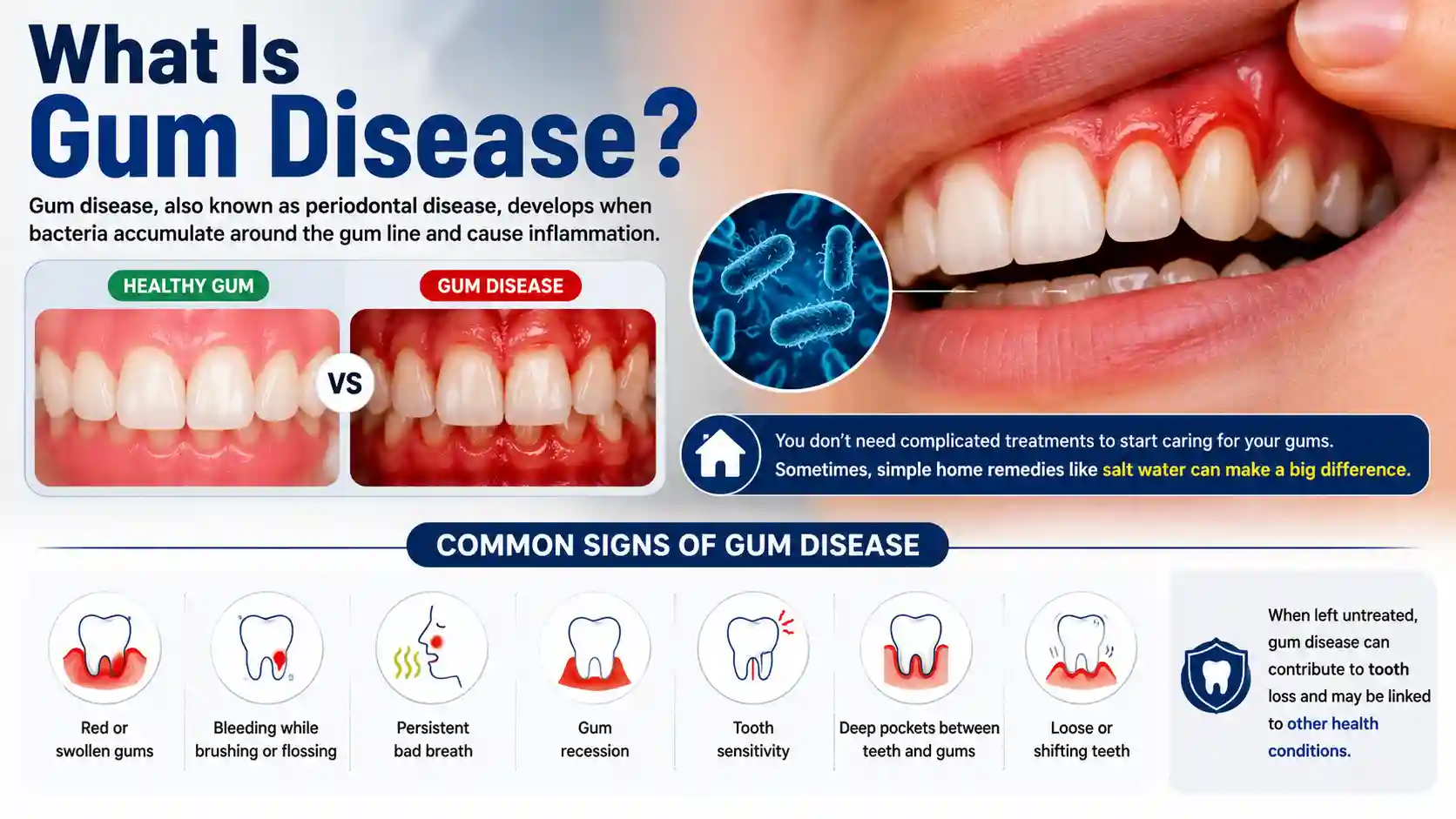
What Is Gum Disease?
Gum disease, also known as periodontal disease, develops when bacteria accumulate around the gum line and cause inflammation. Early-stage gum disease is called gingivitis, while advanced stages can damage the tissues and bone supporting your teeth.
Modern medicine has come up with various products to help people maintain their oral health. When taking care of their gums and teeth, there are many products to turn to. But unfortunately, despite all the effort, some people will still develop gum disease.
Although there are medicines to treat gum disease, one of the best forms of treatment is gargling with salt water. This method doesn’t require you to go to the pharmacy to get the ingredients. Instead, salt and water are things found at home.
Common signs of gum disease include:
Red or swollen gums
Bleeding while brushing or flossing
Persistent bad breath
Gum recession
Tooth sensitivity
Deep pockets between teeth and gums
Loose or shifting teeth
When left untreated, gum disease can contribute to tooth loss and may be linked to other health conditions.
General timeline Salt Water to Heal Gums:
Minor gum irritation: 1–3 days
Swollen gums: 2–7 days
Mouth sores: Several days to one week
After tooth extraction: Follow your dentist’s instructions, but healing support typically occurs over several days
The exact timeline depends on:
Severity of inflammation
Oral hygiene habits
Presence of gum disease
Smoking habits
Overall health
If your symptoms continue beyond a week or become worse, schedule a dental examination.
Why Does Salt Water Help Gums?
Salt water helps gums because it creates an environment that is less favorable for harmful bacteria.
It also helps:
- Reduce bacterial growth
- Remove debris around irritated tissues
- Support natural healing
- Reduce inflammation
- Soothe sore gum tissue
Because harmful oral bacteria thrive in acidic conditions, salt water may help create a healthier balance inside the mouth.
How Long to Hold Salt Water in Your Mouth
You do not need to hold salt water in your mouth for an extended period.
Simply swish it around your teeth and gums for 15–30 seconds before spitting it out.
Longer rinsing generally does not provide additional benefits.
How Long Salt Water Takes to Heal Gums
This is one of the most common questions people ask. A salt water rinse can begin providing relief within minutes by soothing irritated tissues and helping remove bacteria. However, actual healing takes longer.
Can You Gargle Salt Water Every Day?
Occasional daily use is generally safe for most people.
However, using salt water excessively over long periods may irritate oral tissues.
If you need frequent rinses because of ongoing gum pain or inflammation, it is best to speak with a dental professional to identify the underlying cause.
How Salt Water Helps Gums Heal
When you rinse with warm salt water, several beneficial things happen:
Reduces Bacteria
Salt water helps decrease bacterial activity inside the mouth, lowering the risk of infection and irritation.
Supports Tissue Recovery
The rinse helps keep wounds and irritated tissues clean, allowing your gums to heal more efficiently.
Reduces Inflammation
Many people use salt water for swollen gums because it can help calm inflamed tissues and reduce discomfort.
Cleans Hard-to-Reach Areas
A salt water rinse can flush away food particles and bacteria that brushing alone may miss.
How to Make Salt Water for Gums
Preparing a salt water rinse is simple.
Ingredients:
- 8 ounces (1 cup) warm water
- ½ teaspoon salt
Instructions:
- Warm the water.
- Add the salt.
- Stir until dissolved.
- Swish gently for 15–30 seconds.
- Spit out the solution.
- Discard leftovers.
Salt Water After Dental Procedures
Dentists often recommend salt water rinses after:
Tooth extractions
Gum treatments
Oral surgery
Minor dental procedures
Salt water helps keep the area clean while supporting the body’s natural healing process.
Always follow your dentist’s specific instructions after surgery.
How Long Does Salt Water Help a Toothache?
Salt water may provide temporary toothache relief for a few hours by cleansing the affected area and reducing irritation.
However, toothaches are often caused by cavities, infections, cracks, or gum disease. Salt water does not treat these underlying problems. If tooth pain persists, seek professional dental care. If you’re in pain now, our emergency dentistry team in Mesa offers same-day appointments.
What Does Salt Water Do for Your Gums?
Salt water acts as a simple, natural oral rinse that may:
Soothe sore gums
Reduce swelling
Help control bacteria
Support healing after dental procedures
Reduce discomfort from minor mouth sores
While it can support gum health, it should never replace daily brushing, flossing, and professional dental care.
What are the Warning Signs of Gum Disease?
- Heightened tooth sensitivity
- Having persistent bad breath
- Tender, swollen, or bleeding gums
- Receding gums
- Shifting or loose teeth
- Deep pockets between gums and teeth
How Long Does a Salt Water Rinse Take to Work?
Many people notice temporary relief shortly after rinsing. A warm salt water rinse helps cleanse the affected area and reduce irritation almost immediately. However, reducing visible swelling and supporting tissue recovery usually requires several days of regular use. For best results, rinse consistently rather than expecting overnight healing.
Is It Safe to Rinse with Salt Water Every day?
Saltwater can be acidic, and gaggling with it every day can soften your teeth’s enamel and gums. Therefore, you’re not supposed to gargle salt water daily. Also, if you have special medical conditions such as high blood pressure, you should take extra precautions or look for other alternatives to use.
How Long Should I Rinse with Salt Water for Swollen Gums?
You should rinse with salt water between 15-30 seconds, and you’re not supposed to swallow it. When you’re done, spit the water out and repeat this process at least three times a day. However, you’re not supposed to rinse more than a few times a day. You should do that until your gums are healed.
How to Make Salt Water for Gums?
To make your saltwater, our dentist in Mesa recommends you follow these three steps:
Use warm water because warm water will be more relieving to a sore throat than cold water. Warm water also helps the salt to dissolve in the water more effectively
Use any available type of salt. Also, consider adding some ingredients like hydrogen peroxide or honey for additional soothing and healing properties. Most saltwater recipes contain eight ounces of warm water and one teaspoon of salt. However, you may have a tender mouth making the saltwater rinse sting. Therefore, you should reduce the salt to a half teaspoon for the first one to two days.
You should ensure the water has boiled, remove it from heat, add salt, and then stir. Let your saltwater cool to a warm temperature before rinsing your mouth. Once you have done rinsing, discard the leftover solution to avoid contamination.
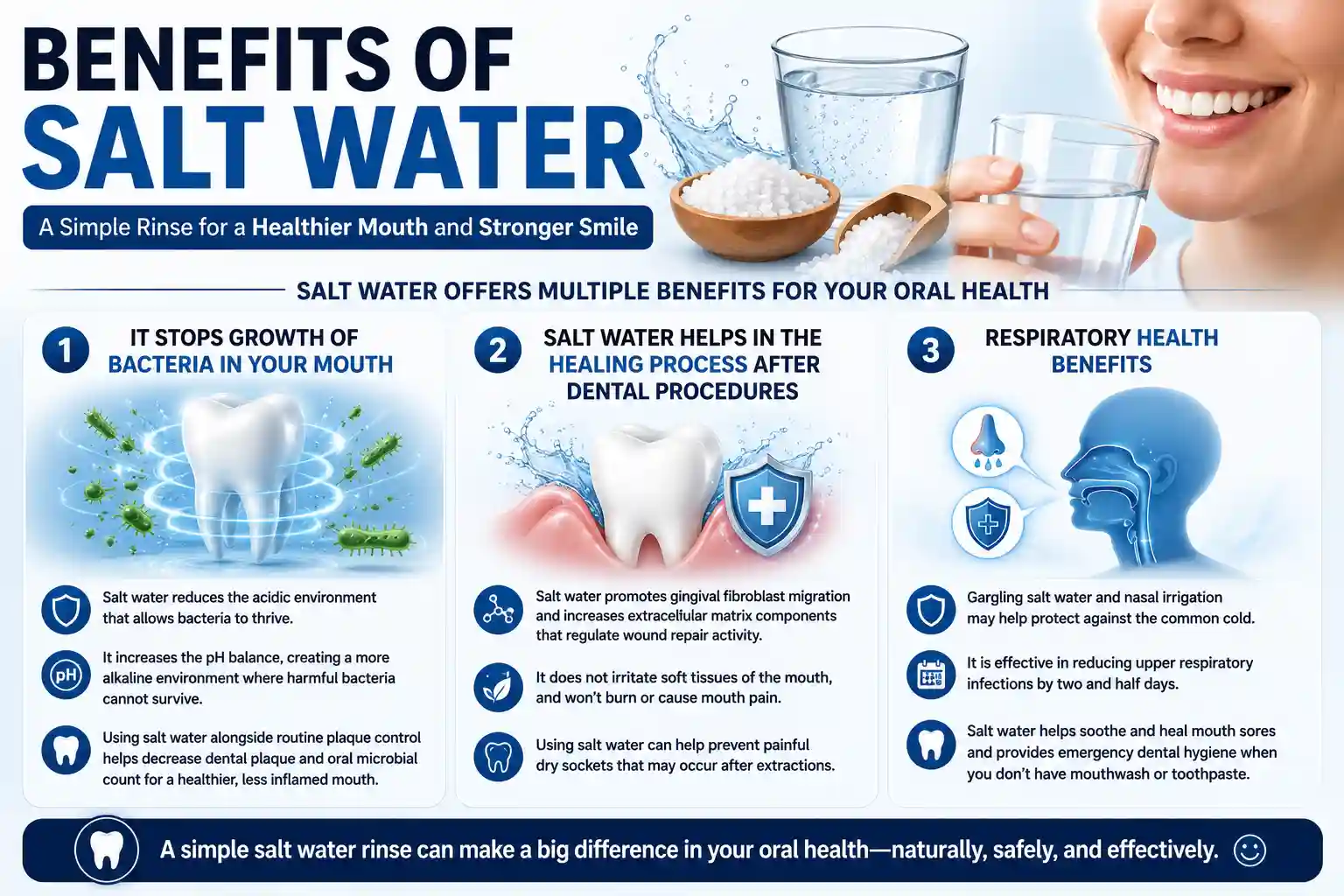
Benefits of Salt Water
Some of these benefits include:
It Stops Growth of Bacteria in Your Mouth
Our dentist in U Smile Family Dentistry in Mesa says that salt water reduces the acidic environment that allows bacteria to thrive.
Saltwater work by increasing the PH balance in your mouth. It creates a more alkaline oral environment in which the bacteria can no longer thrive. Instead, the harmful bacteria grow more in an acidic environment, so once it is neutralized, your mouth can become healthier and less inflamed.
When you use salt water alongside routine plaque control, it helps decrease the dental plaque and oral microbial count.
Salt Water Helps in the Healing Process After Dental Procedures
Saltwater assists in the healing process after dental procedures such as tooth extractions. Saltwater helps promote healing after dental procedures because it promotes gingival fibroblast migration and increases the number of extracellular matrix components that serve to regulate wound repair activity. In addition, saltwater does not irritate the mouth’s soft tissues, and it won’t burn or cause mouth pain.
Using saltwater will prevent painful dry sockets that can occur after extractions.
Respiratory Health Benefits
When you gargle saltwater and nasal irrigation, it may protect against the common cold. It is also effective in reducing upper respiratory infections by two and half days.
We also rinse our mouths with saltwater to provide emergency dental hygiene when you don’t have regular mouthwash or toothpaste. Also, it helps soothe and heal mouth sores.
When Should You See a Dentist?
Schedule a dental appointment if you experience:
Gum swelling lasting more than a week
Severe tooth pain
Persistent bleeding gums
Pus around the gums
Loose teeth
Signs of infection
Salt water is a helpful home remedy, but it should not delay necessary treatment.
Schedule a Dental appointment:
Schedule a dental appointment with U Smile Family Dentistry if you experience gum swelling lasting more than a week, severe tooth pain, persistent bleeding gums, pus around the gums, loose teeth, or signs of infection. We offer same-day emergency appointments and accept most major insurance plans. Don’t wait — early treatment prevents bigger problems.”
Conclusion
Salt water is a simple home remedy that can help soothe sore, swollen, and inflamed gums by reducing bacteria and supporting the mouth’s natural healing process. Many people notice relief within the first day, while minor gum irritation may improve within a few days of regular rinsing.
For best results, rinse with warm salt water for about 30 seconds, 2–3 times per day, unless your dentist recommends otherwise. This can help reduce discomfort, keep the area clean, and support recovery after minor gum irritation or dental procedures.
However, salt water is not a cure for gum disease or serious dental infections. If gum swelling, bleeding, pain, or toothache continues for more than a few days, professional dental treatment may be necessary. Combined with proper brushing, flossing, and routine dental visits, salt water rinses can be an effective way to support healthier gums and a healthier smile.
FAQs
How quickly does salt water start helping sore gums?
Many people notice temporary relief within hours, while visible healing often takes 2–7 days.
How many times a day should I rinse with salt water for gum swelling?
Most dentists recommend 2–3 rinses per day using warm salt water.
Can salt water cure gum disease?
No. Salt water may relieve symptoms, but professional treatment is usually needed for gum disease.
Warm salt water better than cold salt water for gums?
Yes. Warm salt water is generally more soothing and helps salt dissolve more effectively.
Should I brush my teeth before or after a salt water rinse?
Either is acceptable, but many dentists recommend brushing first and rinsing afterward.
Can salt water help bleeding gums?
It may reduce irritation and bacteria, but ongoing bleeding should be checked by a dentist.
What is the best salt-to-water ratio for a mouth rinse?
About ½ teaspoon of salt mixed into 8 ounces of warm water.
When should I see a dentist instead of using salt water?
If symptoms last more than a week, worsen, or include severe pain, pus, or loose teeth.