
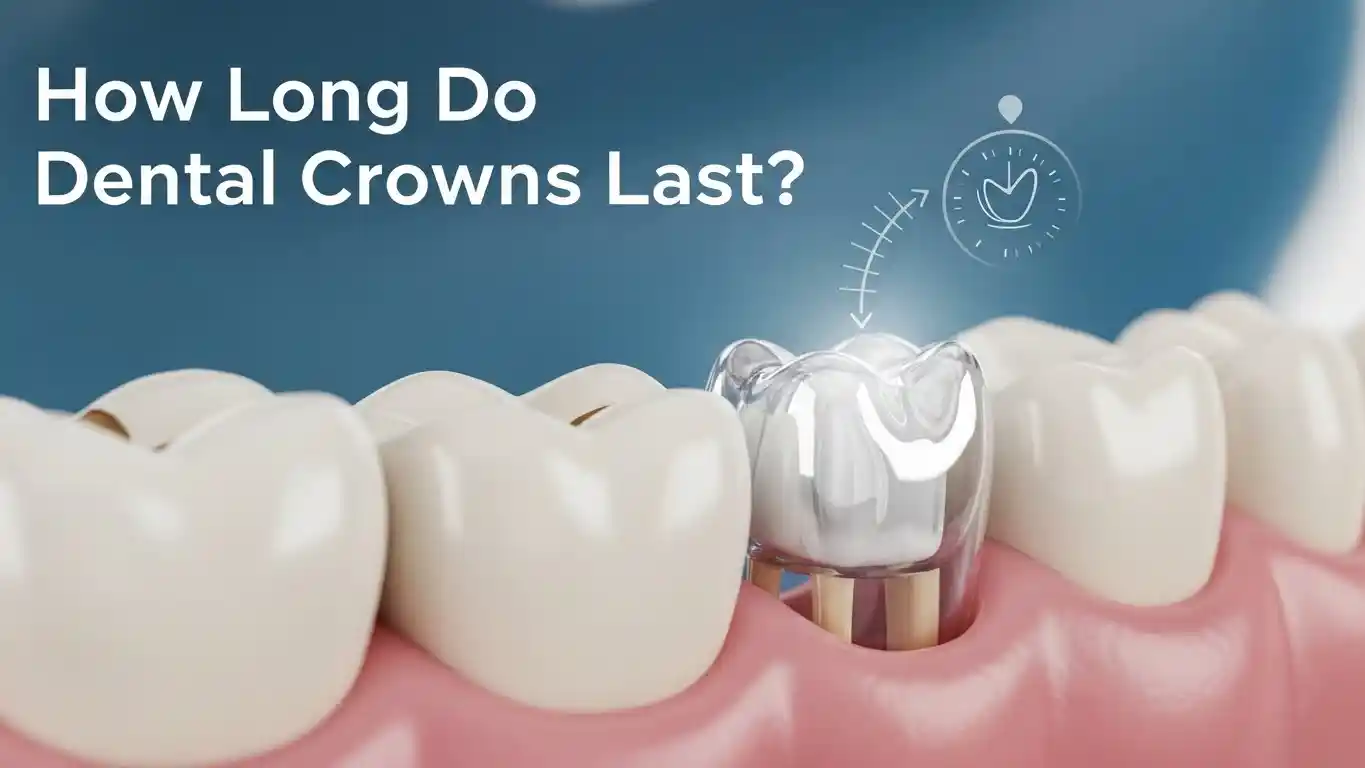
 Getting a dental crown is a big decision. You want to know if it’s worth the money and how long it will last. The good news is that dental crowns can protect your teeth for many years if you take care of them properly.
Nobody wants to spend money on dental work only to have it fail after a few years. You’re probably wondering if you’ll need to replace your crown soon or if it will last a lifetime. The answer might surprise you – with the right care, your crown could easily last 15, 20, or even 25 years. Let’s talk about everything you need to know about how long dental crowns last and what you can do to make them last even longer.
What Is a Dental Crown?
A dental crown is like a cap that goes over your tooth. Think of it as a protective helmet for a damaged tooth. Dentists use crowns when a tooth is broken, cracked, or has a big cavity. They also put crowns on teeth after a root canal procedure.
The crown covers the entire part of your tooth that you can see above your gums. It makes your tooth strong again so you can eat and smile without worry.
How Long Do Dental Crowns Usually Last?
Most dental crowns last between 5 and 15 years. That’s the average time you can expect your crown to work well. But here’s the exciting part – many crowns last much longer than that. Some people keep their crowns working great for 20 years or even 25 years or more.
One study looked at over 2,000 crowns placed by one dentist. After 25 years, 85% were still good. That means almost 2,000 crowns lasted more than two decades!
Your dental insurance company usually lets you replace a crown every 5 to 8 years. But if your crown fits well and you take care of it, you won’t need a new one for way longer than that.
Different Types of Crown Materials
The material your crown is made from makes a big difference in how long it lasts.
Gold Crowns
Gold crowns are the strongest type. They can last for several decades – sometimes 20, 30, or even more years. Gold is super tough and doesn’t chip or crack easily. The downside is that everyone can see a gold crown when you smile. Most people only get gold crowns on their back teeth where they won’t show.
Metal Crowns
Metal crowns are made from mixtures of different metals like chromium, nickel, or palladium. They’re very strong and durable, often lasting 15 years or more. Like gold, they don’t look natural, so they’re better for back teeth.
Porcelain-Fused-to-Metal (PFM) Crowns
These crowns have a metal base covered with porcelain on the outside. The metal makes them strong, while the porcelain makes them look like real teeth. They typically last 10 to 15 years. The porcelain can chip, and as your gums pull back over time, you might see a dark metal line at the bottom.
All-Ceramic or Porcelain Crowns
These crowns are made completely of porcelain or ceramic material. They look the most natural and work great for front teeth. With good care, they last 10 to 15 years.
Zirconia Crowns
Zirconia is a super strong type of ceramic material. These crowns are newer and combine strength with good looks. They can easily last 10 to 15 years or longer with proper care.
What Makes Crowns Last Longer or Shorter?
Many things affect how long your crown will last. Some you can control, and some you can’t.
Where the Crown Is in Your Mouth
Location matters a lot. Front teeth crowns usually last longer than back teeth crowns. Why? Because your back teeth (molars) do all the heavy work. They grind and chew your food, which puts a lot of pressure on crowns.
Your Oral Hygiene Habits
How well you brush and floss makes a huge difference. If you don’t clean well around your crown, plaque builds up. This causes gum disease and can make your crown come loose.
People who brush twice a day, floss daily, and see their dentist regularly get way more years out of their crowns.
Grinding and Clenching Your Teeth
Do you grind or clench your teeth, especially at night? This is called bruxism. It puts tons of extra pressure on your crowns and can crack or break them. Many people don’t even know they grind their teeth because it happens while they sleep.
If you’re a teeth grinder, a night guard protects your crown from all that grinding pressure.
What You Eat
Your eating habits play a big role. Chewing on really hard things is bad news for crowns. Ice, hard candies, nuts, and popcorn kernels can crack or chip your crown. Using your teeth to open packages or bite your nails is also risky.
Sticky foods like taffy, caramel, and chewy candies can pull on your crown and loosen it.
How Well Your Crown Fits
A crown that fits perfectly will last much longer than one that doesn’t fit right. When a crown doesn’t fit well, your bite feels off. This is why going to a skilled dentist who has lots of experience making crowns is so important.
How to Make Your Crown Last as Long as Possible
Want to get 15, 20, or even 25 years out of your crown? Here’s what you need to do:
Brush Your Teeth Properly
Brush at least twice a day – once in the morning and once before bed. Use a soft-bristled toothbrush and fluoride toothpaste.
Pay extra attention to where your crown meets your gum line. This spot is like a magnet for plaque. Clean it carefully every time you brush.
Floss Every Single Day
Flossing is super important for crowns. Food particles and plaque love to hide between your teeth and around your crown’s edges. If you don’t floss, this buildup leads to gum disease.
Once your permanent crown is cemented in place, flossing won’t hurt it at all. Floss around your crown just like you do with your other teeth.
Use Mouthwash
Rinse with an antimicrobial or antibacterial mouthwash after you brush and floss. Look for alcohol-free mouthwash because it’s gentler. Mouthwash kills bacteria and stops plaque from building up around your crown.
Avoid Hard Foods
Stay away from really hard foods that can crack your crown:
- Ice cubes
- Hard candies
- Nuts with shells
- Popcorn kernels
- Raw carrots (unless you cut them into small pieces)
Never use your teeth as tools. Don’t open bottles, tear open packages, or bite your fingernails.
Skip the Sticky Stuff
Sticky foods can grab onto your crown and pull it loose:
- Taffy
- Caramel
- Gummy candies
- Peanut butter (in large amounts)
If you eat these foods, do it carefully and clean your teeth right after.
Get a Night Guard If You Grind Your Teeth
If you grind or clench your teeth while you sleep, ask your dentist about a night guard. This is one of the best things you can do to protect your crown. Your dentist can make you a custom-fitted night guard that’s comfortable to wear.
Wear a Mouthguard for Sports
Do you play football, hockey, basketball, or other contact sports? Wear a mouthguard! A blow to your face can crack or knock out your crown.
See Your Dentist Regularly
Visit your dentist every six months for check-ups and cleanings. During these visits, your dentist looks at your crown to make sure it’s still in good shape. They can spot small problems before they become big ones.
Professional cleanings remove plaque and tartar that your toothbrush can’t reach, especially around the edges of your crown.
Warning Signs Your Crown Needs Attention
Even with the best care, crowns can have problems. Watch out for these warning signs:
Your Crown Feels Loose
If your crown moves when you touch it or feels wobbly, call your dentist right away. A loose crown means the cement is failing. Your dentist might be able to re-cement it, but sometimes you need a new crown.
You Feel Pain or Sensitivity
Some sensitivity is normal right after you get a crown, especially to hot and cold foods. This should go away in a few days. If the pain lasts longer than a week or gets worse, something’s wrong.
You See Cracks or Chips
Look at your crown in the mirror regularly. If you see any cracks, chips, or pieces missing, get it checked. Even small cracks can turn into big problems if you don’t fix them.
The Crown Looks Different
If your crown changes color or doesn’t match your other teeth anymore, it might be staining or wearing out. While this isn’t an emergency, it’s a sign your crown is getting old.
Your Gums Are Swollen or Bleeding
Red, swollen, or bleeding gums around your crown mean you have gum disease. This needs treatment right away. Gum disease can damage the bone that holds your tooth and crown in place.
When Do You Need to Replace Your Crown?
Even crowns that are well cared for eventually need replacing. Here are the main reasons:
Normal Wear and Tear
After 10, 15, or 20 years, your crown has done a lot of work. It might be worn down from all that chewing. The cement can weaken over time. Eventually, it makes sense to get a fresh crown.
Decay Under the Crown
If the tooth under your crown gets a cavity, you’ll need a new crown after the dentist fixes the decay. This is why good oral hygiene is so important – it protects the tooth under the crown.
The Crown Breaks
If your crown cracks or breaks, you usually need a replacement. Sometimes a small chip can be fixed, but bigger damage means you need a whole new crown.
Your Bite Changes
As you get older, your teeth shift a little bit. If your crown no longer fits well with your bite, it can cause problems. You might need a new crown that fits better.
Take Action Today to Protect Your Crown
Your dental crown is an investment in your smile and your health. Don’t wait until problems get worse – schedule your next dental check-up today if it’s been more than six months since your last visit.
If you’re experiencing any pain, sensitivity, or notice something different about your crown, call your dentist right away. The sooner you address small issues, the longer your crown will last. Taking action now can save you time, money, and discomfort down the road. Your future self will thank you for taking care of your crown today!
Conclusion
Dental crowns typically last 10 to 15 years, but many people keep their crowns working great for 20 years or more. How long your crown lasts depends mostly on you. The type of material matters – gold and metal crowns last the longest. But no matter what your crown is made of, good care is the key to making it last.
Brush twice a day, floss every day, and see your dentist twice a year. Avoid hard and sticky foods. If you grind your teeth, wear a night guard. Treat your crowned tooth with the same respect you give your natural teeth.
With the right care, your crown can give you many years of comfortable eating and confident smiling. It’s a good investment in your dental health – and now you know exactly how to protect that investment.
Remember, your dentist is your partner in keeping your crown healthy. If you notice anything weird with your crown, don’t wait. Call your dentist and get it checked out. Catching problems early means your crown can last even longer.
Frequently Asked Questions
Can a dental crown last 20 years?
Yes, many dental crowns last 20 years or longer with proper care. Gold and metal crowns have the best chance of lasting this long.
Do crowns on front teeth last longer than back teeth?
Yes, front teeth crowns usually last longer because they don’t do as much chewing work. Back teeth handle more pressure, which wears down crowns faster.
What happens if you don’t replace an old crown?
An old crown can crack, break, or fall off when you’re eating. The tooth underneath can get cavities or you might lose the whole tooth.
Can you get a cavity under a crown?
Yes, you can get a cavity on the natural tooth under your crown, especially where it meets your gum line. This is why brushing and flossing around your crown is so important.
How do I know when my crown needs to be replaced?
You’ll know if it feels loose, causes pain, has cracks or chips, or if your gums are swollen. Your dentist will also check it during regular visits.