
Dental sealants are thin coatings that cover the chewing surfaces of your back teeth. They seal deep grooves where food and bacteria can get stuck, helping to lower the risk of cavities. Dentists often recommend sealants for children and teens because they help protect teeth from decay. Tooth decay is one of the most common dental problems in the world. It affects more than 2.4 billion people with adult teeth and over 520 million children with baby teeth.
If you are in Mesa, AZ, our team helps patients of all ages protect their smiles with simple, effective preventive treatments. Dental sealants are one of the simplest and most effective tools in preventive dentistry, and they are far less complicated than most people expect.
What Are Dental Sealants?
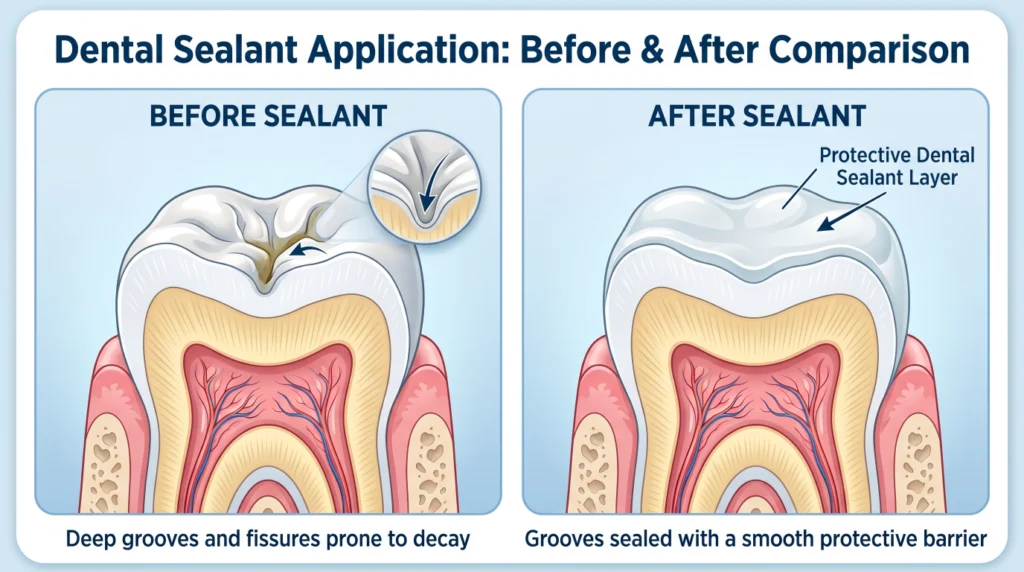
Dental sealants are a simple way to protect your teeth from cavities. Dentists apply a thin coating to the chewing surfaces of the back teeth to cover deep grooves where food and bacteria can collect, helping lower the risk of tooth decay. Think of a sealant as a raincoat for your molars. It does not change how your teeth look or feel, but it creates a smooth, protective surface that makes it much harder for cavities to form.
What Are Dental Sealants Made Of?
Most dental sealants are made from a plastic resin material called composite resin, the same type of material used in white tooth-colored fillings. Some sealants use a glass ionomer material, which also releases small amounts of fluoride over time for added protection.
How Dental Sealants Protect Teeth
The back teeth, especially the molars, have a naturally uneven surface full of tiny ridges, grooves, and pits. When bacteria feed on food particles left in these grooves, they produce acids that slowly eat through the enamel and cause cavities. A sealant fills those grooves in and creates a flat, smooth surface that is easy to clean and far less hospitable to bacteria.
How Do Dental Sealants Work?
Once applied, a dental sealant covers the deep grooves in your teeth and creates a protective barrier. This helps stop food and bacteria from getting trapped in hard-to-clean areas, reducing the risk of cavities. Sealants work especially well on molars and premolars because these back teeth have deep grooves and do most of the chewing. In fact, dental sealants can prevent up to 80% of cavities in the first two years after they are applied.
Who Needs Dental Sealants?
Dental sealants are most commonly recommended for children around age six when their first permanent molars come in, and again around age twelve when the second set arrives. These are the years when cavity risk is highest and brushing habits are still being developed.
Teenagers are also good candidates, especially since their diets tend to be high in sugary drinks and snacks. Adults can get sealants too, as long as the teeth are healthy and free of existing decay or fillings. Anyone with deep grooves in their back teeth and a history of cavities is worth considering for sealants, regardless of age.

Benefits of Dental Sealants
Dental sealants offer a simple and effective way to protect teeth from cavities and support long-term oral health.
Helps Prevent Cavities
This is the primary benefit and the reason sealants exist. By sealing off the grooves where most cavities start, sealants dramatically reduce the risk of tooth decay in the back teeth. For children, this can mean fewer dental procedures, less discomfort, and healthier permanent teeth for life.
Quick and Painless Treatment
The entire sealant procedure takes just a few minutes per tooth and requires no drilling, no needles, and no anesthesia. It is one of the few dental treatments that most patients, including young children, find completely stress-free. There is no recovery time and no soreness afterward.
Long-Lasting Protection
With proper care, dental sealants can last between five and ten years. Some sealants remain intact for even longer. Your dentist checks the condition of sealants at every routine visit and can reapply them if they show signs of wear.
Cost-Effective Preventive Care
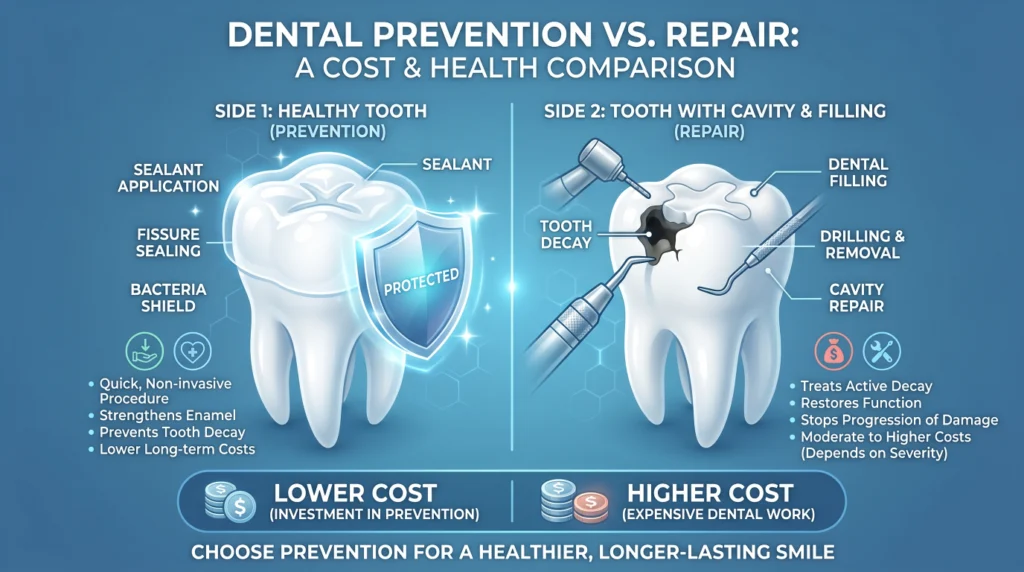
A single tooth sealant costs significantly less than a filling. When you factor in that a filling often leads to more extensive work down the line, including larger fillings, crowns, or root canals as the tooth is repaired and re-repaired over the years, preventing that first cavity with a sealant is one of the smartest financial decisions you can make for your dental health.
Reduces the Need for Fillings
Fewer cavities mean fewer fillings. For parents, this means fewer stressful dental appointments for their children. For adults, it means avoiding the cycle of decay, treatment, and eventual replacement that comes with repeatedly filled teeth.
The Dental Sealant Procedure: Step-by-Step
Getting dental sealants is a quick, painless process that helps protect your teeth from cavities in just a few simple steps.
Examining and Cleaning the Tooth
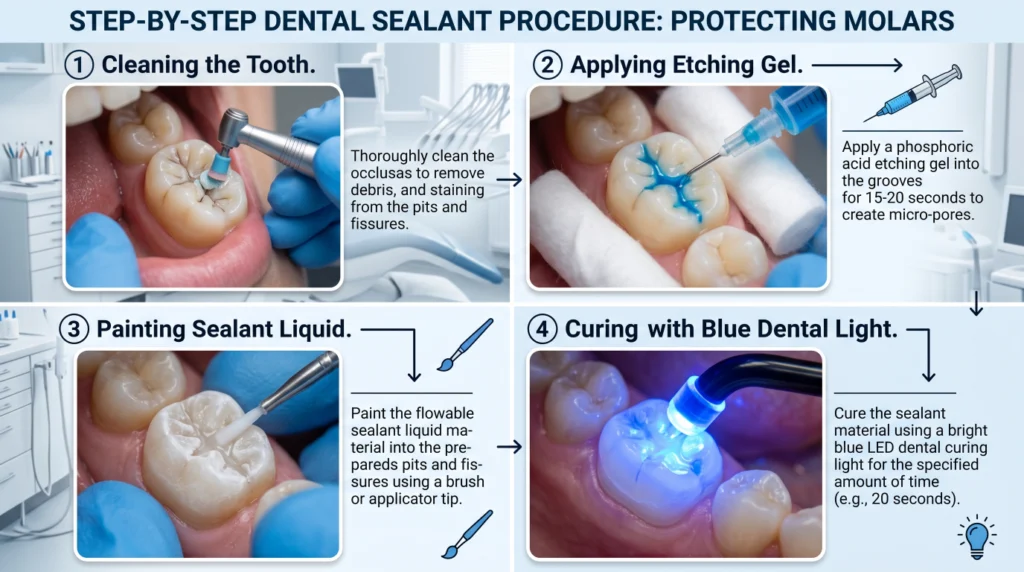
Before applying a sealant, the dentist or hygienist thoroughly cleans the tooth to remove any plaque, food debris, or surface buildup. Only clean, healthy tooth surfaces can receive a sealant.
Preparing the Tooth Surface
The tooth is dried and kept dry using cotton rolls or a dental dam. An acidic gel or solution is then applied to the chewing surface of the tooth for a few seconds. This etching solution roughens the surface slightly at a microscopic level, which helps the sealant bond more securely to the enamel. The gel is rinsed off and the tooth is dried again.
Applying the Sealant Material
The liquid sealant material is painted directly onto the tooth’s chewing surface. It flows into the grooves and pits and covers the entire area that needs protection. The material is still liquid at this stage and has not yet hardened.
Hardening the Sealant With a Curing Light
A special blue curing light is held over the tooth for about 30 seconds. This light activates the bonding agents in the sealant material and hardens it into a solid, durable coating that is firmly attached to the tooth.
Final Bite and Fit Check
Once the sealant has hardened, the dentist checks your bite to make sure the sealant does not interfere with how your teeth come together. If any adjustment is needed, it is made quickly and easily. The whole process from start to finish typically takes less than an hour even when multiple teeth are being sealed.
How Long Do Dental Sealants Last?
Most dental sealants last between five and ten years when properly applied and cared for. Some last even longer. The longevity depends on the quality of the application, the material used, and how well the patient cares for their teeth after treatment.
Chewing hard foods like ice or hard candy can cause sealants to chip or wear down faster. Grinding teeth at night also accelerates wear. Your dentist checks your sealants at every routine visit. If a sealant has chipped, worn down significantly, or come off entirely, it can be reapplied easily and quickly.
Do Dental Sealants Replace Fluoride?
Fluoride and dental sealants are not competing options. They work together and serve different purposes. Fluoride strengthens enamel throughout the entire mouth by making it more resistant to acid attacks. Sealants physically block bacteria from reaching the grooves of specific teeth.
Using fluoride toothpaste and drinking fluoridated water protects all tooth surfaces from decay. Sealants add an additional layer of targeted protection to the back teeth where cavities are most likely to form. Using both strategies together gives your teeth the best possible defense against decay.
How Much Do Dental Sealants Cost?
The cost of dental sealants is generally affordable, especially compared to the cost of treating a cavity later. Pricing varies depending on your location, the dental practice, and whether the patient is a child or an adult.
Many insurance plans cover sealants fully for children as part of preventive care, while adult coverage varies by plan. If your insurance does not cover them, most offices offer payment plans to help. When you consider what a filling costs, sealants are a much smaller investment upfront.
Dental Sealants vs Fillings
| Factor | Dental Sealants | Fillings |
| Purpose | Prevent cavities before they start | Treat cavities after they form |
| When Applied | On healthy teeth | On decayed or damaged teeth |
| Pain Level | Usually painless | May cause mild discomfort |
| Procedure Time | A few minutes per tooth | 30–60 minutes per tooth |
| Best For | Preventing tooth decay | Repairing damaged teeth |
| Cost | Generally lower | Usually higher |
| Longevity | 5–10 years | 5–15 years, depending on the material |
| Effect on Tooth | No tooth structure is removed | Requires removal of decayed tooth material |
| Who It Is For | Children, teens, and cavity-prone adults | Anyone with an existing cavity |
| Result | Helps keep teeth healthy and cavity-free | Restores the function and shape of a damaged tooth |
Potential Disadvantages of Dental Sealants
Dental sealants are not without their limitations. They can chip or wear down over time, especially if you chew on hard foods or grind your teeth at night. They also require regular monitoring at dental checkups to make sure they are still intact and doing their job.
If a sealant partially comes off and goes unnoticed, it leaves the tooth less protected than expected. And for teeth that already have decay or existing fillings, sealants are not an option until those issues are addressed first.
Ready to Prevent Cavities Before They Start?
At U Smile Family Dentistry in Mesa, Arizona, we are dedicated to helping our patients maintain healthy, cavity-free smiles through evidence-based preventive treatments. Contact us, our team of skilled dental professionals utilizes the latest technology and techniques to ensure your sealant procedure is efficient, precise, and completely comfortable. Whether you are ready for your child or yourself, our sealant procedure is straightforward, completely painless, and completed in a single visit.
Conclusion
Dental sealants are one of the most practical and proven tools in preventive dentistry. They are painless, affordable, and highly effective at stopping cavities before they start, especially in the molars where decay is most likely to develop. For children, getting sealants as soon as their permanent molars come in gives those teeth the best possible start.
For adults, sealants are a smart way to protect teeth that are currently healthy and avoid the cost and discomfort of future fillings. Preventive care is always easier, more comfortable, and less expensive than treating problems after they develop.
Frequently Asked Questions
Are Dental Sealants Painful?
No. The procedure involves no drilling, no needles, and no anesthesia. Most patients, including young children, feel nothing more than the sensation of the dentist working around their teeth. It is one of the most comfortable dental procedures available.
Can Sealants Be Removed?
Yes, a dentist can remove a sealant if needed. However, removal is rarely necessary. If a sealant wears down or chips, it is simply reapplied rather than removed entirely.
Are Sealants Visible?
Most sealants are clear or slightly white in color and are applied to the back teeth. They are not visible when you smile or talk and most people around you will have no idea they are there.
Can Adults Get Dental Sealants?
Yes. Any adult with healthy, cavity-free molars that have deep grooves is a candidate for sealants. There is no age limit. Adults who are prone to cavities or who want to protect specific teeth will benefit just as much as children.
How Soon Can I Eat After Getting Sealants?
You can eat and drink normally as soon as you leave the dental office. The sealant hardens completely during the procedure with the curing light, so there is no waiting period required after the appointment.