
A salt water rinse is generally best used after brushing your teeth, especially if your goal is to soothe sore gums, reduce bacteria, ease mouth ulcers, or support healing after dental work. Brushing first removes plaque and food particles, allowing the salt water to reach affected areas more effectively.
Salt water works by creating a healthier oral environment that may temporarily reduce bacteria, calm inflammation, and promote natural healing. While it can help with gum irritation, sore throats, canker sores, and recovery after tooth extraction, it is not a replacement for brushing, flossing, or professional dental care.
Instead of mouthwash purchased from supermarkets or drugstores, we suggest you use saltwater rinses that effectively kill many types of bacteria and improve your oral health and hygiene.
Should You Use a Salt Water Rinse Before or After Brushing Your Teeth?
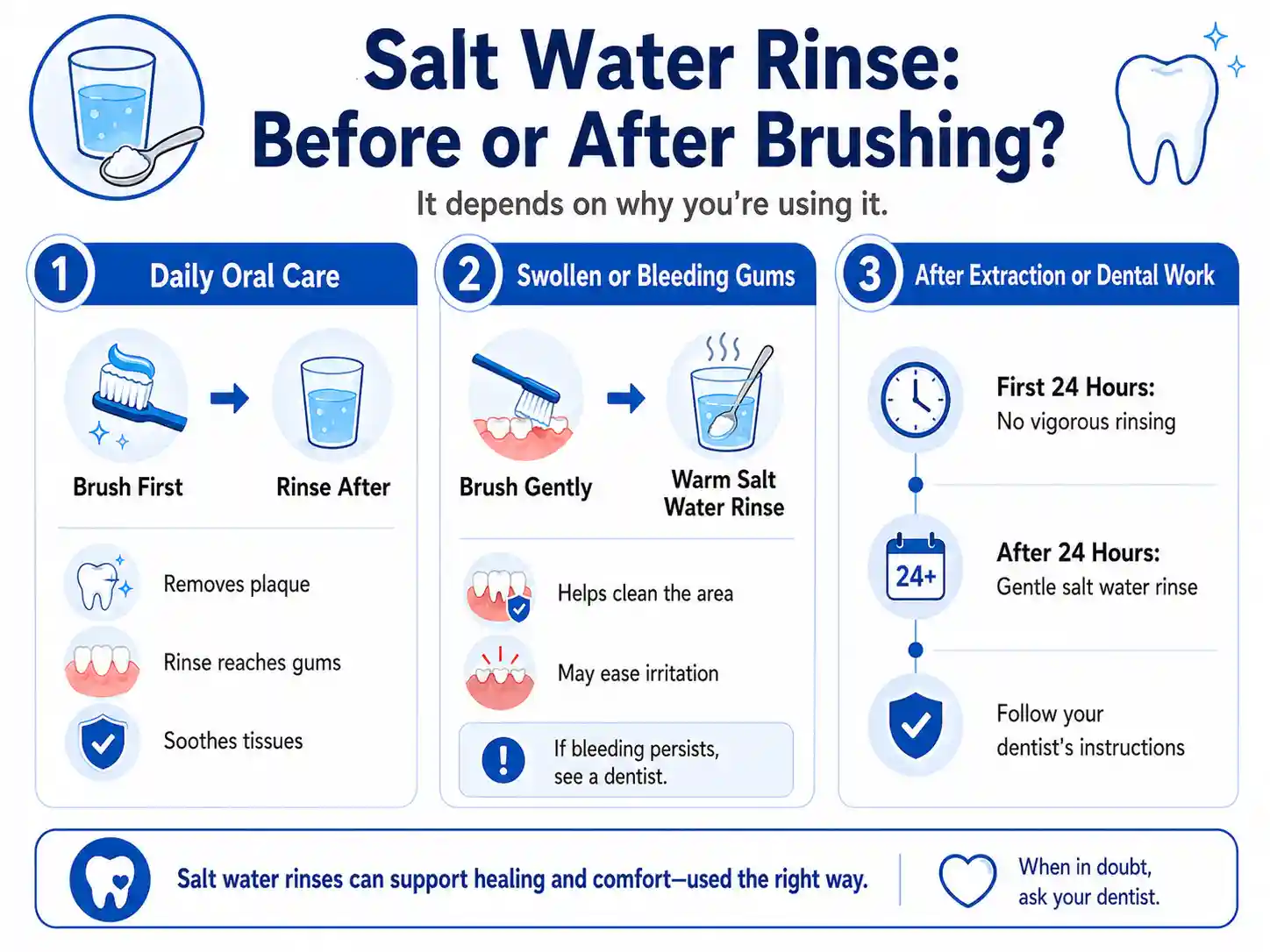
This is one of the most common questions people ask, and the answer depends on why you’re using the rinse.
For Daily Oral Hygiene
If you’re using a salt water rinse as part of your everyday oral care routine, brush your teeth first and rinse afterward.
Here’s why:
Brushing removes plaque and food debris.
Your toothpaste cleans the surfaces of your teeth.
The salt water can then reach your gums and soft tissues more effectively.
It helps wash away remaining debris while soothing irritated tissues.
This sequence gives you the greatest overall benefit without interfering with your toothpaste’s cleaning action.
If You Have Swollen or Bleeding Gums
People with mild gum irritation often benefit from brushing gently first and then rinsing with warm salt water. The brushing removes plaque that contributes to gum inflammation, while the rinse helps keep the area clean and may temporarily reduce discomfort.
Keep in mind that persistent bleeding gums should always be evaluated by your dentist, as they may indicate gingivitis or more advanced gum disease.
After a Tooth Extraction or Dental Procedure
If you’ve recently had a tooth extraction, dental implant, or periodontal treatment, always follow your dentist’s instructions.
Most dentists recommend:
Avoiding vigorous rinsing during the first 24 hours.
Beginning gentle salt water rinses about 24 hours after the procedure.
Brushing carefully around the surgical site until healing progresses.
Following these instructions helps protect the blood clot and supports proper healing.
If You’re Gargling for a Sore Throat
If your goal is to soothe a sore throat rather than improve oral hygiene, you can gargle with salt water either before or after brushing. Since the rinse is targeting your throat rather than your teeth, the timing is less important.
How to Make a Salt Water Rinse at Home
One of the biggest advantages of a salt water rinse is that it’s inexpensive and easy to prepare using ingredients you likely already have at home.
Ingredients
- 1 cup (8 ounces) of warm water
- ½ teaspoon of table salt
Stir the salt until it dissolves completely. The water should be warm—not hot—to avoid irritating sensitive oral tissues. For best results, prepare a fresh solution each time you rinse rather than storing it for later use.
How to Use a Salt Water Rinse Properly
Using a salt water rinse correctly helps you get the most benefit while protecting your oral tissues.
Follow These Steps
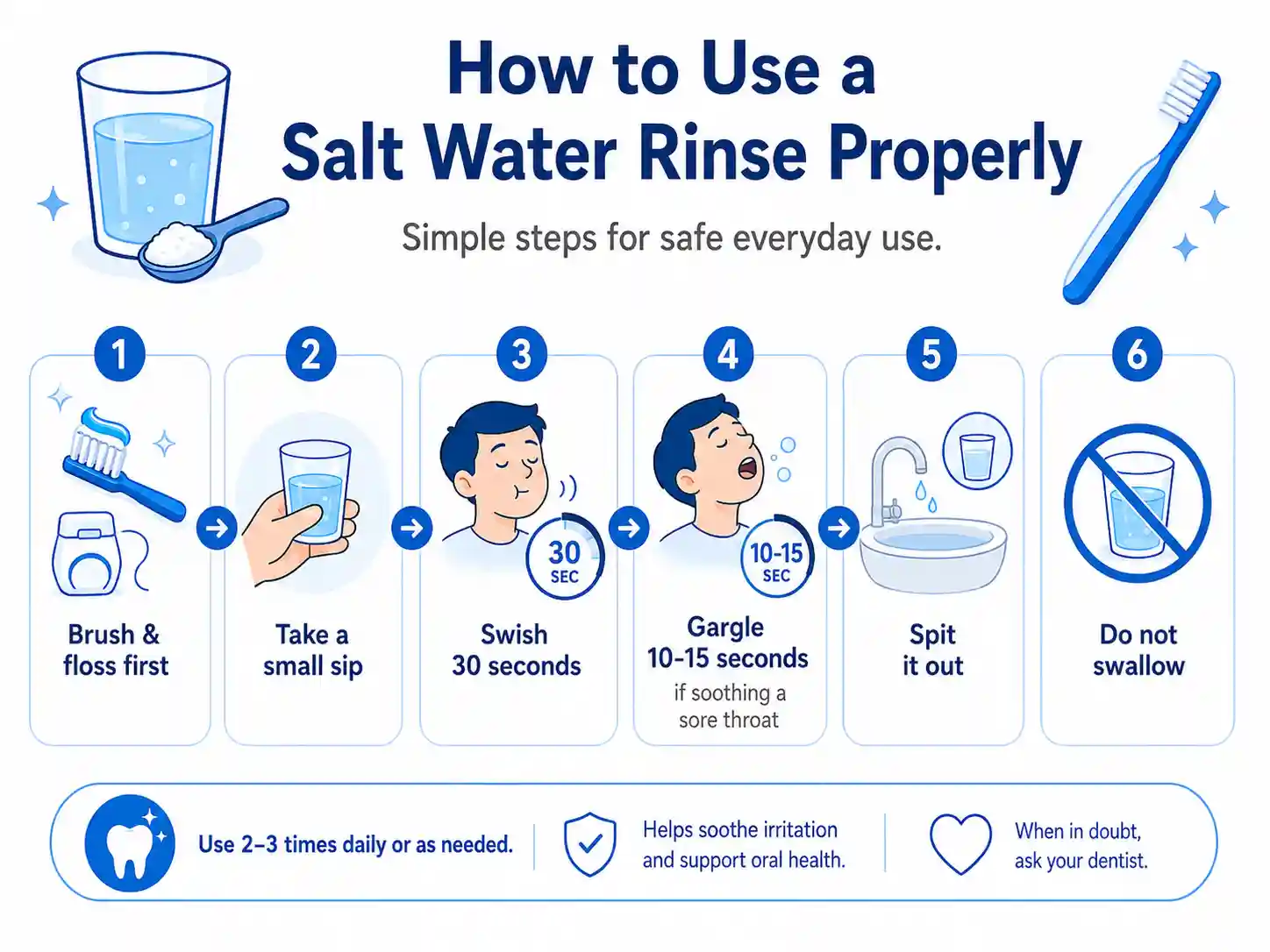
- Brush and floss your teeth first if you’re using the rinse as part of your daily oral hygiene routine.
- Take a small sip of the warm salt water.
- Swish it gently around your teeth and gums for about 30 seconds.
- Tilt your head back and gargle for another 10–15 seconds if you’re also soothing a sore throat.
- Spit the solution out completely.
- Avoid swallowing the salt water, as it contains bacteria and excess sodium.
How Often Should You Use a Salt Water Rinse?
How often you should rinse with salt water depends on your reason for using it. While it is generally safe, excessive or long-term use may dry out or irritate your oral tissues. For ongoing oral health concerns, always follow your dentist’s recommendations.
| Purpose | Recommended Frequency |
|---|---|
| Everyday oral hygiene | Occasionally or as recommended by your dentist |
| Swollen or irritated gums | 2–3 times daily for a few days |
| After dental procedures | Follow your dentist’s instructions |
| Canker sores | 2–3 times daily until symptoms improve |
| Sore throat | Several times daily as needed |
| Long-term use | Avoid excessive daily use unless advised by your dentist |
How Long Should You Rinse with Salt Water?
For most people, 30 to 60 seconds is enough. This gives the solution time to reach your gums, teeth, and other oral tissues without causing unnecessary irritation. If you’re gargling for a sore throat, spend an additional 10 to 15 seconds gargling before spitting out the solution. There’s no need to rinse for several minutes, as doing so doesn’t provide additional benefit
Can You Brush Your Teeth After a Salt Water Rinse?
Yes. You can brush your teeth after using a salt water rinse. Many people worry that brushing immediately afterward may reduce the rinse’s effectiveness, but for routine oral care, that’s generally not a concern. However, if you’ve had oral surgery, your dentist may recommend waiting or brushing carefully around the treated area until healing has progressed.
For everyday dental hygiene, many professionals actually recommend the opposite order:
- Brush your teeth.
- Floss if needed.
- Finish with a warm salt water rinse.
When Should You Use a Salt Water Rinse?
| Situation | Best Time to Rinse |
|---|---|
| Everyday oral hygiene | After brushing |
| Swollen or irritated gums | After brushing |
| Mild tooth discomfort | After brushing |
| Sore throat | Before or after brushing |
| Mouth sores | After brushing |
| After tooth extraction | Only as directed by your dentist |
| After periodontal treatment | Follow your dentist’s instructions |
When Should You Use a Salt Water Rinse?
A salt water rinse can be helpful in several situations, including:
After a Tooth Extraction
Once your dentist says it’s safe, gently rinsing with warm salt water can help keep the extraction site clean while supporting healing.
After Gum Treatment
Following deep cleaning or periodontal therapy, salt water rinses may help soothe sensitive gums and keep the treated areas clean.
For Swollen or Bleeding Gums
If your gums feel irritated, brushing gently and following with a warm salt water rinse may provide temporary relief. Persistent bleeding, however, should always be evaluated by a dental professional.
For Canker Sores
Salt water may reduce discomfort and help keep mouth sores free from food debris while they heal.
For a Sore Throat
Gargling with warm salt water can soothe throat irritation and temporarily reduce bacteria in the throat. Unlike using a salt water rinse for oral hygiene, gargling for a sore throat can be done either before or after brushing your teeth.
After Food Gets Stuck Around Teeth
If food becomes trapped around your teeth or gums and you don’t have access to a toothbrush, a gentle salt water rinse can help loosen debris until you can brush properly.
When to Use Saltwater Gargles before or After Brushing?
If you want to gargle your mouth with salt water, you can do so before or after brushing your teeth. So long as you ensure you take a comfortable amount of solution in your mouth, gargle the saltwater around the back of your throat, rinse around the mouth, teeth, and gums for 15 to 20 seconds and spit out the solution, you will begin enjoying the benefits of saltwater rinses.
Saltwater rinses are beneficial to improve your dental health in many ways. The reduction of bacteria and plaque by itself proves helpful to keep you from dental issues like cavities and gum disease. If you have undergone any dental procedure making your mouth prone to infections, saltwater rinses are suggested by dentists as a safeguard to keep your dental hygiene in optimal condition.
If you want to learn more about the benefits of salt water rinses and their use, please schedule an appointment with U Smile Family Dentistry for all the information you need about this excellent home remedy
Does Warm Salt Water Work Better Than Cold?
Yes. Warm salt water is generally preferred. Warm water dissolves salt more completely and feels gentler on irritated gums, mouth sores, and throat tissues. It also encourages people to rinse for the recommended amount of time because it’s more comfortable than cold water.
The temperature doesn’t affect whether you should rinse before or after brushing—it simply makes the rinse more soothing.
Benefits of Salt Water Rinses for Oral Health
A warm salt water rinse has been used for generations as a simple home remedy for oral discomfort. While it isn’t a replacement for brushing, flossing, or professional dental care, research and clinical experience suggest that salt water can temporarily reduce bacteria, soothe irritated tissues, and support the mouth’s natural healing process.
Below are some of the most important oral health benefits of using a salt water rinse.
Helps Reduce Harmful Oral Bacteria
Your mouth naturally contains hundreds of different types of bacteria. While many are beneficial, others contribute to plaque buildup, gum inflammation, and bad breath. A salt water rinse creates a slightly more alkaline environment inside the mouth, making it less favorable for certain harmful bacteria. Although it doesn’t sterilize your mouth or eliminate all bacteria, it can temporarily reduce bacterial levels and help maintain a cleaner oral environment.
Using a salt water rinse after brushing can also help flush away loosened debris that may remain after brushing and flossing.
Soothes Swollen and Irritated Gums
One of the biggest reasons dentists recommend salt water rinses is their ability to calm irritated gum tissue. If your gums feel tender after flossing, professional teeth cleaning, or mild gum inflammation, rinsing with warm salt water may provide temporary relief. The warm solution helps keep the affected area clean while reducing irritation, making it easier for the gums to recover naturally.
However, if your gums bleed regularly or remain swollen for several days, schedule a dental examination because persistent symptoms may indicate gum disease.
Supports Healing After Dental Procedures
Dentists commonly recommend warm salt water rinses after procedures such as:
- Tooth extractions
- Dental implants
- Periodontal (gum) treatment
- Wisdom tooth removal
- Certain oral surgeries
Once your dentist advises it’s safe to begin rinsing—usually about 24 hours after a tooth extraction—a gentle salt water rinse helps keep the area clean without exposing healing tissues to the alcohol or strong ingredients found in some mouthwashes. It’s important to rinse gently. Vigorous swishing during the early stages of healing may interfere with the protective blood clot.
May Help Prevent Infection During Healing
Although salt water isn’t an antibiotic, it can help lower the number of bacteria around healing tissues. Keeping the mouth clean after dental treatment reduces the chance of food particles and bacteria accumulating near the surgical site, creating a healthier environment for recovery. This is one reason many dentists recommend salt water rinses as part of post-treatment care.
Provides Temporary Relief from Mouth Sores
Canker sores can make eating, drinking, and even talking uncomfortable.
A warm salt water rinse may help:
Clean the affected area
Reduce irritation
Remove food debris
Support the natural healing process
While salt water won’t make mouth ulcers disappear overnight, many people find that regular rinsing helps reduce discomfort until the sore heals naturally.
Helps Ease Minor Tooth Discomfort
A salt water rinse isn’t a treatment for tooth decay or dental infections, but it may temporarily relieve minor discomfort caused by food trapped around a tooth or mild gum irritation. Because the rinse helps cleanse the mouth, some people notice short-term relief while waiting to see their dentist. If your tooth pain is severe, persistent, or accompanied by swelling or fever, seek professional dental care promptly instead of relying on home remedies.
Freshens Breath Naturally
Bad breath often develops when bacteria break down food particles left inside the mouth. Since a salt water rinse helps wash away debris and temporarily reduces bacteria, it may improve breath freshness for a short time.
However, chronic bad breath is often linked to underlying issues such as gum disease, tooth decay, or dry mouth, so it’s important to identify and treat the root cause.
May Help Reduce Mild Gum Inflammation
Plaque buildup is one of the leading causes of gum inflammation. Although brushing and flossing remain the most effective ways to remove plaque, using a warm salt water rinse after brushing may help soothe irritated gum tissues and support healthier gums. It should be viewed as a supportive measure rather than a cure for gingivitis or periodontal disease.
Saltwater Rinses – Health Benefits
The oral Cancer foundation states the high alcohol content in many mouthwash brands irritates your mouth, especially if you have a gum infection. Saltwater rinses are safer alternatives when infected by gingivitis to kill bacteria and keep your mouth clean. Besides inhibiting bacterial growth, saltwater rinses help reduce the amount of plaque in your mouth to promote safe recovery after dental procedures. It is why the dentist in Mesa, AZ, recommends saltwater rinses to many patients.
Saltwater rinses are beneficial to cut down the acidic environment in your mouth that allows bacteria to thrive, making them an effective tool to inhibit bacterial growth in your mouth. In addition, the rinses increase the pH balance in your mouth to create an alkaline oral environment making it challenging for the bacteria to thrive. Usually, harmful bacteria prefer an acidic environment. However, when the domain no longer exists, the mouth becomes less inflamed and healthier.
How Do Saltwater Rinses Help In the Healing Process?
After dental procedures like tooth extractions, saltwater promotes healing by encouraging gingival fibroblasts migration and increased extracellular matrix components to regulate wound repair. In addition, saltwater does not irritate the mouth and will not burn or cause mouth pain. Finally, salt water rinses help prevent alveolar osteitis, occurring after extractions.
Can Salt Water Replace Mouthwash?
A salt water rinse is an effective home remedy for soothing irritated gums and supporting healing, but it cannot replace a therapeutic mouthwash. Mouthwashes are specially formulated to help control plaque, reduce bacteria, strengthen tooth enamel, and provide longer-lasting protection for your oral health.
| Feature | Salt Water Rinse | Mouthwash |
|---|---|---|
| Reduces bacteria | Temporarily reduces bacteria | Effectively reduces bacteria with antiseptic ingredients |
| Supports gum healing | Helps soothe gums and promotes healing | Limited healing benefits; some formulas may irritate after procedures |
| Prevents cavities | No | Often contains fluoride to help prevent cavities |
| Controls plaque & gingivitis | Limited effectiveness | Designed to help control plaque and gingivitis |
| Freshens breath | Temporary | Longer-lasting fresh breath |
| Cost | Low-cost and easy to prepare at home | More expensive but offers broader oral health benefits |
Who Should Be Cautious When Using Salt Water Rinses?
Although a salt water rinse is safe for most people, some individuals should use it carefully or consult a healthcare professional first. This includes people who:
- Have high blood pressure and have been advised to limit sodium intake
- Frequently experience dry mouth
- Have large open oral wounds that require professional care
- Have recently undergone oral surgery and received specific post-operative instructions
- Experience persistent oral pain, swelling, or bleeding
If your symptoms continue despite home care, schedule a dental examination rather than relying solely on salt water rinses.
Common Mistakes to Avoid
Using a salt water rinse incorrectly may reduce its effectiveness. Avoid these common mistakes:
Using Too Much Salt
Adding extra salt won’t improve the rinse and may irritate your mouth.
Swallowing the Solution
Always spit out the rinse after use.
Rinsing Too Aggressively After an Extraction
Forceful rinsing can disturb the protective blood clot and delay healing.
Replacing Brushing and Flossing
Salt water is a supportive home remedy—not a substitute for brushing twice daily, flossing, and regular dental checkups.
Using Extremely Hot Water
Warm water is soothing, while hot water may irritate already sensitive tissues.
Are There Any Risks or Side Effects of Salt water rinses?
Salt water rinses are generally considered safe when used correctly, but excessive use may cause unwanted side effects.
Possible side effects include:
Temporary mouth dryness
Mild gum irritation
Increased sensitivity if the solution is too salty
Dehydration if large amounts are swallowed regularly
To minimize these risks:
Use the correct amount of salt.
Don’t rinse excessively throughout the day.
Always spit the solution out after rinsing.
If irritation develops, stop using the rinse and consult your dentist.
Need Professional Dental Care?
While a salt water rinse can provide temporary relief, it cannot replace expert diagnosis or treatment. If you’re experiencing persistent tooth pain, swollen gums, bleeding, or signs of infection, schedule an appointment with our dental team. We’ll identify the underlying cause of your symptoms and recommend the most effective treatment to restore your oral health.
Conclusion
A salt water rinse is a simple, inexpensive home remedy that can support healthier gums, reduce bacteria, soothe mouth sores, and help the mouth heal after certain dental procedures. For most people, using a salt water rinse after brushing is the better choice because it allows the solution to work on clean teeth and gums without washing away toothpaste too early.
However, salt water should complement—not replace—your daily oral hygiene routine. Continue brushing twice a day with fluoride toothpaste, flossing daily, and visiting your dentist regularly. If gum pain, swelling, bleeding, or mouth sores persist for more than a week or worsen, seek professional dental care instead of relying only on home remedies.
Used correctly, a warm salt water rinse can be a safe addition to your oral care routine. Whether you’re asking “Should I rinse with salt water before or after brushing?”, “Can I brush my teeth after a salt water rinse?”, or “Is salt water good for my gums?”, the answer depends on your goal—but in most situations, brushing first and rinsing afterward provides the greatest benefit for maintaining a healthier mouth.
FAQs
Should you use a salt water rinse before or after brushing your teeth?
For everyday oral care, brushing first and then rinsing with warm salt water is generally recommended. This allows the rinse to reach cleaner gum tissues and helps soothe irritation more effectively.
Can I brush my teeth immediately after a salt water rinse?
Yes. For routine oral hygiene, it’s safe to brush immediately after a salt water rinse. If you’ve recently had oral surgery, follow your dentist’s aftercare instructions.
How long should I rinse with salt water?
Swish or gargle the solution for about 30 seconds before spitting it out. Avoid swallowing the salt water.
How often should you use a salt water rinse?
Most dentists recommend using a salt water rinse 2–3 times a day for temporary healing or gum irritation. Long-term daily use isn’t usually necessary unless advised by your dentist.
Can a salt water rinse replace mouthwash?
No. Salt water helps reduce bacteria and soothe oral tissues, but it doesn’t contain fluoride or other ingredients that help prevent cavities and strengthen enamel.
Does a salt water rinse help swollen or bleeding gums?
Yes. Warm salt water may temporarily reduce inflammation, keep the area clean, and support healing. Persistent bleeding or swelling should be evaluated by a dentist.
Is warm or cold salt water better for rinsing?
Warm salt water is usually preferred because it is more comfortable and soothing for irritated gums and throat tissues.